


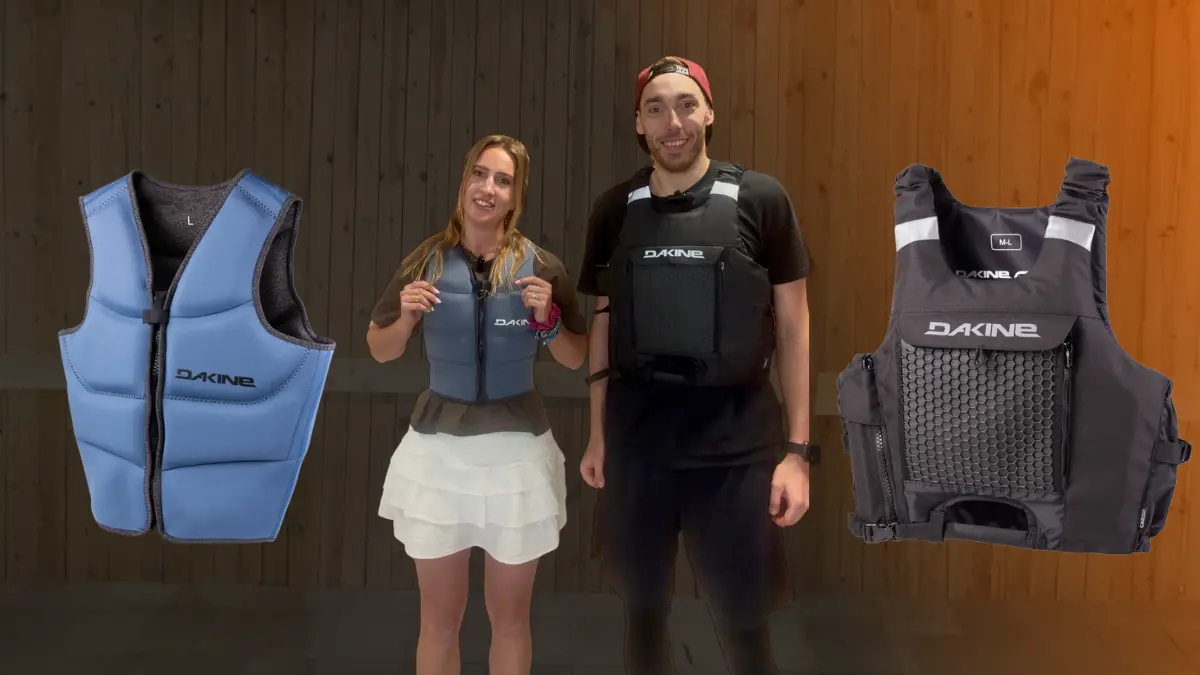
Both types of vests help you stay afloat, but they're designed for two completely different purposes.
A buoyancy vest is made to provide extra flotation and make long sessions on the water more comfortable, while an impact vest focuses on protecting your body during crashes and hard landings.
To make the differences easier to understand, we'll use two Dakine models—the Seeker DLX and the Surface—as practical examples.
Buoyancy Vest – More Flotation, Less Fatigue
A buoyancy vest is all about making your time on the water more comfortable. It adds extra flotation, helping you stay on the surface with less effort, which is especially noticeable during long sessions, downwind runs, or whenever you're riding further from shore.
That's why buoyancy vests are a favourite among wing foilers, windsurfers, kitesurfers and SUP paddlers. They give you that extra feeling of confidence without getting in the way—even when you're wearing a harness.
The extra flotation also comes in handy when learning your first waterstarts or working on new manoeuvres. Staying afloat takes less effort, so you can reset faster and focus on progressing.
On our website you'll find plenty of buoyancy vests from top brands like ION, Dakine, O'Neill, Spinera, AQUADESIGN or Aqua Marina.
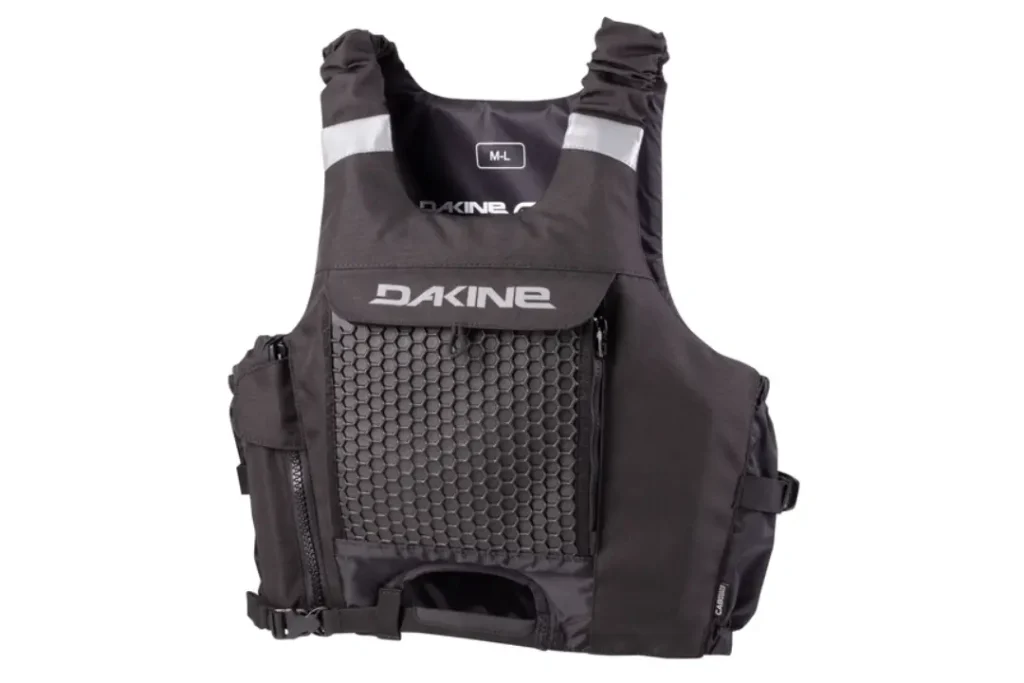
A great example of a buoyancy vest - Dakine Seeker DLX
If your sessions tend to last for hours, you enjoy downwinders or simply appreciate extra support while riding, the Dakine Seeker DLX vest is hard to beat. It's lightweight, fits close to the body and stays comfortable whether you're handling a wing, sail or kite. Having a 50N CE certification, the soft flotation foam provides a lot of extra support in the water while allowing complete freedom of movement.
What really makes the Seeker DLX stand out are all the thoughtful details you'll appreciate once you're on the water. The expandable front pocket keeps your phone or small essentials within easy reach, while the rear pocket on the back is the perfect place to store reef walkers. Planning an all-day adventure? The hydration bladder compatibility means you can stay hydrated without heading back to shore.
There's also a dedicated harness hook opening, a side-entry zip for easy on and off, and adjustable straps that let you dial in the perfect fit. Every feature has one purpose—to help you spend more time enjoying the session and less time thinking about your gear.
Impact Vest – Protection When It Matters Most
An impact vest is designed with one main goal in mind: protecting your body during crashes.
Unlike a buoyancy vest, its primary purpose isn't to provide extra flotation but to absorb impacts when you hit the water or your equipment. That's why impact vests are especially popular among riders who enjoy freestyle, jumping, wave riding or simply want to progress with more confidence.
If you're learning new tricks, crashes are simply part of the process. An impact vest helps protect your ribs, back and torso, reducing the force of heavy landings and giving you extra confidence to keep trying. Instead of worrying about every fall, you can stay focused on improving your technique and enjoying the session.
Another big advantage is freedom of movement. Modern impact vests are designed to be lightweight, flexible and low-profile, allowing you to move naturally without feeling bulky or restricted. They're also built to work comfortably with both waist and seat harnesses, making them a popular choice for wing foiling, windsurfing, kitesurfing and wakeboarding.
If you're learning new tricks, pushing your freestyle riding or simply expect to crash from time to time, an impact vest quickly becomes one of those pieces of gear you won't want to ride without.
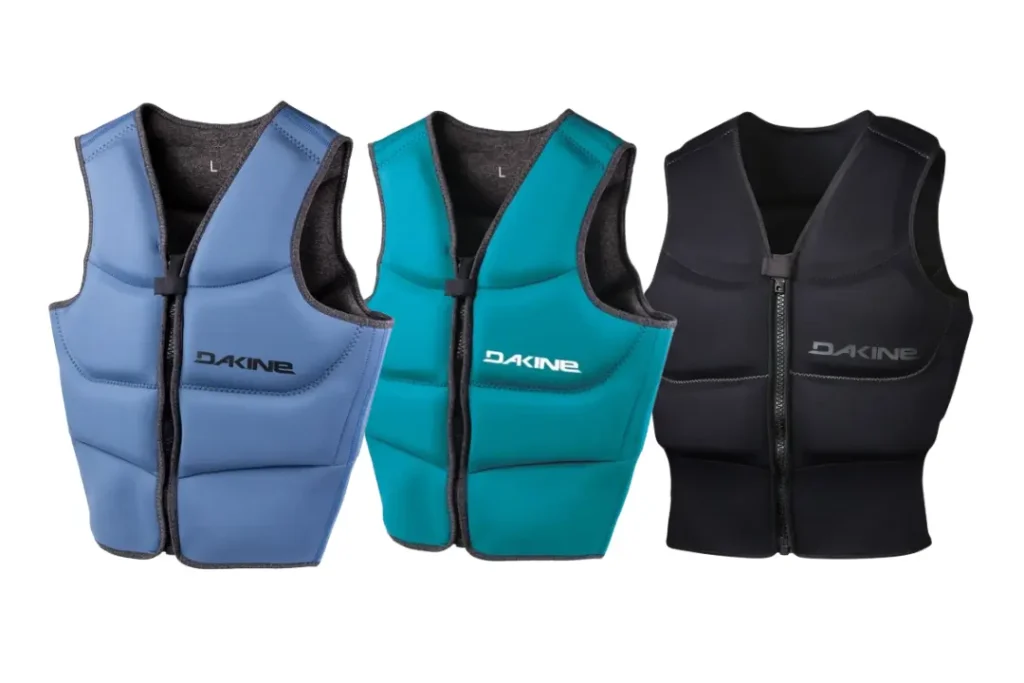
A good example of an impact vest - Dakine Surface
The Dakine Surface is built to absorb impacts while letting you move completely naturally. Flexible neoprene combined with lightweight closed-cell foam helps protect your ribs, back and torso during falls, while staying light and comfortable throughout the session.
Unlike bulkier protection, the Surface never feels restrictive. It's designed specifically for windsurfing, wing foiling, kitesurfing and wakeboarding, and works seamlessly with both waist and seat harnesses. The front zip also makes getting in and out of the vest quick and hassle-free.
Perhaps the biggest benefit isn't something you can measure.
It's confidence.
When you know your body has an extra layer of protection, you're much more likely to commit to that new trick, push your limits and progress faster without constantly worrying about the next crash.
Which One Is Right for You?
Choose a buoyancy vest if you want extra flotation, longer and more comfortable sessions, and practical features that make your time on the water easier.
Choose an impact vest if your priority is protecting your body while learning new tricks, pushing your limits or riding more aggressively.
No matter which option you choose, investing in the right vest means more confidence, more comfort and ultimately more fun every time you head out on the water.
Want to see the comparison of the two Dakine examples? Take a closer look at both models – watch our YouTube video, where we explain with Adam the key differences.