


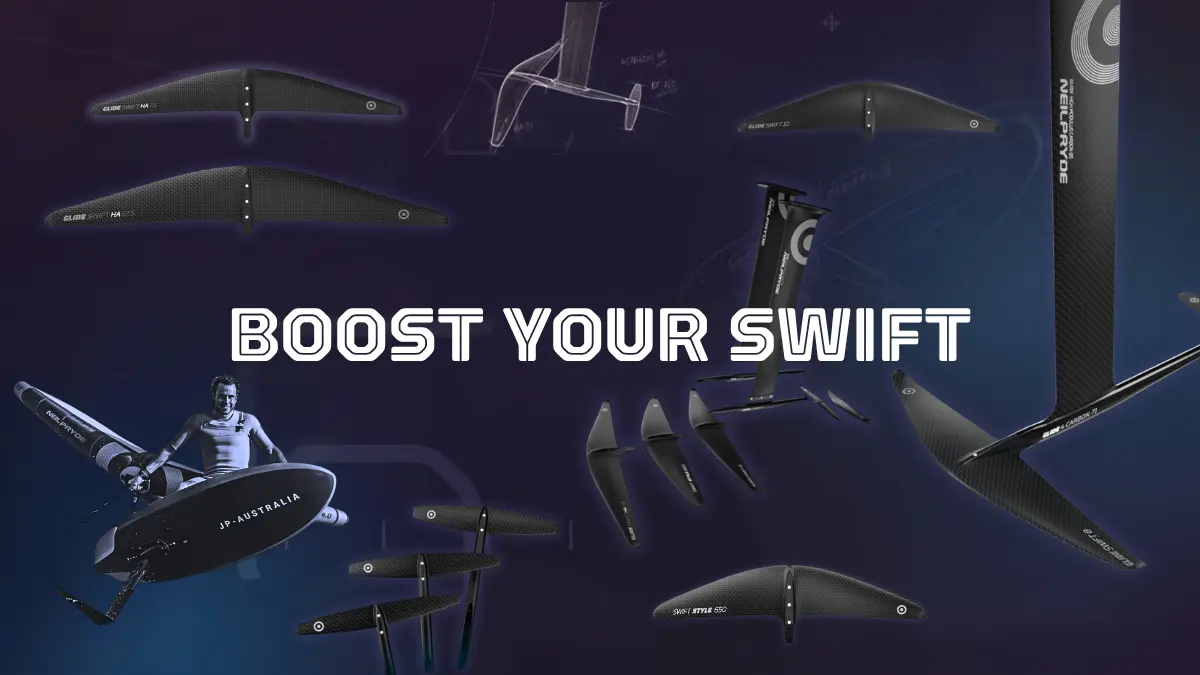
NeilPryde has refreshed the Glide foil system. And this isn't just a cosmetic update – it's a rebuild of the whole platform so one set of components can cover wing foiling, downwind and wind foiling, letting you pick the wing that suits you rather than adapting to whatever wing you've got.
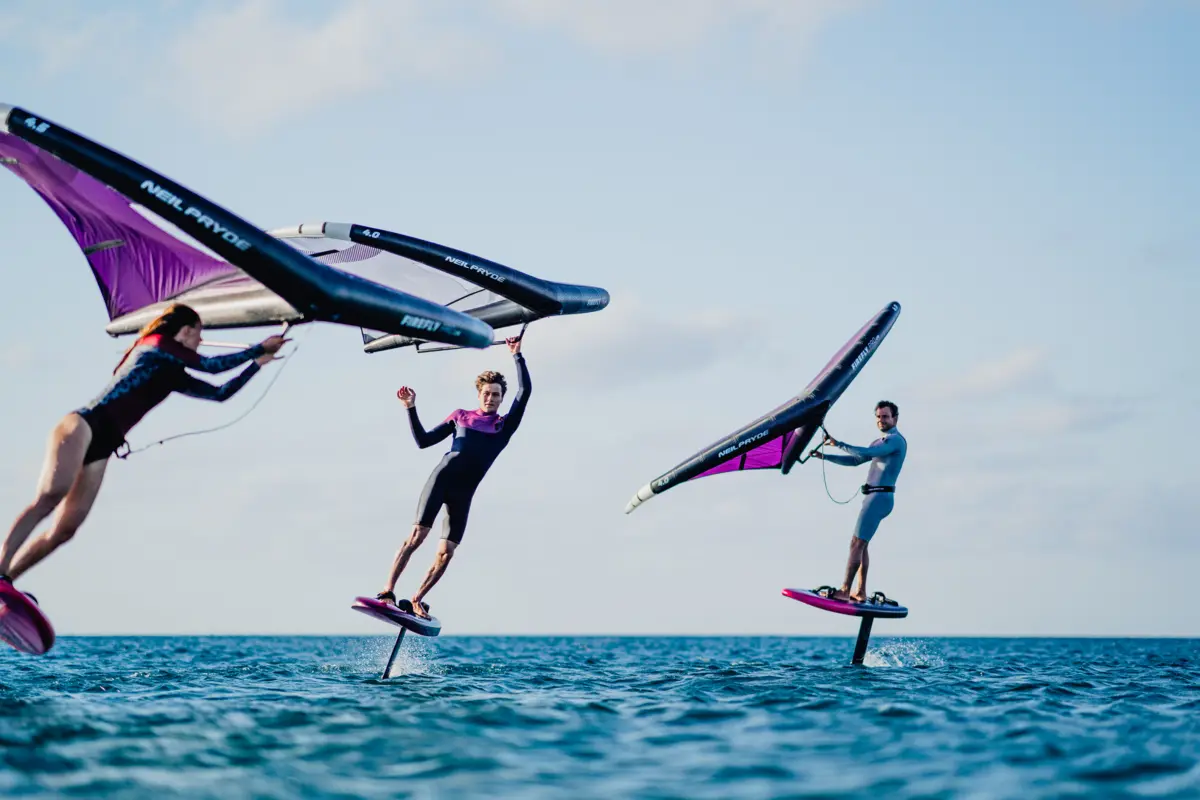
Modularity – one platform instead of ten
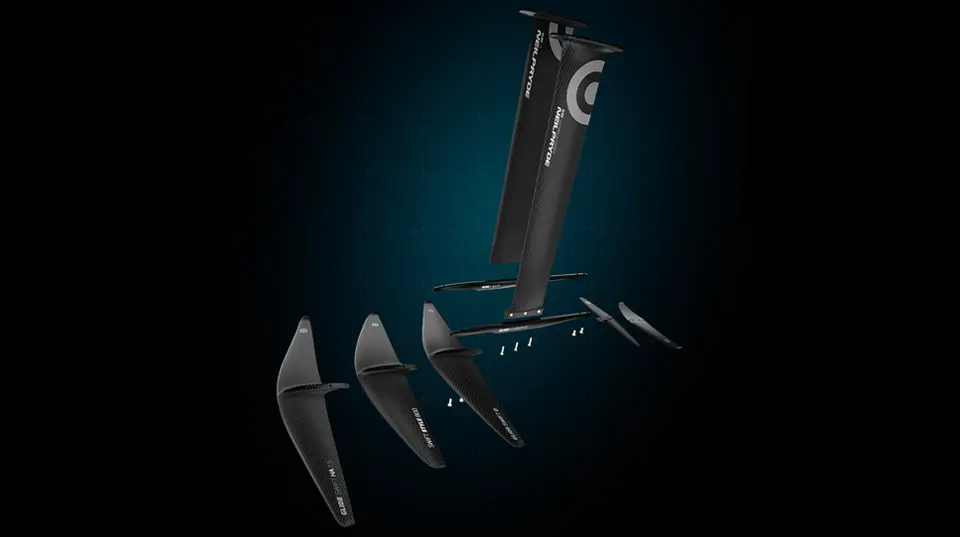
Every front and back wing in the Glide system fits every fuselage in the range, including legacy models. Whether you're riding a carbon mast or the tried-and-tested aluminium version, the new wings simply bolt on and work.
In practice, this means you don't need to buy a new foil from scratch just to change how it feels on the water. Swap the front or back wing on the gear you already own. That's a real saving, and a lot of flexibility if you ride in different conditions or you're still figuring out your style.
Three wings, three riding styles
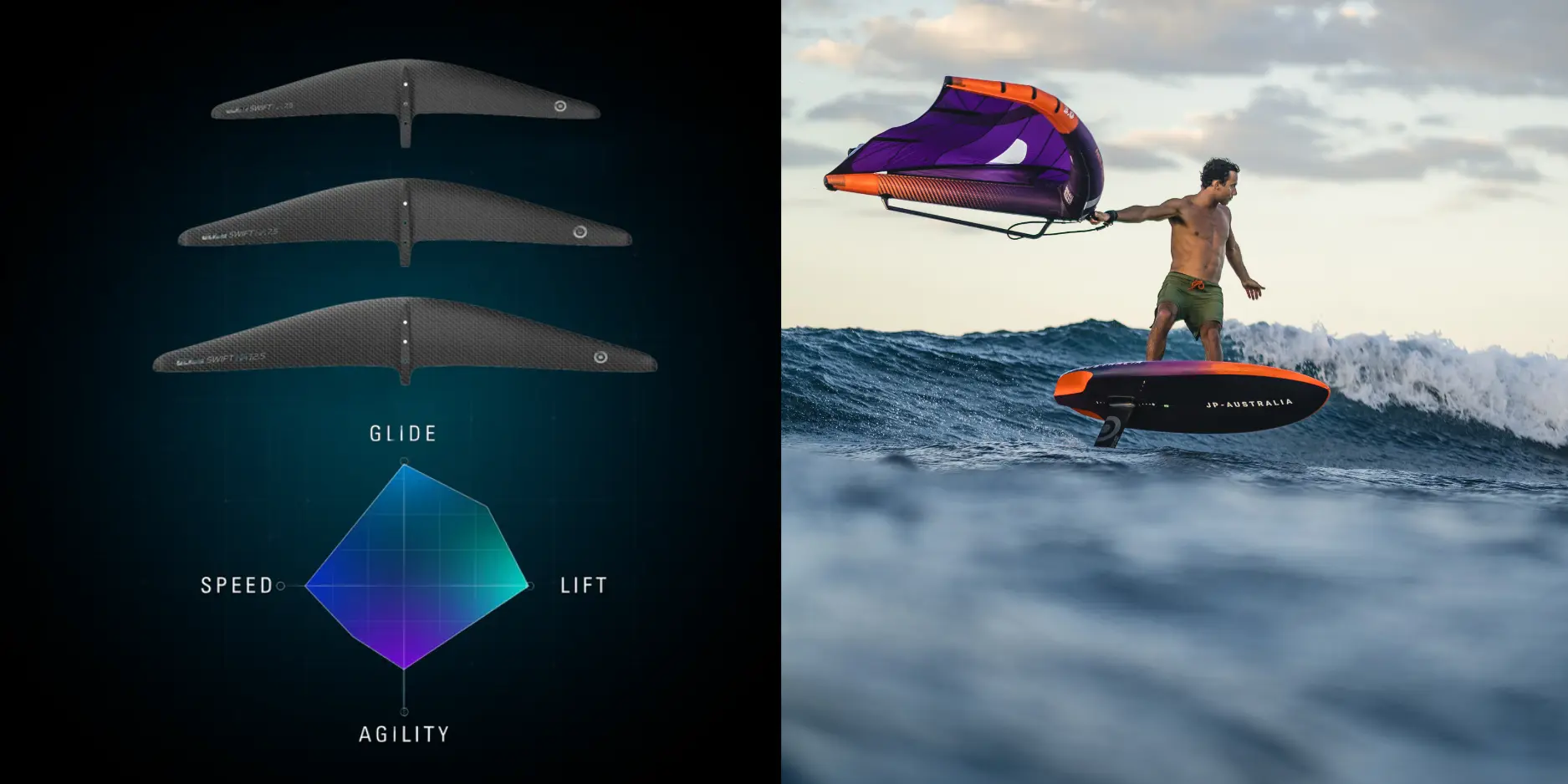
NeilPryde has split the previous Swift family into three distinct characters.
Swift – the all-rounder for most riders
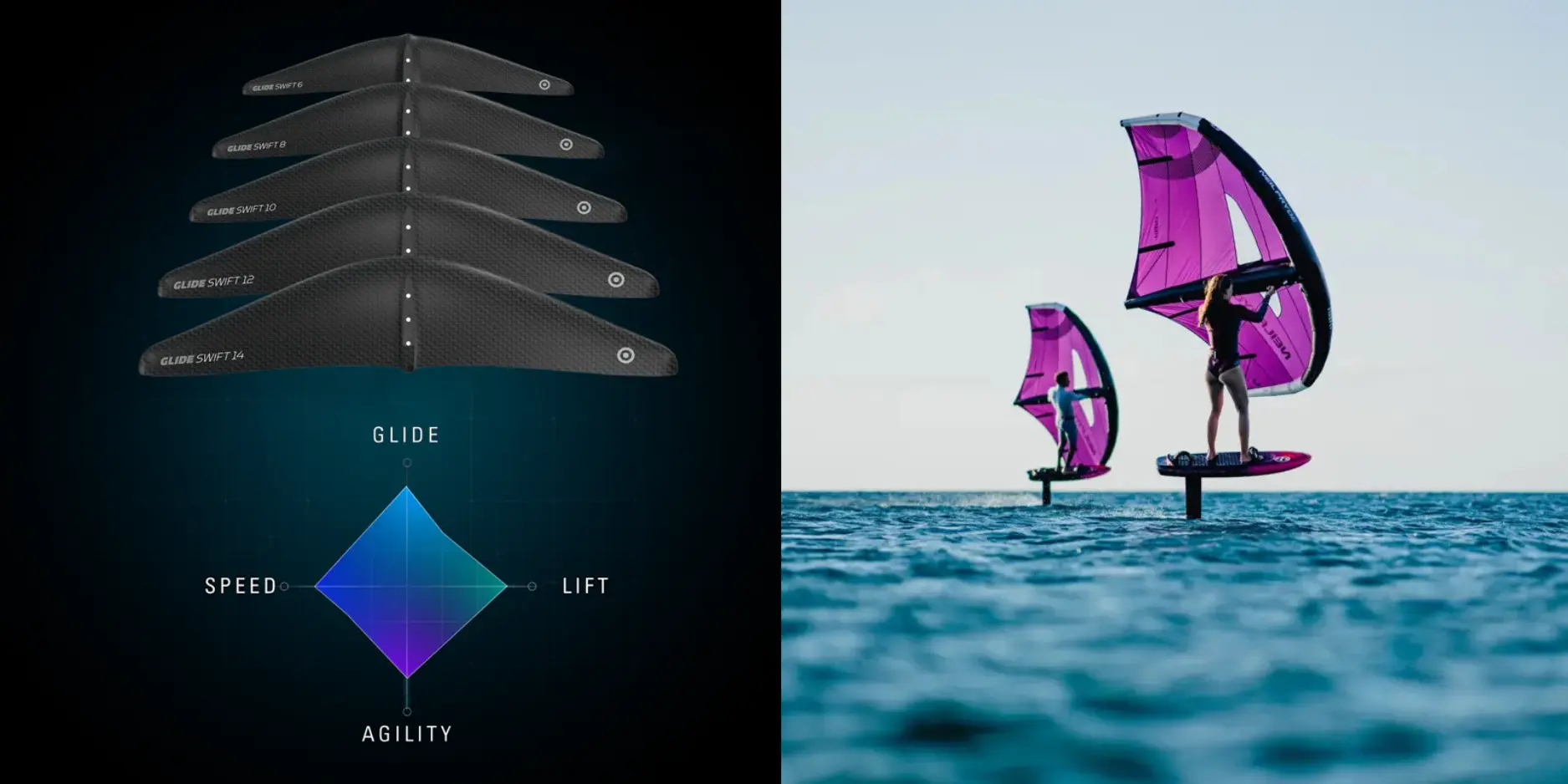
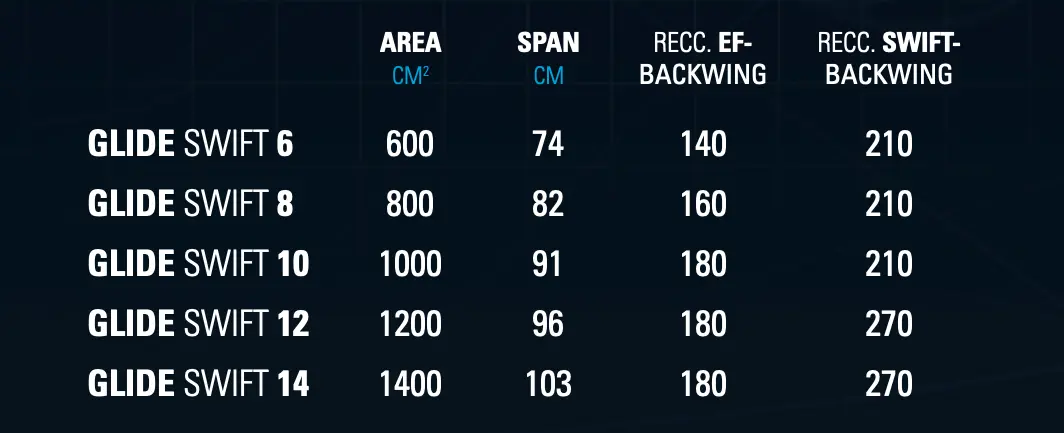
Well balanced between lift and control, smooth turns and an easy take-off. Built to work in almost any conditions – NeilPryde says it suits 95% of wingfoilers. It used to come with 210 and 270 cm² back wings; now you can bring it back to life by swapping in one of the new EF back wings, which makes the Swift livelier, more agile and faster. Swift sizes: 600, 800, 1000, 1200, 1450.
Swift HA – more glide, more flow
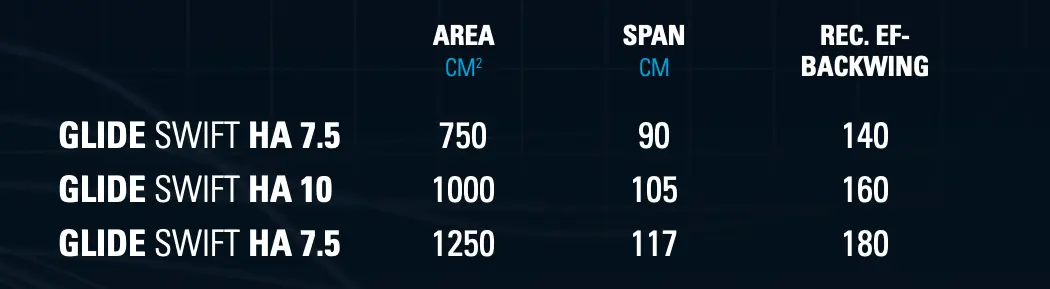
HA stands for high aspect – a slimmer, more elongated shape. It shows its full potential when you depower the wing and ride purely on the foil, in downwind sessions and on choppy seas. This isn't a wing for big waves and heavy sets – it's about flow, distance, and linking one bump to the next with minimal effort. For riders still learning, the HA also offers a more forgiving, stable platform, giving more time on foil and more room to progress. The Swift HA really comes into its own on smaller, wind-swell conditions rather than proper ocean waves, paired with a mid-length board. Swift HA sizes: 750, 1000, 1250.
Swift Style – for jumps and aggressive riding
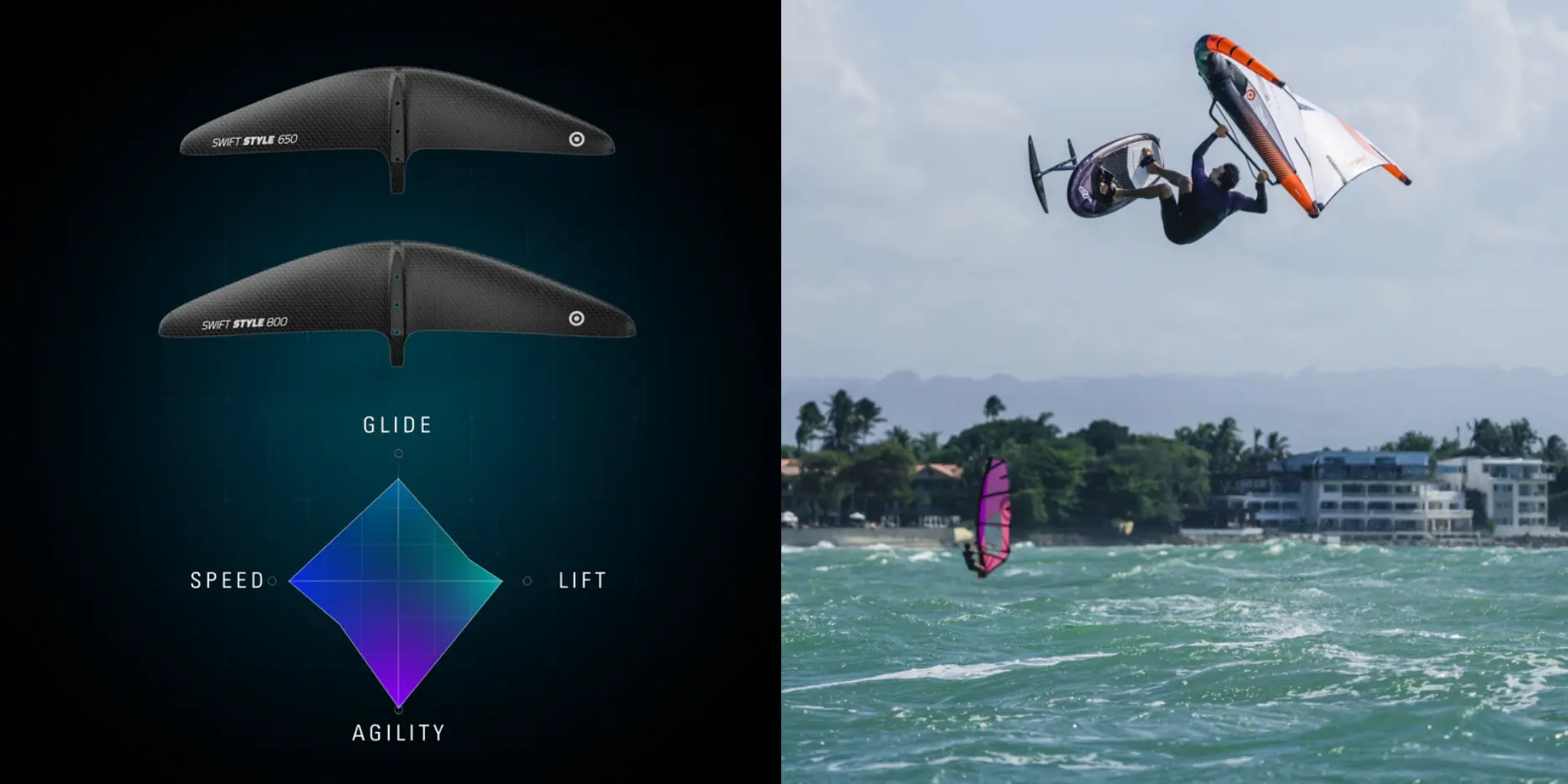
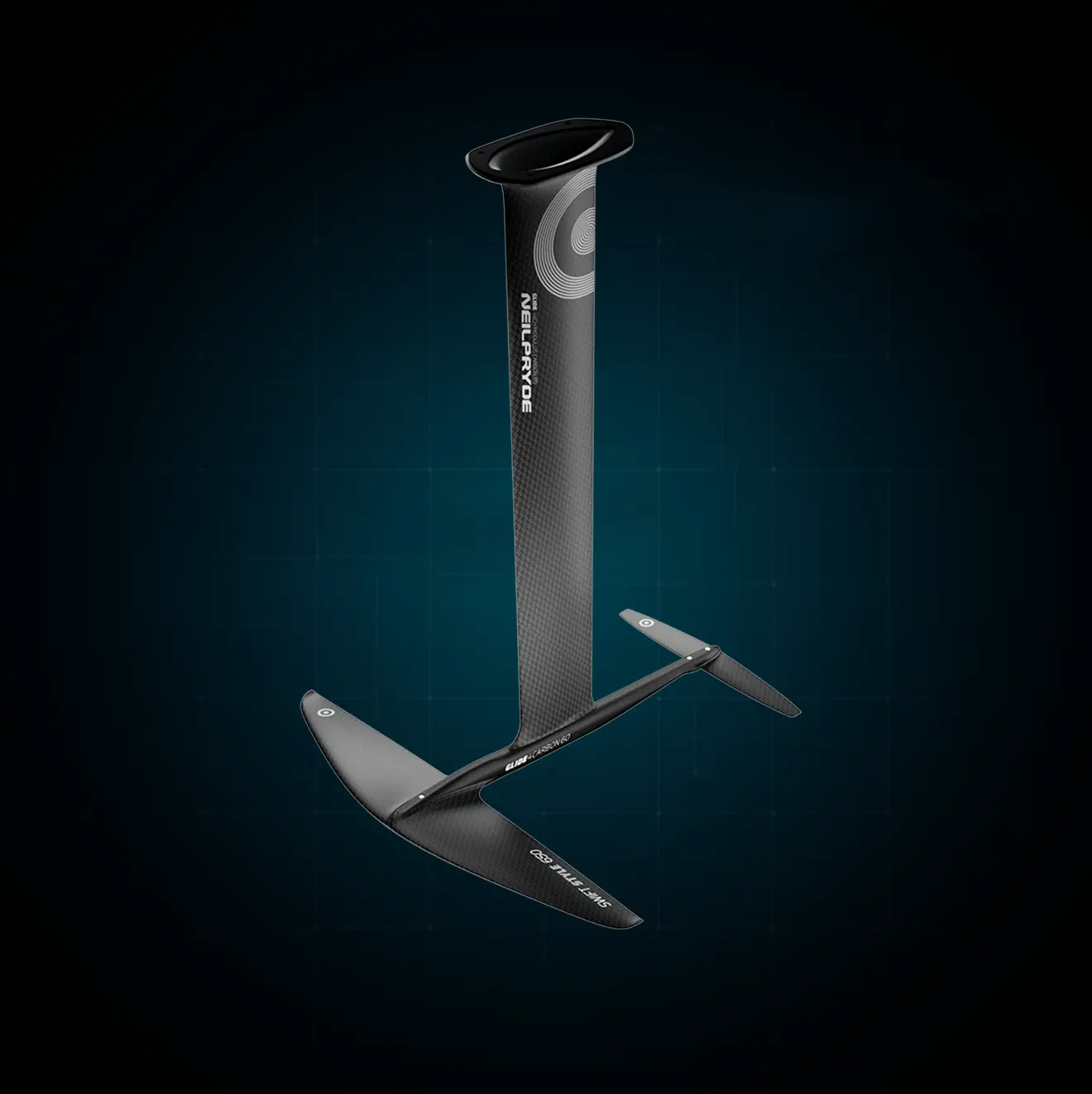
A fast, reactive wing built for big jumps, double pops and tight turns on the wave. More control on the approach, in the air, and on landing. This is the wing that will get your jumps higher and your wave turns more aggressive. Paired with a freestyle board like the JP-Australia F-WINGER, it'll take your tricks to the next level. Swift Style sizes: 650, 800.
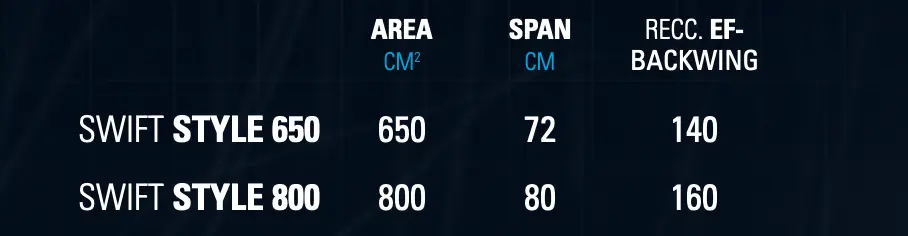
Swift is the solid starting point for most riders, Swift HA if you're after flow and distance, Swift Style if you want to fly high and carve hard.
New EF back wings
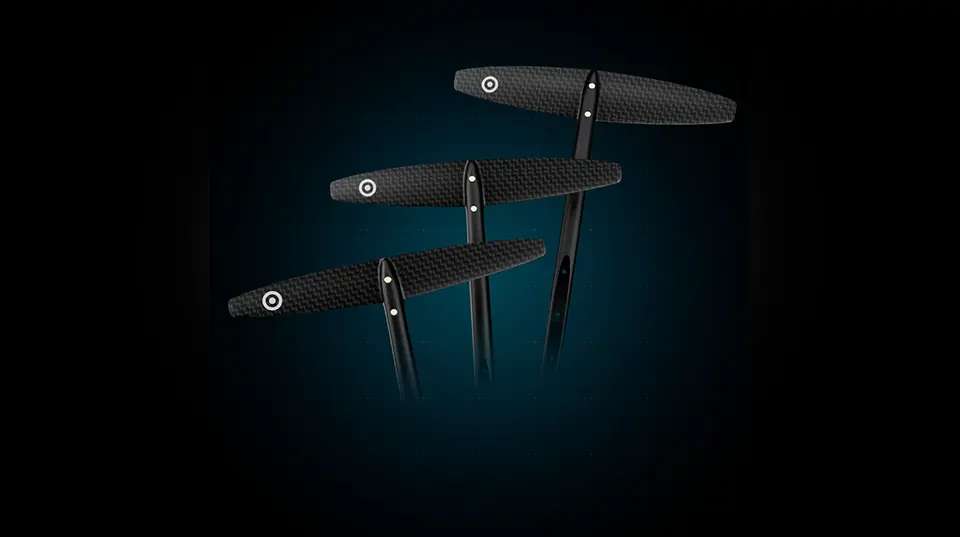
Alongside the refreshed front wings, NeilPryde has launched a new EF back wing range in 140, 160 and 180 sizes. They have a slimmer profile than the previous generation, less drag and better glide efficiency – and the wing responds more livelily to your movements, most noticeably in the smaller sizes.
The size of the EF you choose has a big effect on how the whole set feels. A smaller back wing (say, 140 instead of 180 on the same front wing) means less drag and a more agile, livelier foil – at the cost of a bit of stability. A larger back wing gives you more stability at higher speed and in choppy water, and handles extra load better too – useful when there's simply more mass to lift, for a heavier rider or heavier gear. That means you can fine-tune the same front wing for a specific session, rather than buying a whole extra set.
NeilPryde provides recommended EF pairings for each front wing size:
| Front wing | Recommended EF |
|---|---|
| Swift 600 | 140 |
| Swift 800 | 160 |
| Swift 1000 | 180 |
| Swift 1200 | 180 |
| Swift 1400 | 180 |
| Swift Style 650 | 140 |
| Swift Style 800 | 160 |
| Swift HA 750 | 140 |
| Swift HA 1000 | 160 |
| Swift HA 1250 | 180 |
That's a solid starting point – once you know what you're after (more agility or more calm), you can go a size up or down from there.
If you're already riding an older Glide Swift set, swapping in just the EF back wing is the simplest and cheapest way to feel a real difference in how the foil behaves, without buying a whole new set.
Swift Carbon or Swift Alu
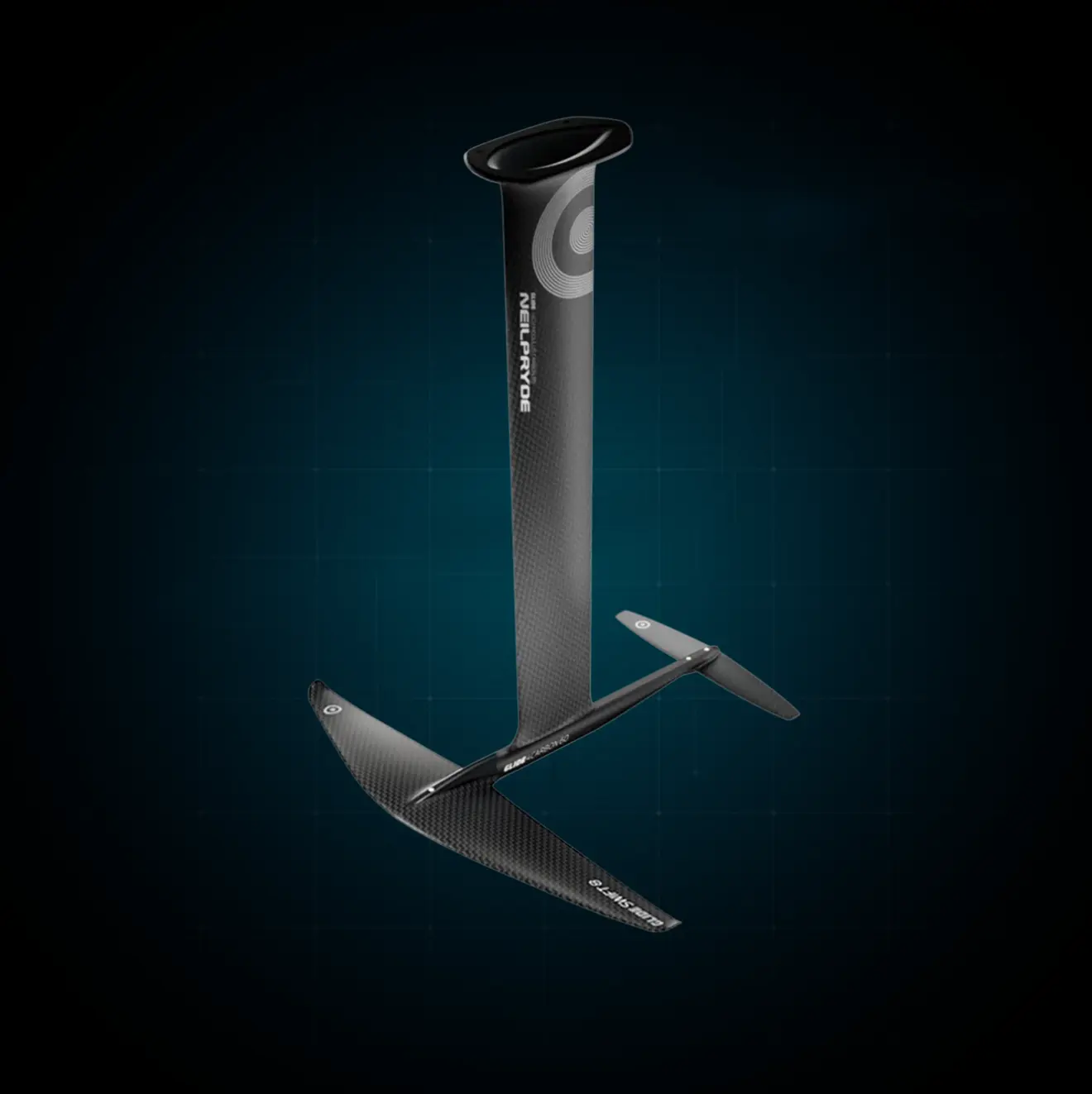
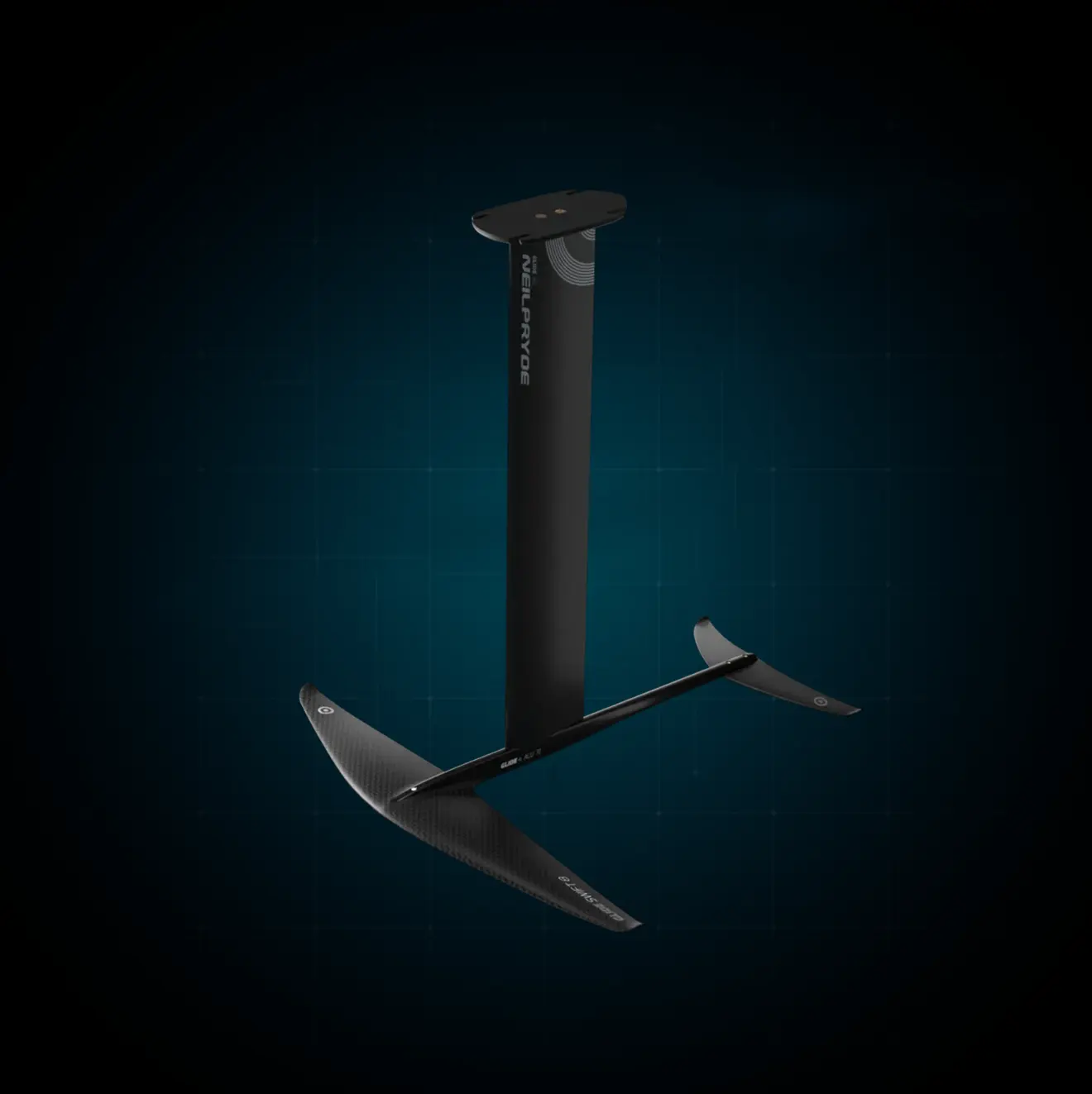
If you're after a complete set, there are two options built around the same Swift front wing:
- Swift Carbon – carbon mast and baseplate, maximum stiffness and a lighter setup. The choice for riders who want to get the most out of the wing.
- Swift Alu – the same feel on the water, at a more accessible price, using components from the older Glide HP platform. A good way to try the new wings without committing to full carbon straight away.
A carbon mast is stiffer than an aluminium one, so it transfers pumping energy more directly, giving a more stable and reactive foil. An aluminium mast dampens that feedback slightly, but still lets you feel the same character of the wing.
Looking for a set built for jumps and aggressive wave riding? Check out the ready-made Swift Style Carbon foil.
And if you're just starting out? Glide Surf HP
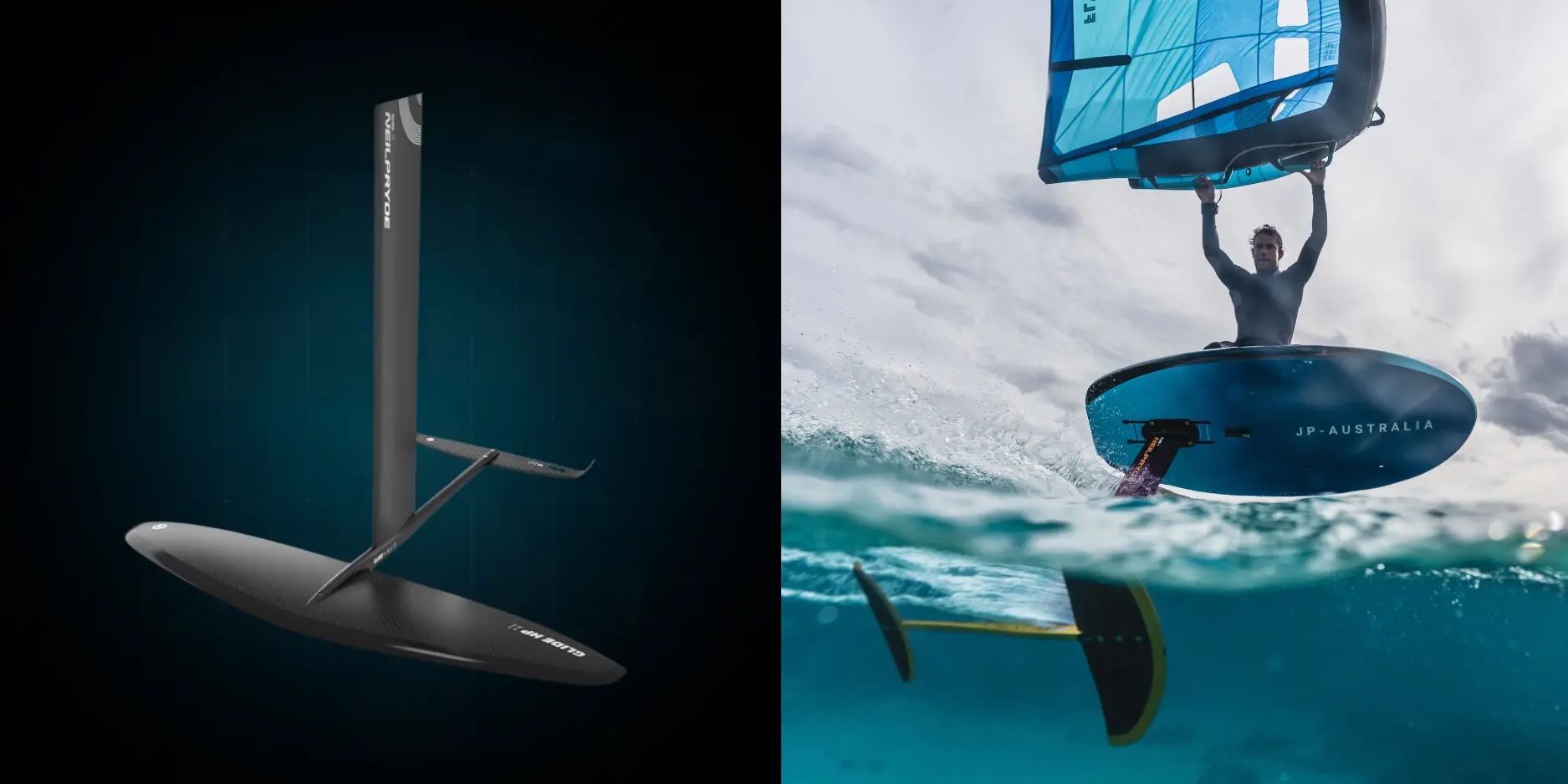
Everything above sits in the higher-performance tier. For riders taking their first steps in wing foiling, NeilPryde has a separate model: the Glide Surf HP.
This is a low-aspect wing, designed specifically for beginners. It comes in large sizes – 1850, 2100 and 2270 cm² – giving an easy take-off and plenty of stability, without the speed that only gets in the way when you're starting out. Paired with a shorter, 75 cm mast, it delivers safe falls and controlled landings. Exactly what you need to master the take-off first, and your first turns after that.
If you're just getting started, that's where to look for your first foil, not in the new Swift range.
In short
The new Glide Foil System means more choice within one compatible platform. Swift, Swift HA and Swift Style give three distinct riding styles for anyone already confident on foil, the EF back wings sharpen up the whole set's performance, and the Glide Surf HP still stands off to the side as a solid choice to start out on.
Not sure which wing suits your style?