


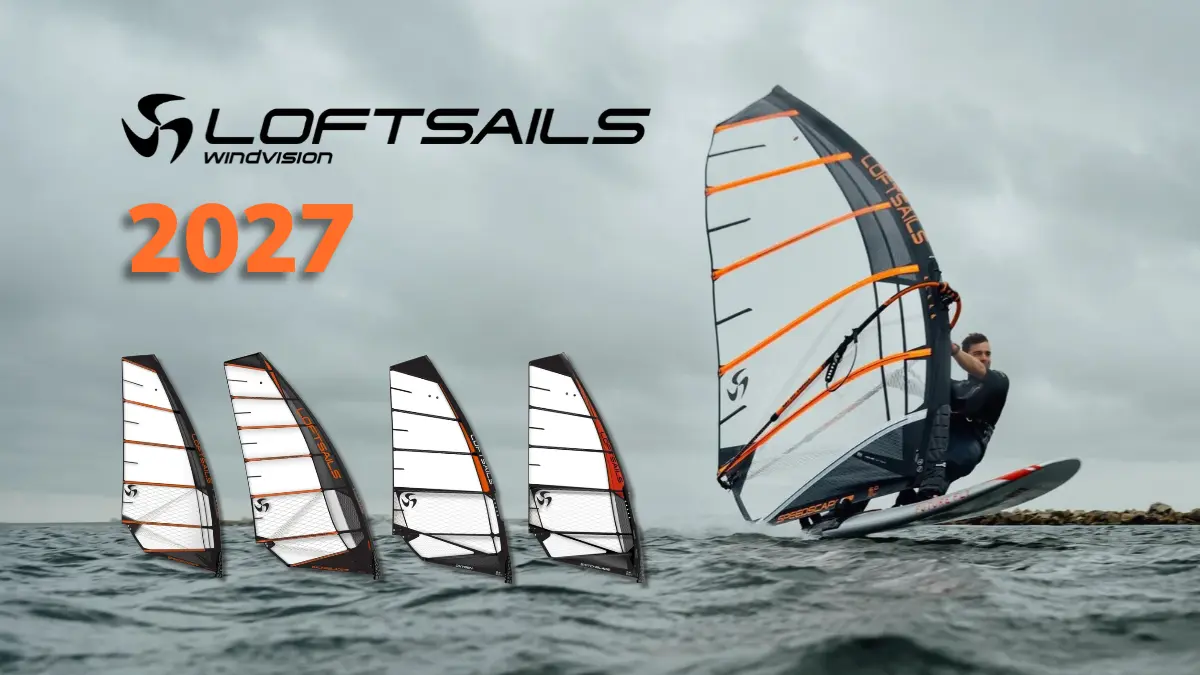
You want to sail fast. But which sail will actually suit your sessions? The new Speedscape 2027 draws on slalom design while staying cam-free. Alongside it, the Loftsails range includes the versatile Oxygen, the three-cam Switchblade and the race-focused Racingblade. Their differences go well beyond cambers: geometry, profile support, materials and the way you want to spend your time on the water all matter.
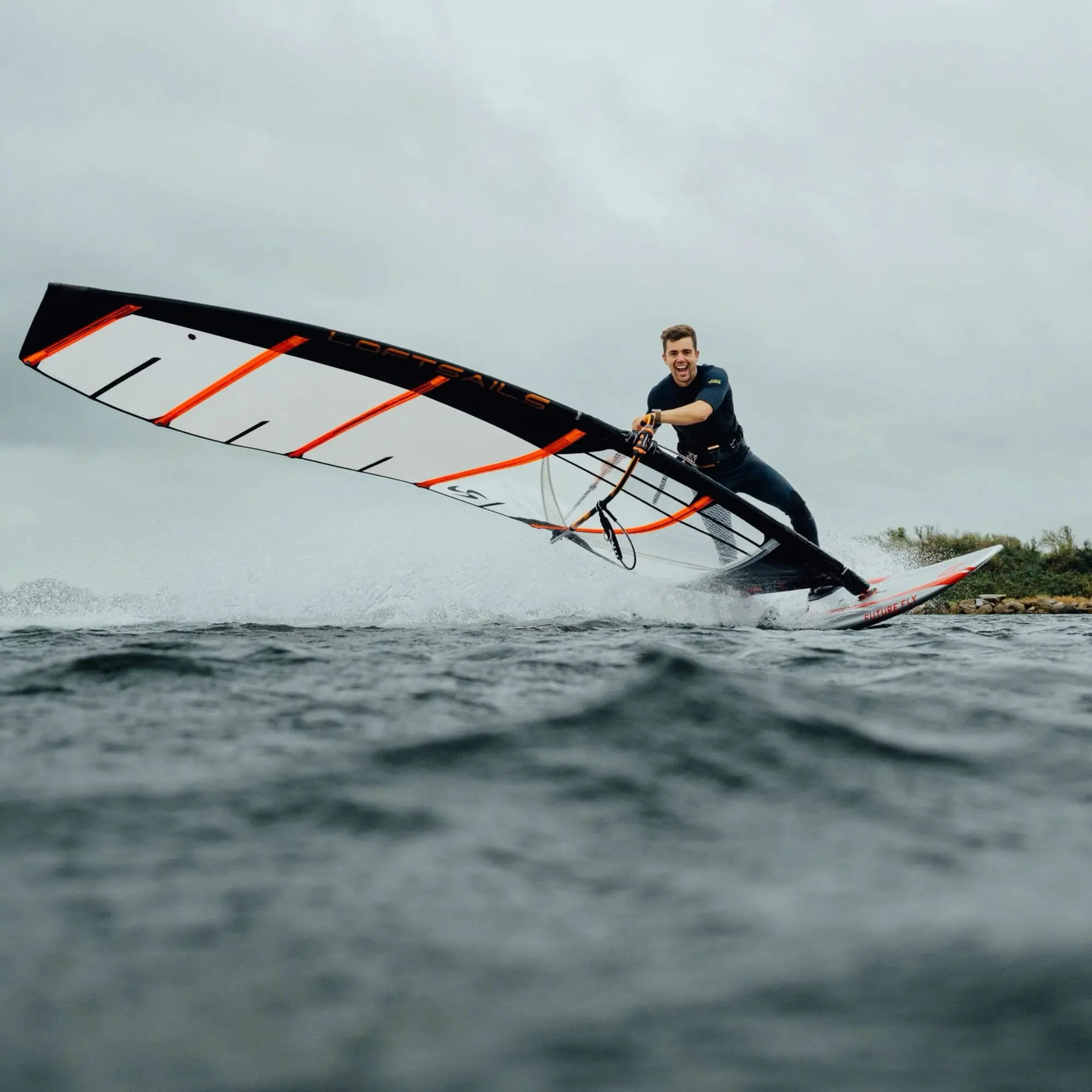
Loftsails Speedscape 2027 during a gybe.
Start with your own sailing. Do you want comfortable, fast freeriding? Are you focusing more on speed while keeping a no-cam rig? Would you prefer a cam-supported profile for powered freerace sessions? Or are you putting together a setup for competitive fin slalom? Those questions lead to four different choices.
This guide compares Oxygen 2026/27, Speedscape 2027, Switchblade 2026/27 and Racingblade 2027. We also explain the standard and HD constructions available for Oxygen and Switchblade, what to check before choosing a size, and how to enquire about Loftsails 2027 pre-orders at EASY-surfshop.
The main differences at a glance
| Model | Cambers | Main use |
|---|---|---|
| Oxygen 2026/27 | None | Versatile freeride / no-cam freerace |
| Speedscape 2027 | None | Slalom-speed sailing on fin and foil |
| Switchblade 2026/27 | 3 | Freerace with a cam-supported profile |
| Racingblade 2027 | 3 | Competitive fin slalom |
Choose the sail's purpose first, then its size and configuration. These four models answer different needs. A sail that suits the way you sail will help you make better use of each session.
Meet the four Loftsails designs
Speedscape 2027: slalom inspiration without cams
Speedscape is the new arrival in this comparison. Based on the Oxygen platform, it has a more focused slalom-speed programme for fin and foil sailing. Its no-cam layout keeps rigging and handling straightforward, while slalom-inspired features help the sail retain an efficient working shape at speed.
Who should consider it? Windsurfers who want to put more attention into acceleration, setup and fast reaches while keeping the practical benefits of a cam-free sail.
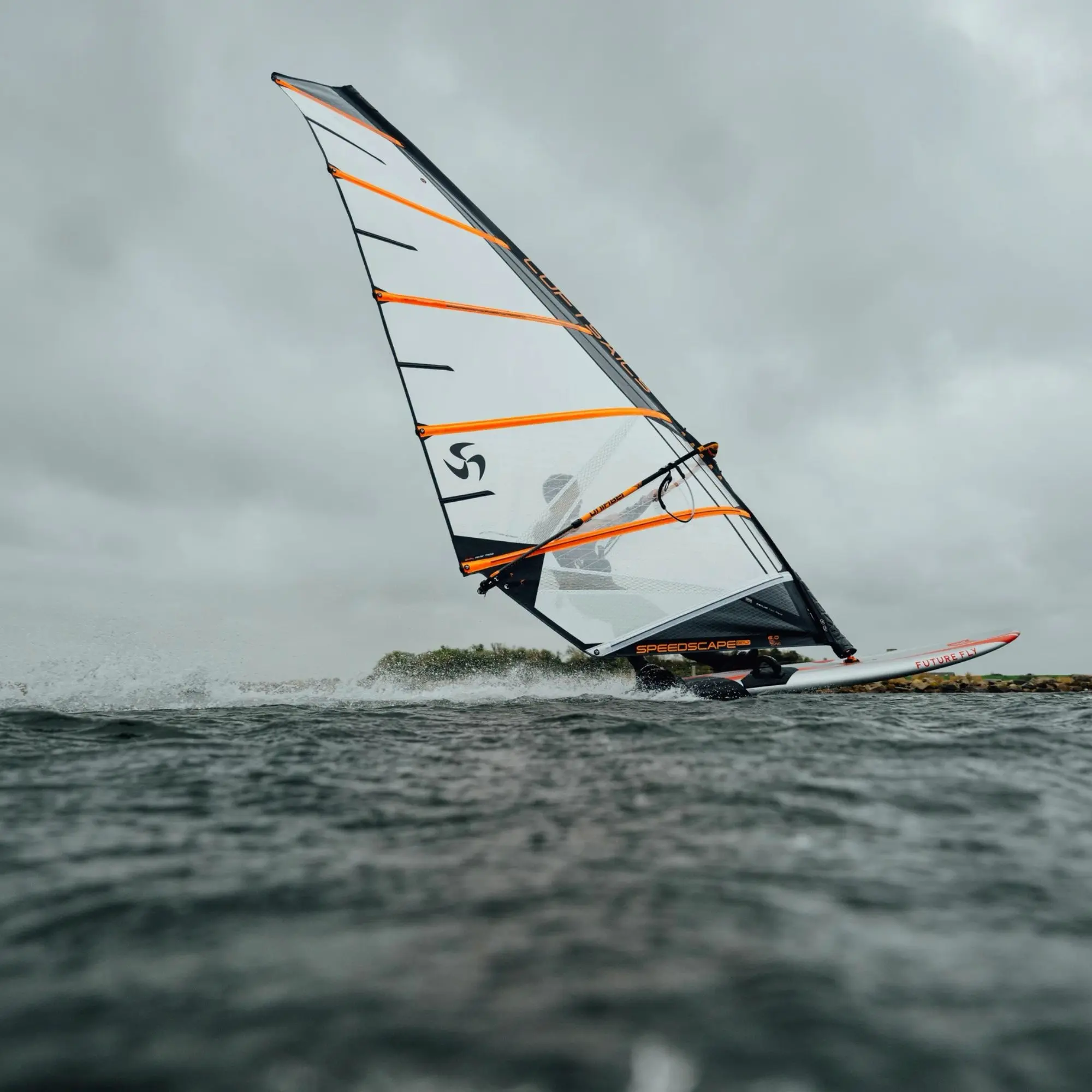
The slim outline of the Loftsails Speedscape 2027.
A higher aspect ratio than Oxygen
Speedscape has a higher aspect ratio, giving it slimmer proportions. Loftsails describes this geometry as improving aerodynamic efficiency at speed and allowing the upper leech to open more. A deeper lower profile is designed to produce drive and acceleration in lighter wind.
This is a useful distinction between two no-cam designs. The absence of cambers tells you about part of the sail's construction, but geometry and profile support also shape its character.
How Speedscape supports its profile
Dual Luff Panels help define the sail's forward profile and maintain its shape as load and trim change. Tubed battens support stability, while the Cross Batten connects the boom area to the batten framework to help manage lower-leech twist.
The construction combines Bi-Ply and X-Ply without conventional monofilm panels. Kevlar reinforcements spread load from the clew, and side-alternating batten pockets help balance the profile between tacks.
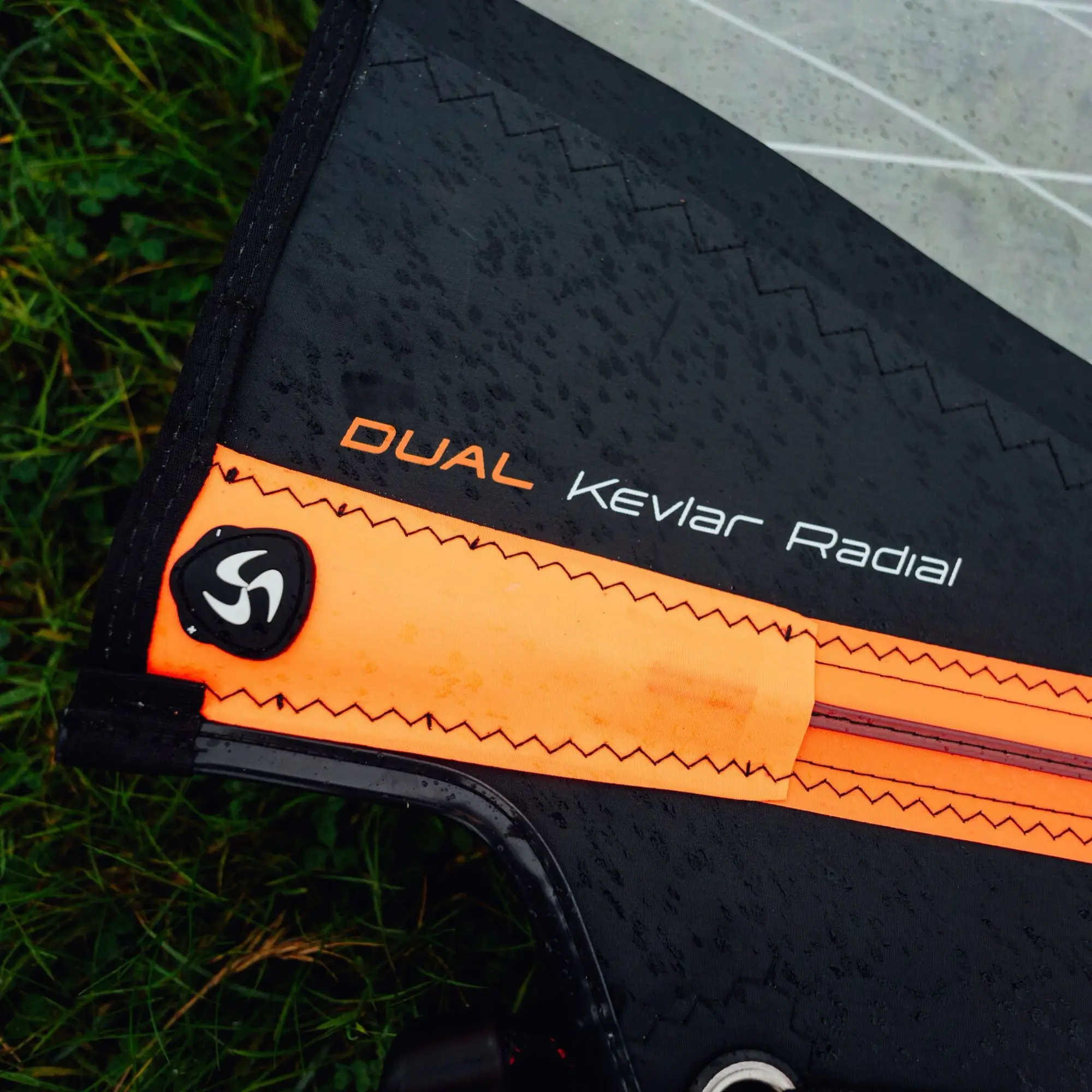
Kevlar reinforcement detail on the Speedscape 2027.
Trim still matters
Speedscape responds to downhaul and outhaul adjustments. Two clew eyelets give another way to tune its character: the upper position produces a fuller profile and firmer leech, while the lower position allows more twist for stronger-wind control.
A no-cam layout simplifies handling, but there is still scope to refine your setup. Start with the recommended settings and make one change at a time so you can recognise its effect.
Speedscape 2027 sizes: 4.1 / 4.7 / 5.4 / 6.0 / 6.7 / 7.4 / 8.2 m².
Speedscape 2027
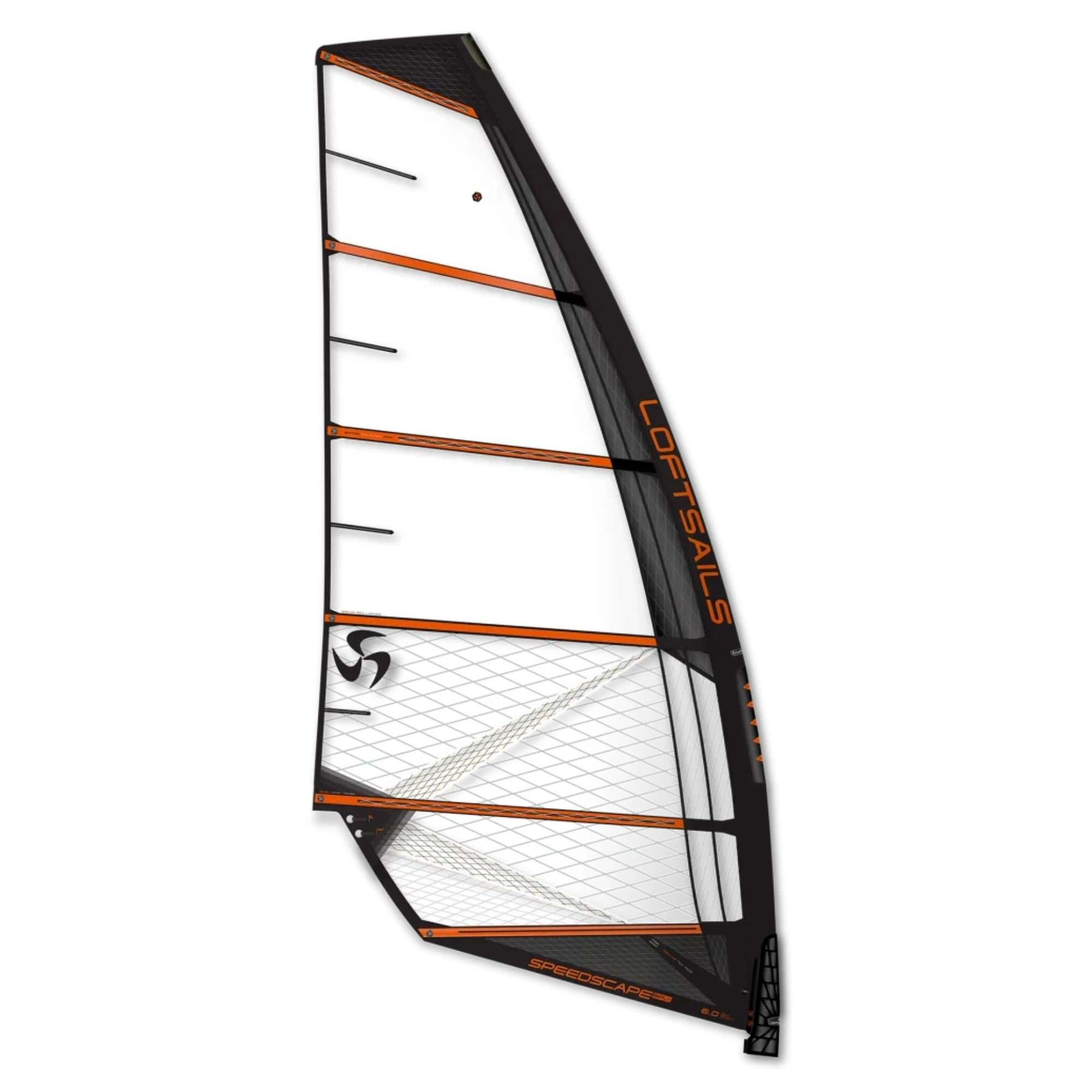
No-cam / fin & foil
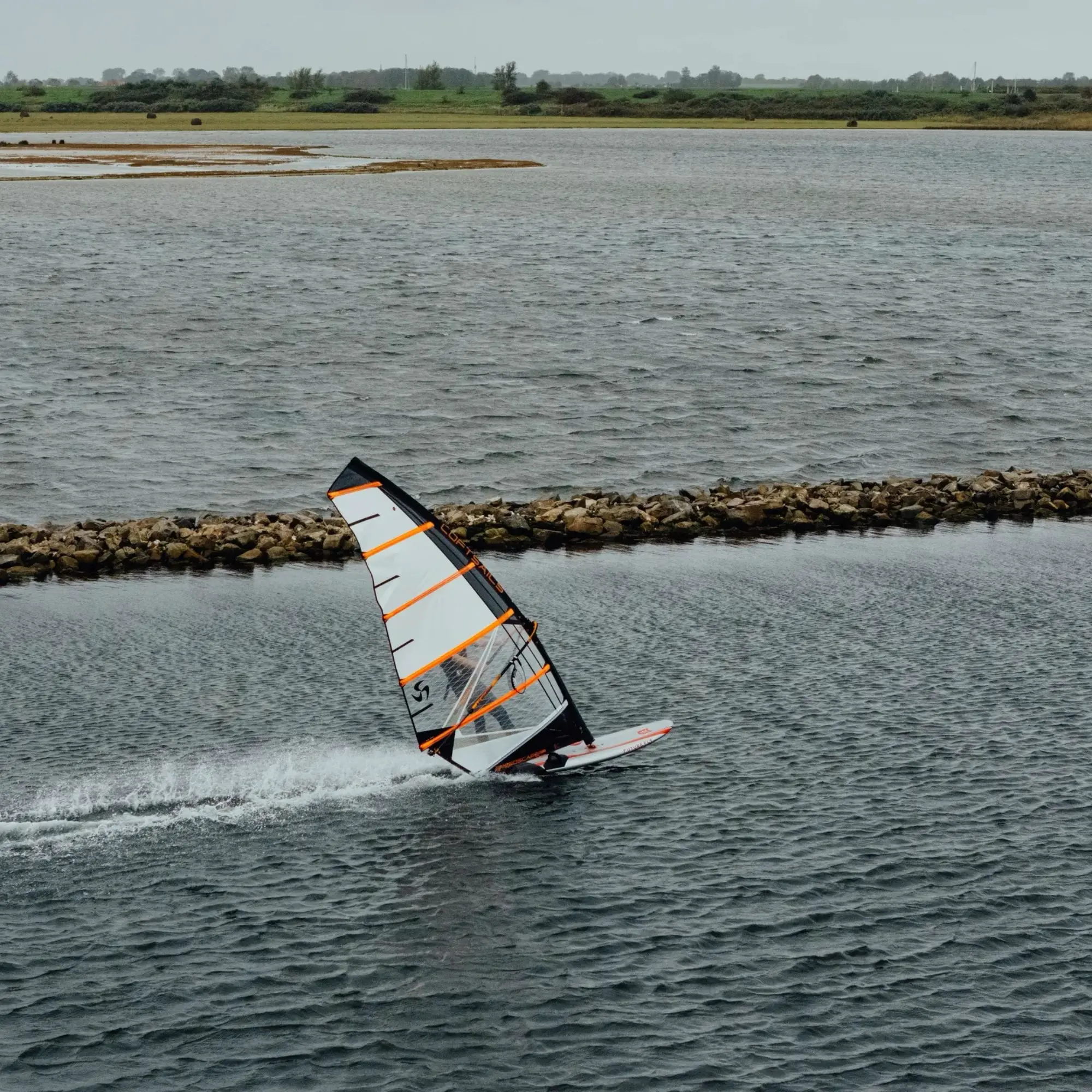
An aerial view of Speedscape 2027 in fin sailing use.
Oxygen 2026/27: fast sailing for everyday sessions
Oxygen combines no-cam freeride handling with freerace performance. Its brief covers smooth power delivery, predictable handling and the ability to enjoy long, fast reaches without making every session a tuning exercise.
It also uses tubed battens, a Cross Batten and two clew eyelets. Versatility does not mean giving up the features that support stability and a useful tuning range.
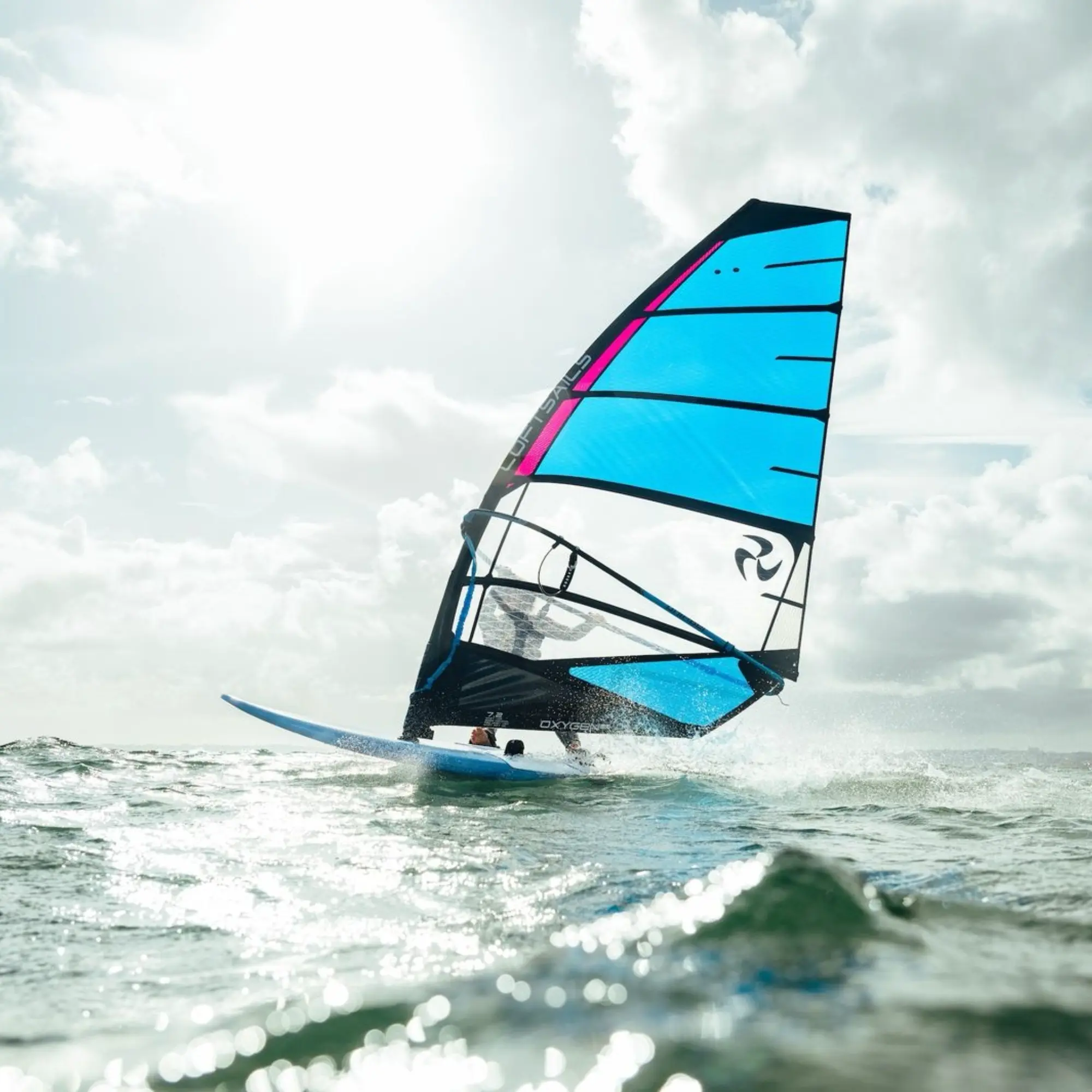
Loftsails Oxygen HD Blue 2026/27 on the water.
Oxygen is a sensible starting point if you want a sail for regular sessions that balances speed with straightforward handling. Consider Speedscape when you deliberately want to move the emphasis towards slalom-speed sailing. Your priorities matter as much as your experience level.
Oxygen White and HD: the difference is in the materials
Standard Oxygen White combines Bi-Ply body panels with X-Ply in the window and reinforced areas. The layout balances weight, durability and shape stability.
Oxygen HD Blue uses a full X-Ply construction, with durability in frequent, demanding use as a priority. The main distinction is the body material: standard Oxygen also has an X-Ply window.
Both retain the same freeride/freerace purpose. If you sail frequently or put more wear on your equipment, HD construction may be worth considering. It is a material choice rather than a separate performance category.
Oxygen White 2026/27
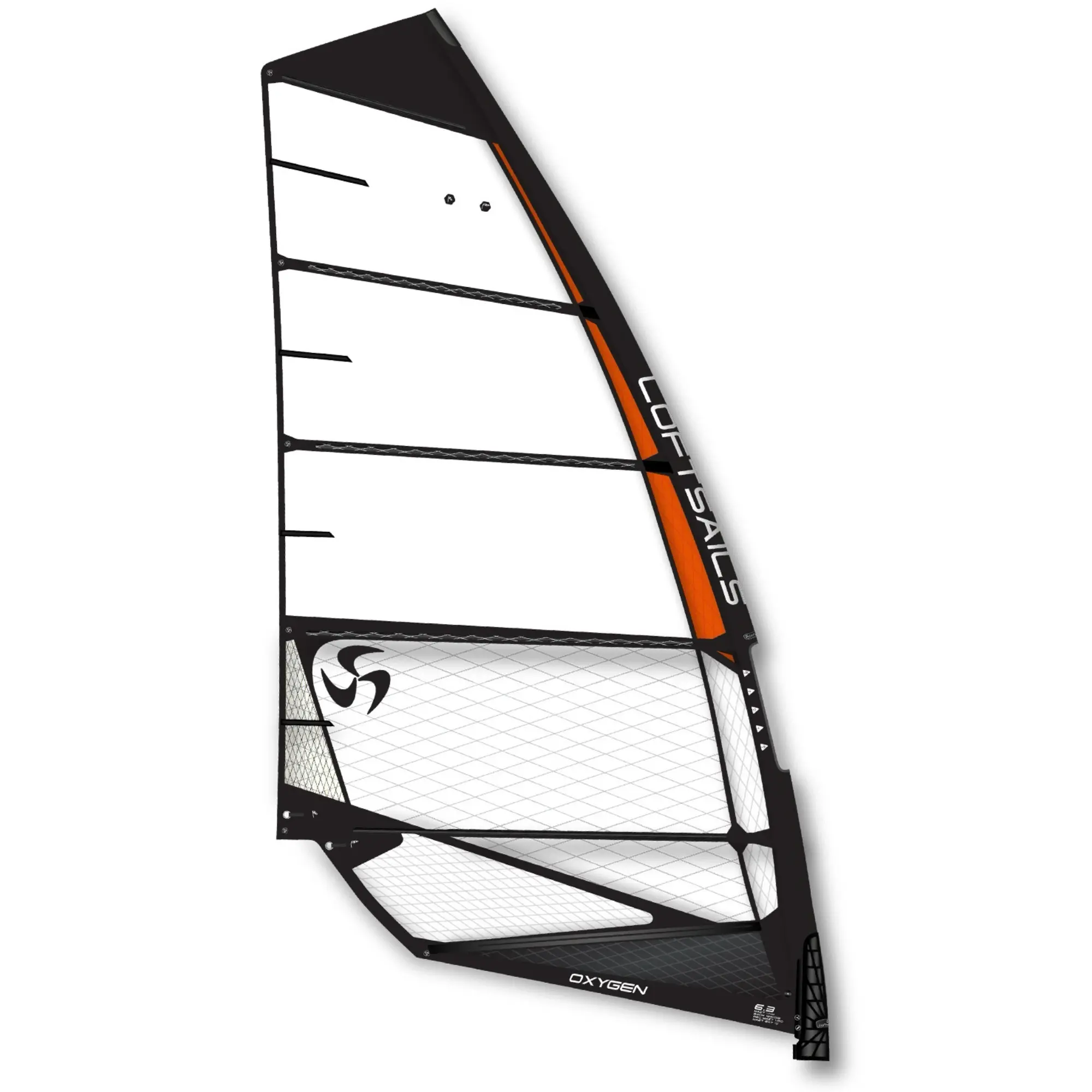
Standard White
Oxygen HD Blue 2026/27
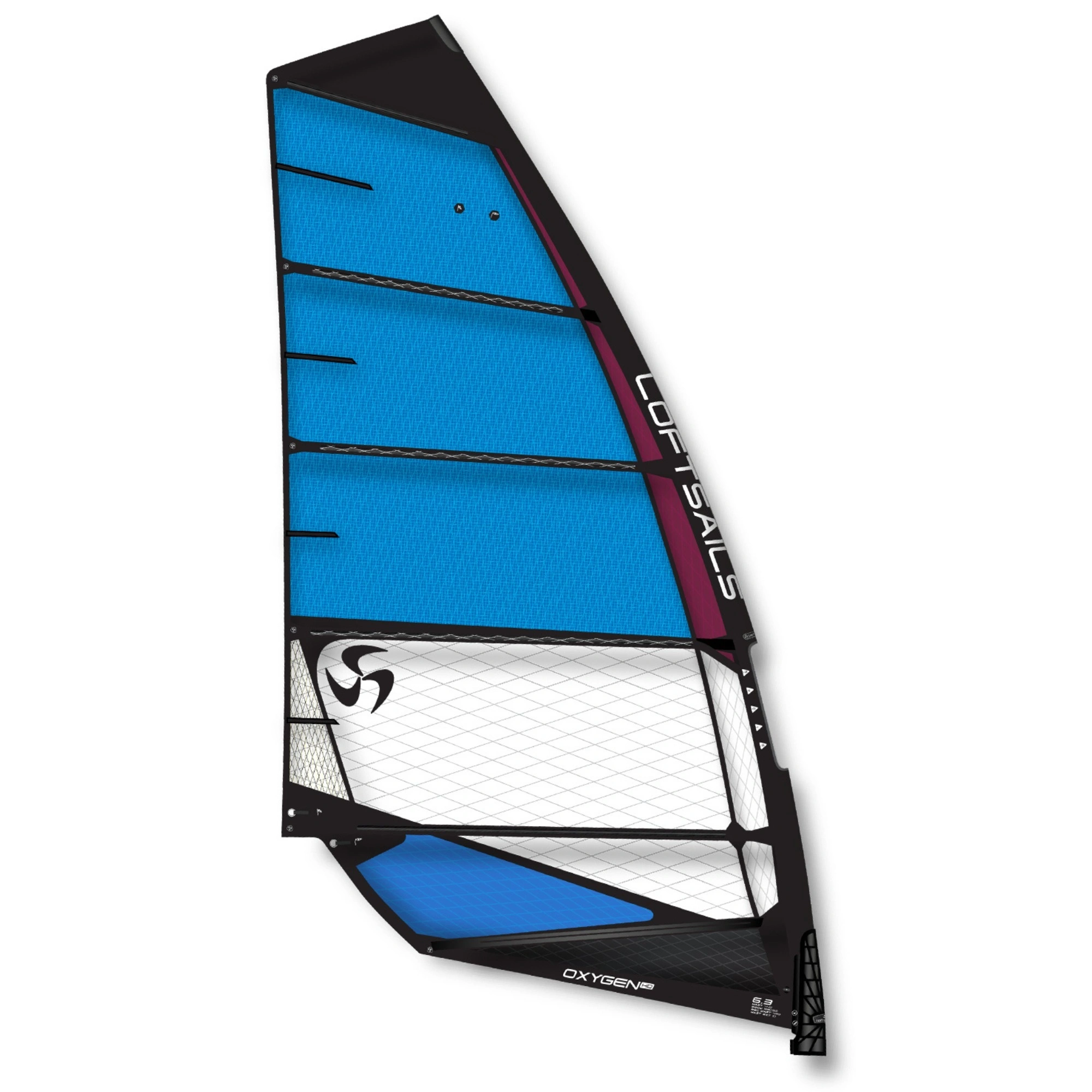
HD Blue
Switchblade 2026/27: three-cam freerace
Do you enjoy sailing fully powered, loading the fin and holding speed over long reaches? Switchblade is designed for sailors who want a cam-supported profile with more accessible handling than a dedicated race sail.
Its design draws on Racingblade. Three TekCam 3 cambers support the profile, and tubed battens help it hold its shape under load. Its freerace programme makes it a natural partner for fast freerace and fin slalom boards.
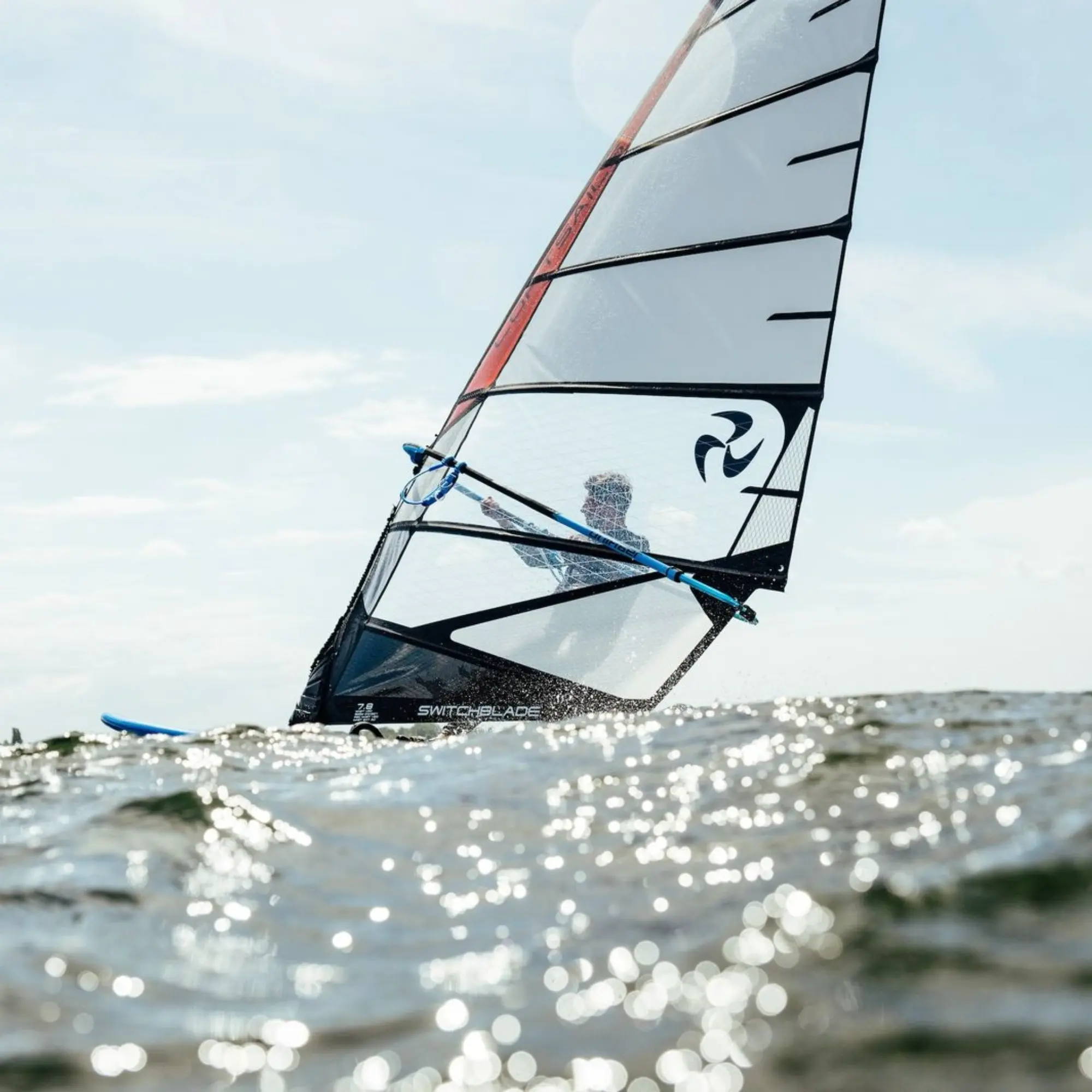
Switchblade White 2026/27 in powered fin sailing.
What does that construction offer?
When powered, the sail is designed to maintain its working shape and deliver consistent forward drive. A higher aspect ratio, shorter boom lengths and revised batten angles support its balance. The mast pocket remains narrower than in full slalom designs, reflecting its balance between race-derived stability and freerace practicality.
Switchblade asks for an understanding of trim and cam handling. Consider it when you want to move towards powered freerace sailing and are ready to spend time setting up the rig.
Switchblade standard and HD: the same programme, different materials
Standard White combines an X-Ply window with Bi-Ply body panels. HD Blue uses an X-Ply laminate layout, including quad-axial upper panels, with durability under frequent use as a priority.
Both have three cambers and the same freerace programme. Standard already includes a reinforced X-Ply window. Choose HD for its material construction and the durability you want from your equipment; the HD label does not automatically mean more speed.
Switchblade 2026/27 sizes: 5.3 / 5.8 / 6.3 / 6.8 / 7.3 / 7.8 / 8.5 m².
Switchblade White 2026/27
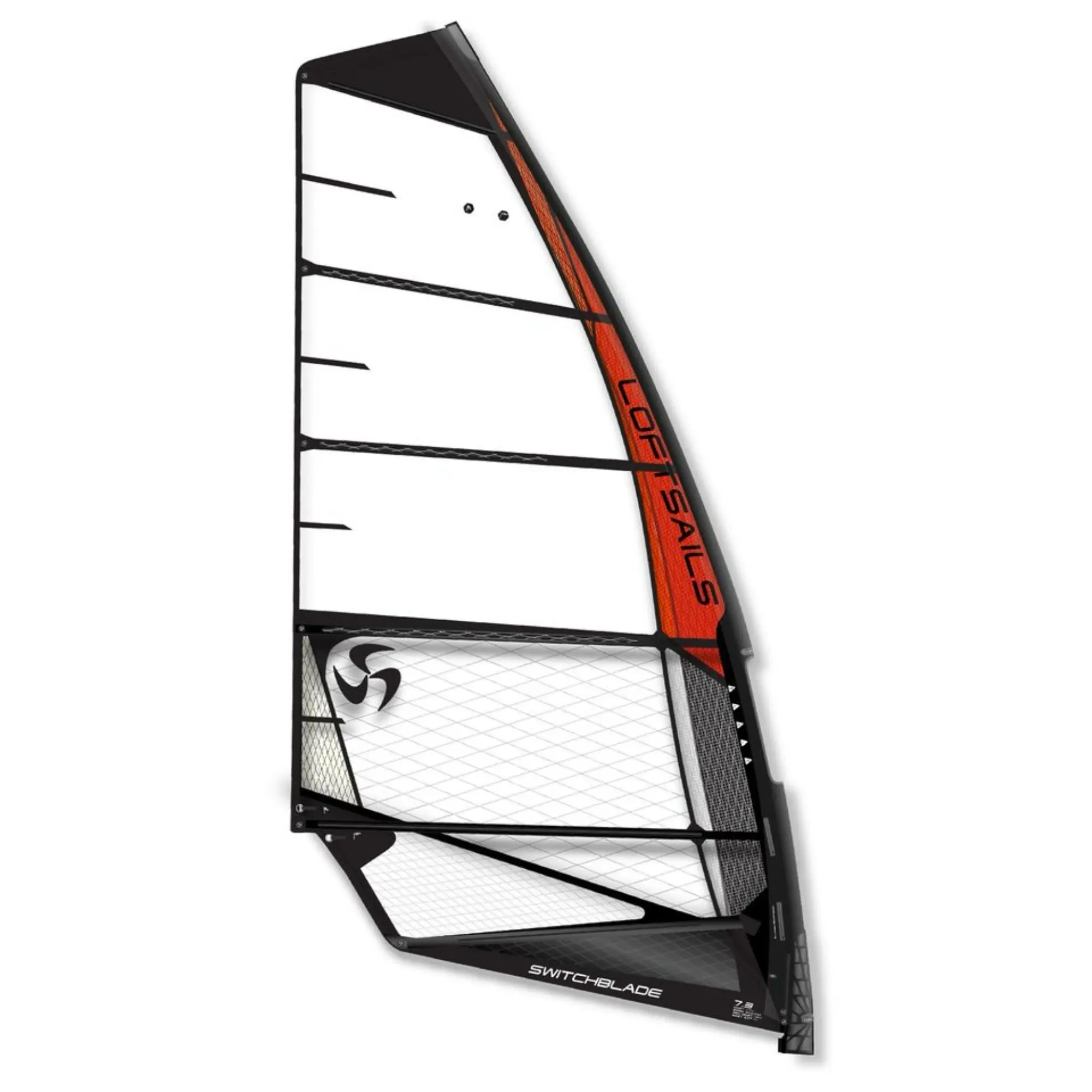
Standard White
Switchblade HD Blue 2026/27
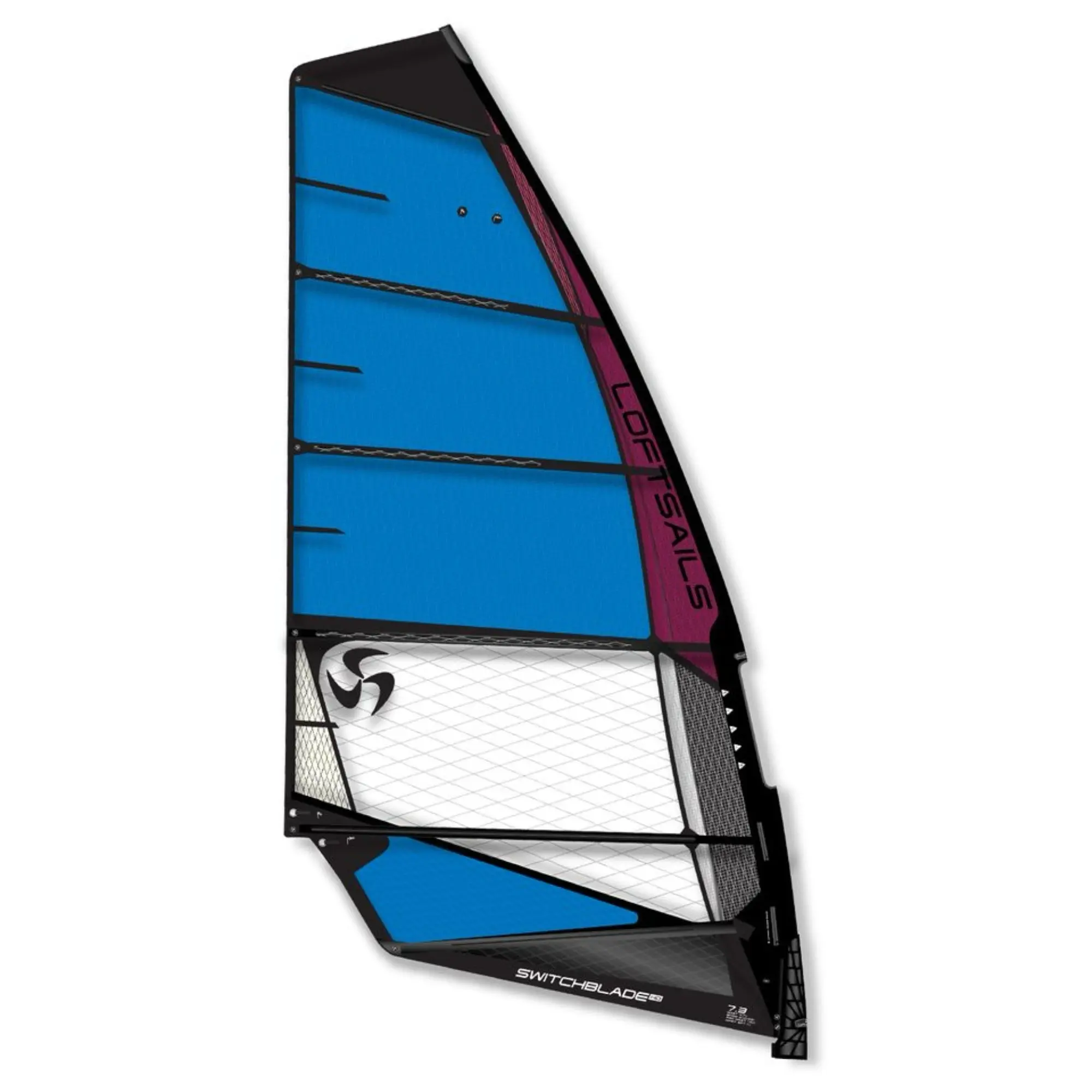
HD Blue
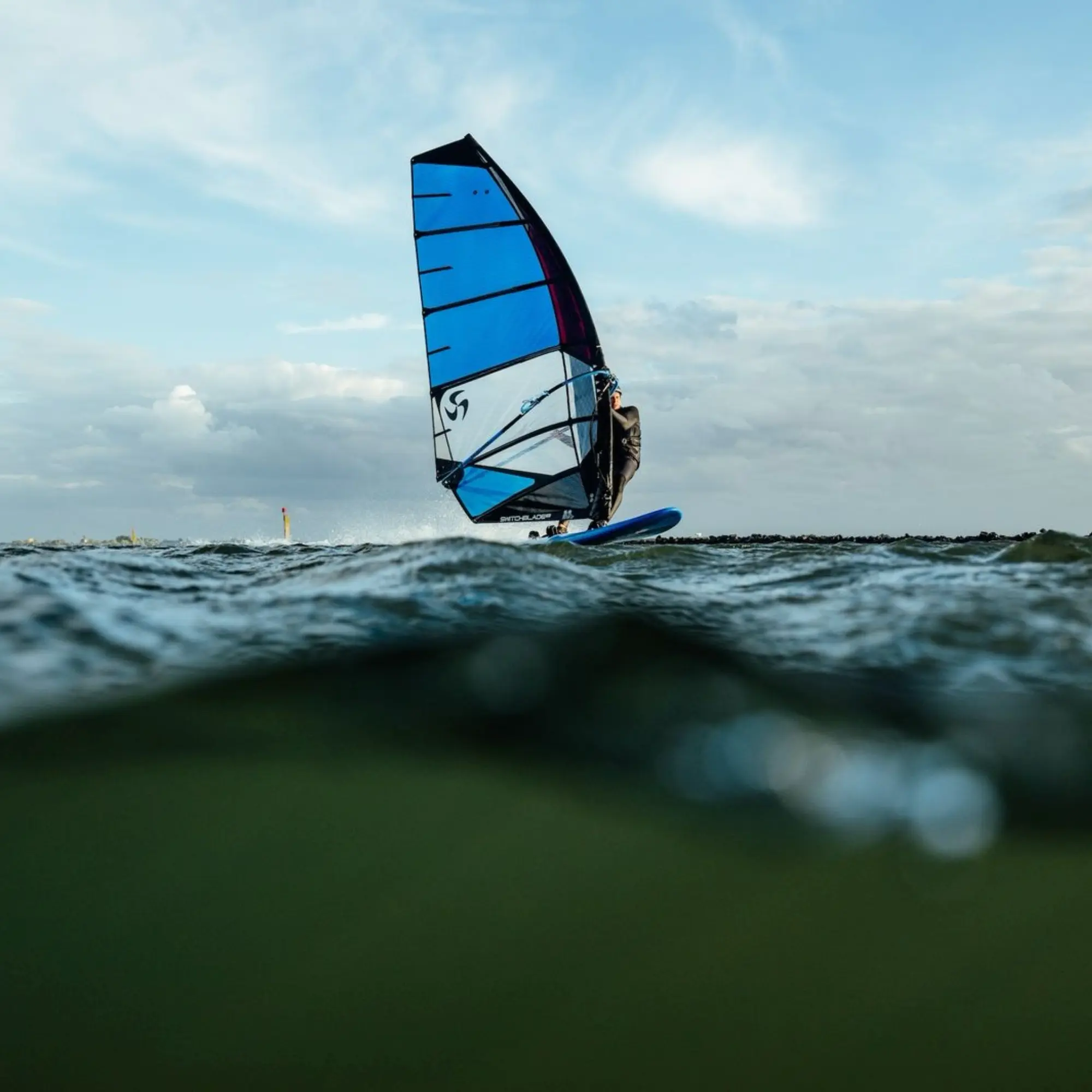
Switchblade HD Blue 2026/27 during a fin session.
Racingblade 2027: built around competitive fin slalom
Racingblade is a specialised fin slalom race sail developed to meet PWA requirements. Its priorities are acceleration, profile stability under sustained load and maintaining speed throughout a race. Every size has seven battens and three TekCam 3 cambers.
For 2027, the geometry, luff curves and batten angles have been revised. A deeper profile below the boom is designed to improve low- and mid-range power, while a lower centre of effort supports balance. The lower leech holds more tension as the upper section opens more freely.
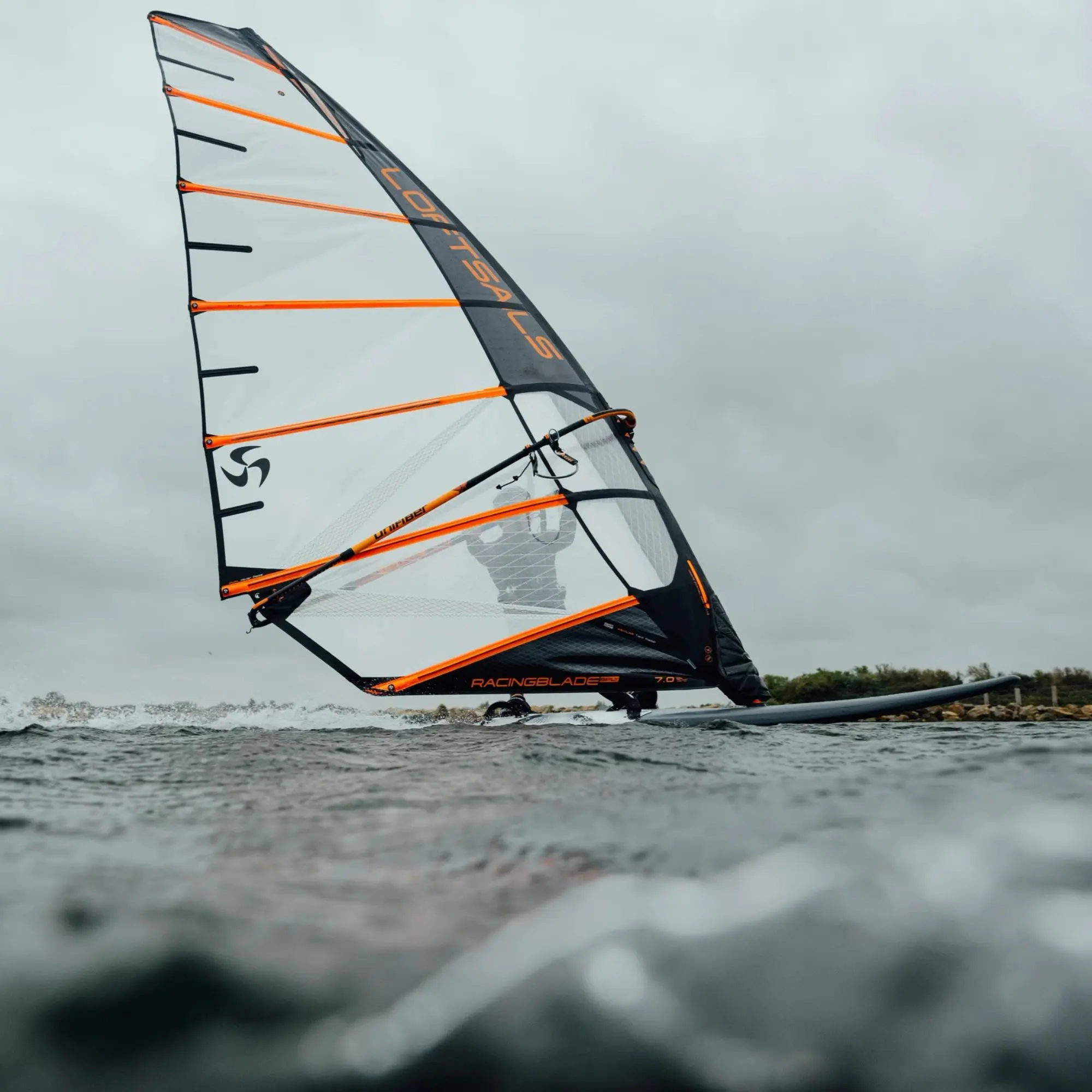
Racingblade 2027 showing its fin slalom race profile.
Cambers and carbon tube battens
TekCam 3 supports the profile and cam rotation. Carbon tube battens allow precise control of the working shape, while the Metallic Cam Interface protects the cam contact points against wear. These features serve consistent performance at racing speeds and loads.
The benefits need to be considered as part of the whole setup. Racingblade is most relevant to experienced slalom sailors who select their board and fin carefully and pay close attention to rig trim.
A cammed sail also adds steps to rigging and adjustment. If straightforward handling is high on your list, compare Oxygen and Speedscape carefully before choosing a dedicated race design.
Racingblade 2027 sizes: 5.2 / 5.7 / 6.3 / 7.0 / 7.7 / 8.4 / 9.1 m².
Racingblade 2027
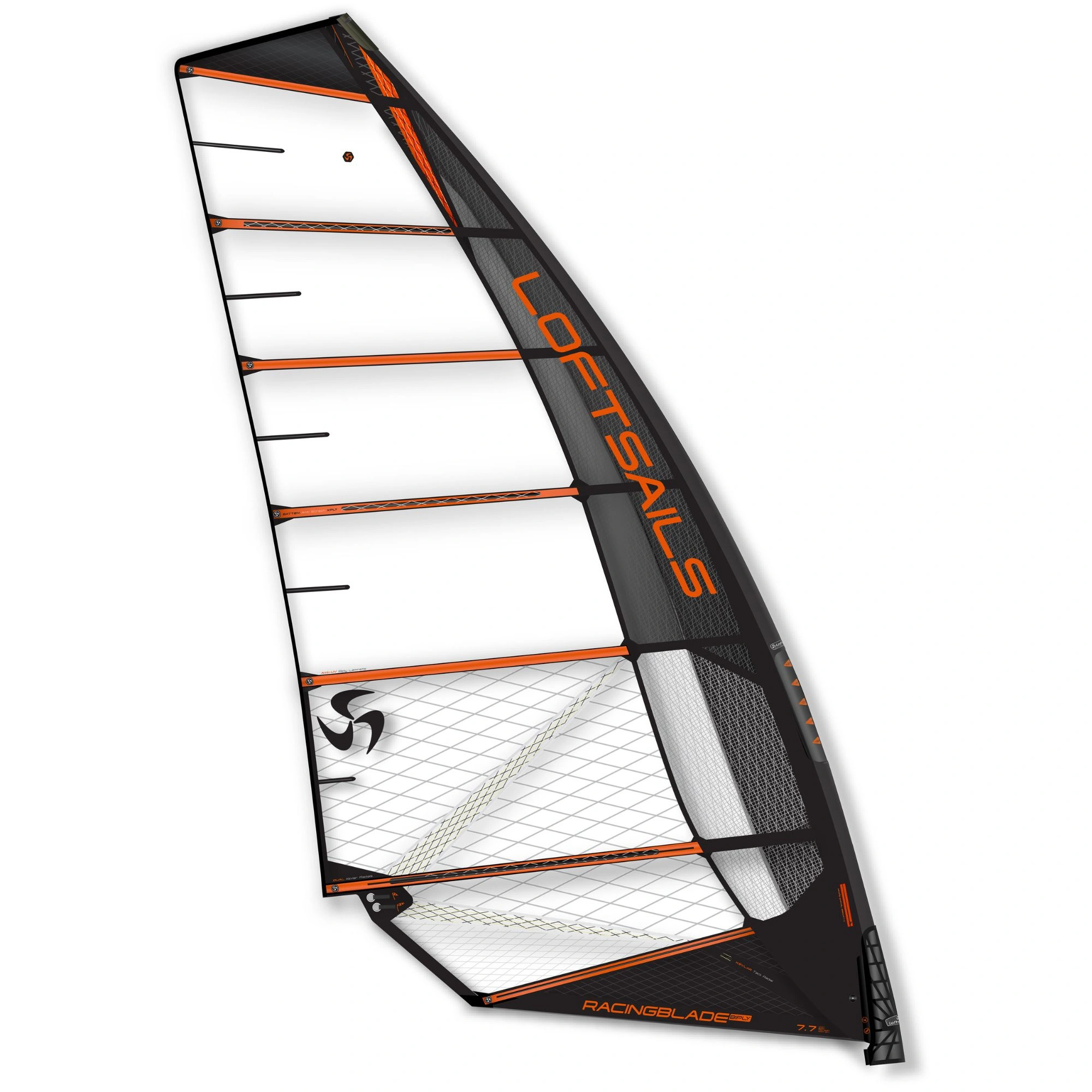
Fin slalom / 3-cam
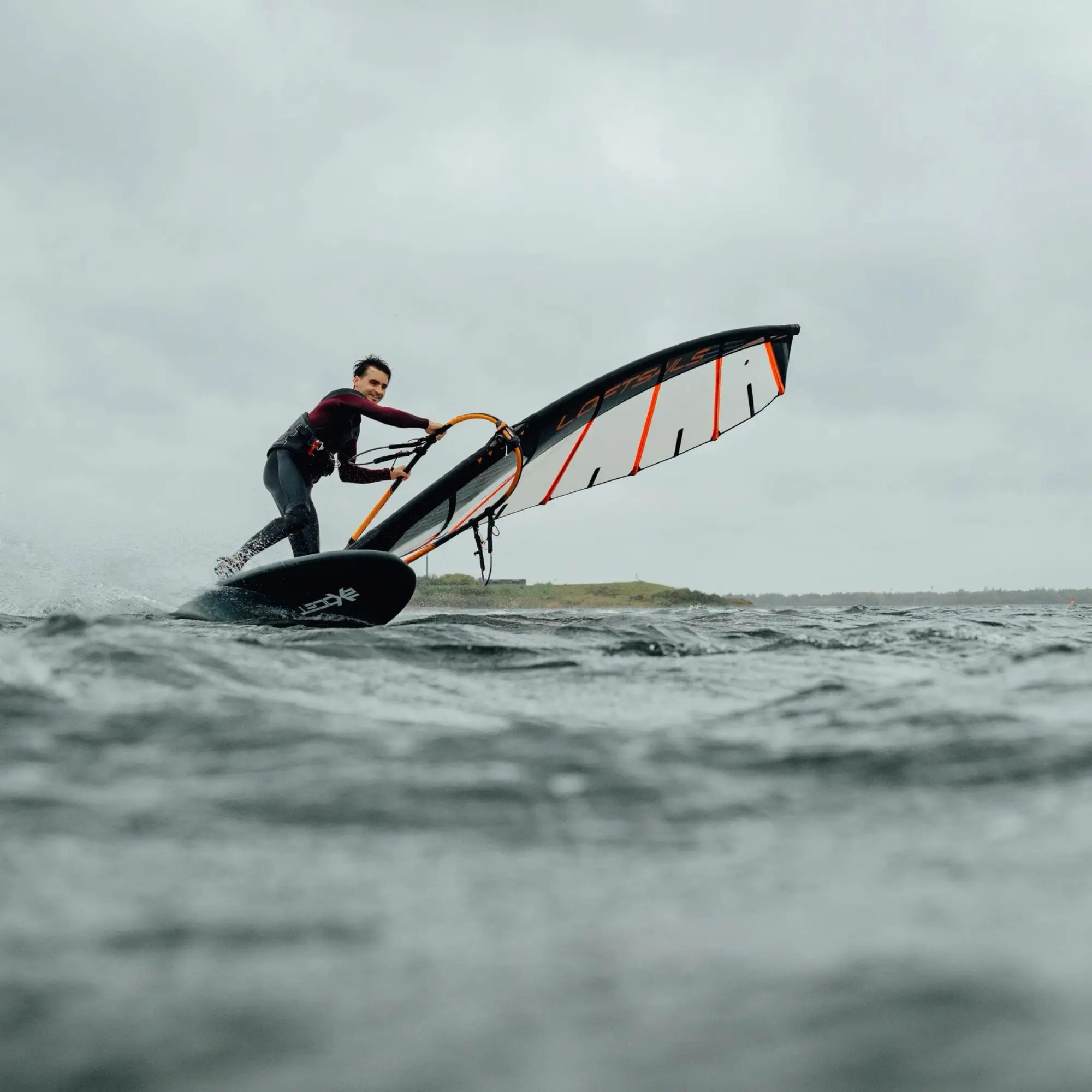
Racingblade 2027 during a gybe.
Speedscape, Switchblade and Racingblade: where do they differ?
Speedscape and Switchblade offer different routes to fast sailing. Speedscape brings slalom-speed shaping to a no-cam sail. Switchblade adds three-cam profile support to a freerace design. Consider Speedscape if easier rigging and handling through manoeuvres matter most. Include Switchblade if you want consistent, cam-supported drive for powered fin sailing and are comfortable handling cambers.
Switchblade and Racingblade both have three cambers, but that number does not define the entire sail. Switchblade is the more accessible freerace design. Racingblade has specialised geometry, carbon tube battens and a construction focused on competitive fin slalom. Purpose, handling and the rest of your setup are more useful selection criteria than the cam count alone.
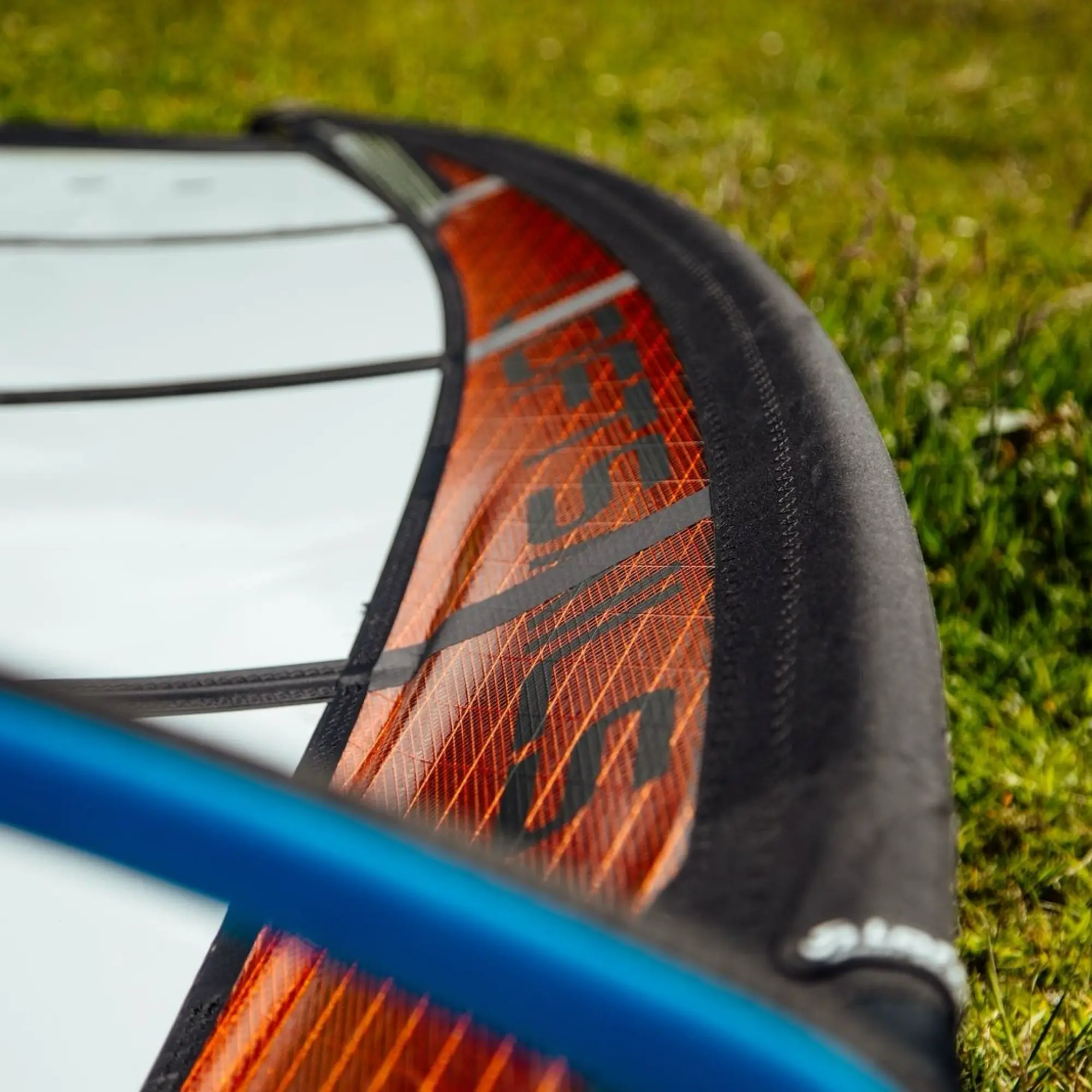
Switchblade 2026/27 detail around the mast pocket and boom opening.
Which model fits your sailing?
You want enjoyable, fast everyday sessions
You sail a freeride or freerace board, enjoy long reaches and want predictable power with straightforward handling. Start with Oxygen. Compare White and HD according to how often you sail and the durability you want.
Speed is becoming your main focus
You want to work on acceleration and fast reaches while keeping a cam-free rig. Take a closer look at Speedscape. Its slalom inspiration, higher aspect ratio than Oxygen and profile-supporting features fit that brief. It is designed for both fin and foil use.
You want cam-supported drive for powered freerace
You sail a freerace or slalom board and enjoy sessions with plenty of power. Consider Switchblade. Compare standard White and HD Blue as material options within the same freerace programme.
You train for slalom and build your setup around racing
You are ready to refine trim and match the mast, board and fin to the sail. Racingblade is developed for that level of specialisation. Begin by choosing a size that fits your complete setup and usual training conditions.
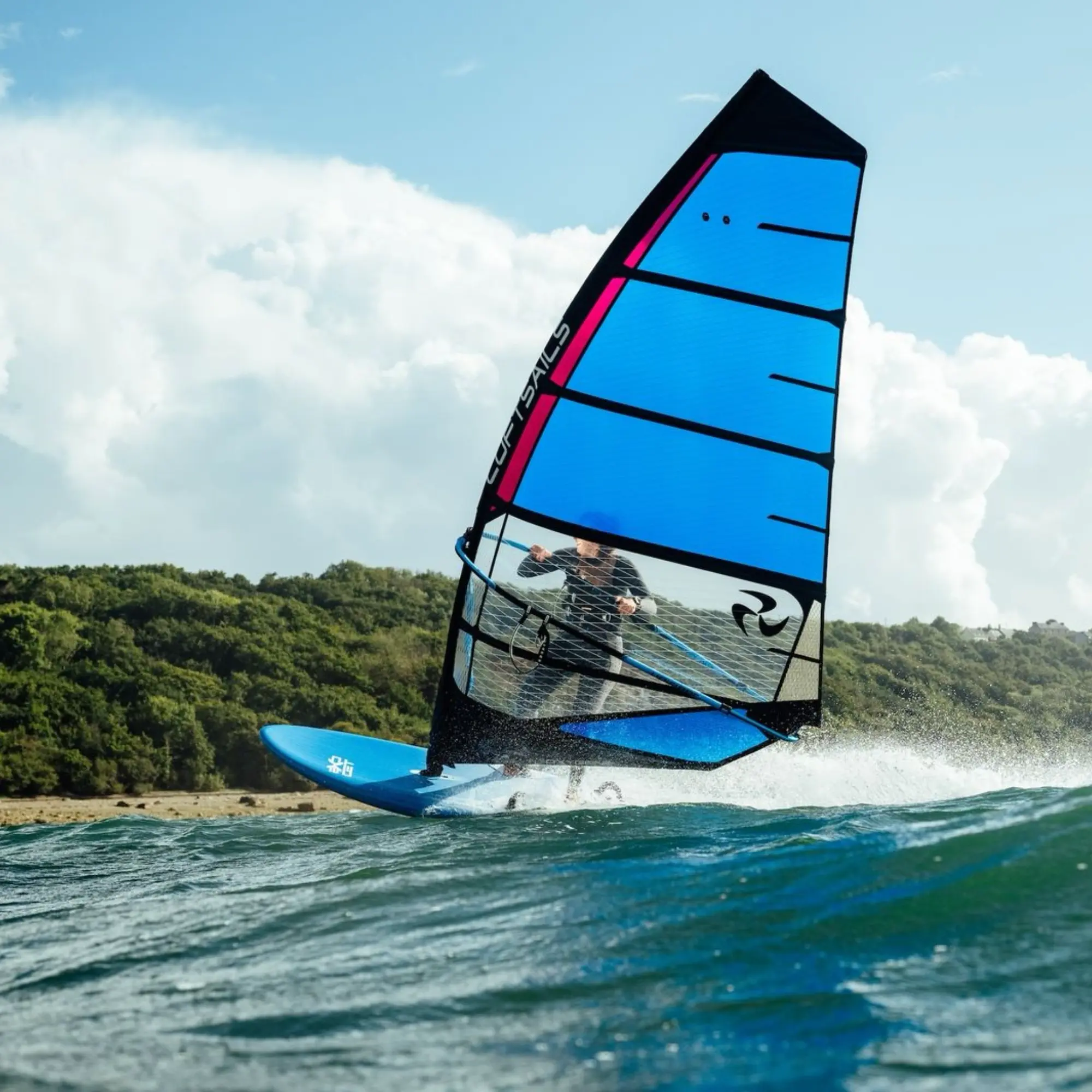
Oxygen HD 2026/27 during a freeride session.
Check your mast and board before choosing a size
Moving to another design is not always a straightforward swap to the same sail area. Check the recommended mast length, diameter and bend characteristics, along with extension and boom settings. For Racingblade 2027, Loftsails recommends RDM for 5.2 and 5.7 m², and SDM for the larger sizes.
Prepare the exact board model, full mast specification and the conditions you are buying the sail for. Add your weight and the sizes already in your quiver. Those details are much more useful for choosing a rig than asking which model is fastest.
If you want to keep your current mast, send us its full specification. We can check the proposed combination before you commit to a sail.
Questions worth asking before you buy
Does Speedscape replace Oxygen?
Both remain in the Loftsails range with different priorities. Oxygen is the versatile freeride/freerace option; Speedscape puts more emphasis on slalom-speed performance. The new model expands the choice for sailors who want to stay cam-free.
Can I use Speedscape on a foil?
Yes. Loftsails positions it for fast fin and foil sailing. Size and trim still need to suit your particular setup. Racingblade is covered here according to its dedicated fin slalom programme.
Will Racingblade always be faster?
It is the most race-specialised of these four designs, but your speed also depends on trim, equipment, conditions and technique. Consider whether you will use its racing character and whether its handling suits your sessions.
Are Switchblade HD and Oxygen HD faster than standard?
HD mainly identifies a different material construction. Choose the model's purpose first, then decide between standard and HD. Added durability may matter for frequent use, but the HD label does not guarantee a higher speed.
Will all four sails work with my mast?
Check the recommendations for the exact size. Mast length, diameter and bend characteristics all matter, and cammed designs also need the correct cam fit. Send us the mast's full specification if you want to keep using it.
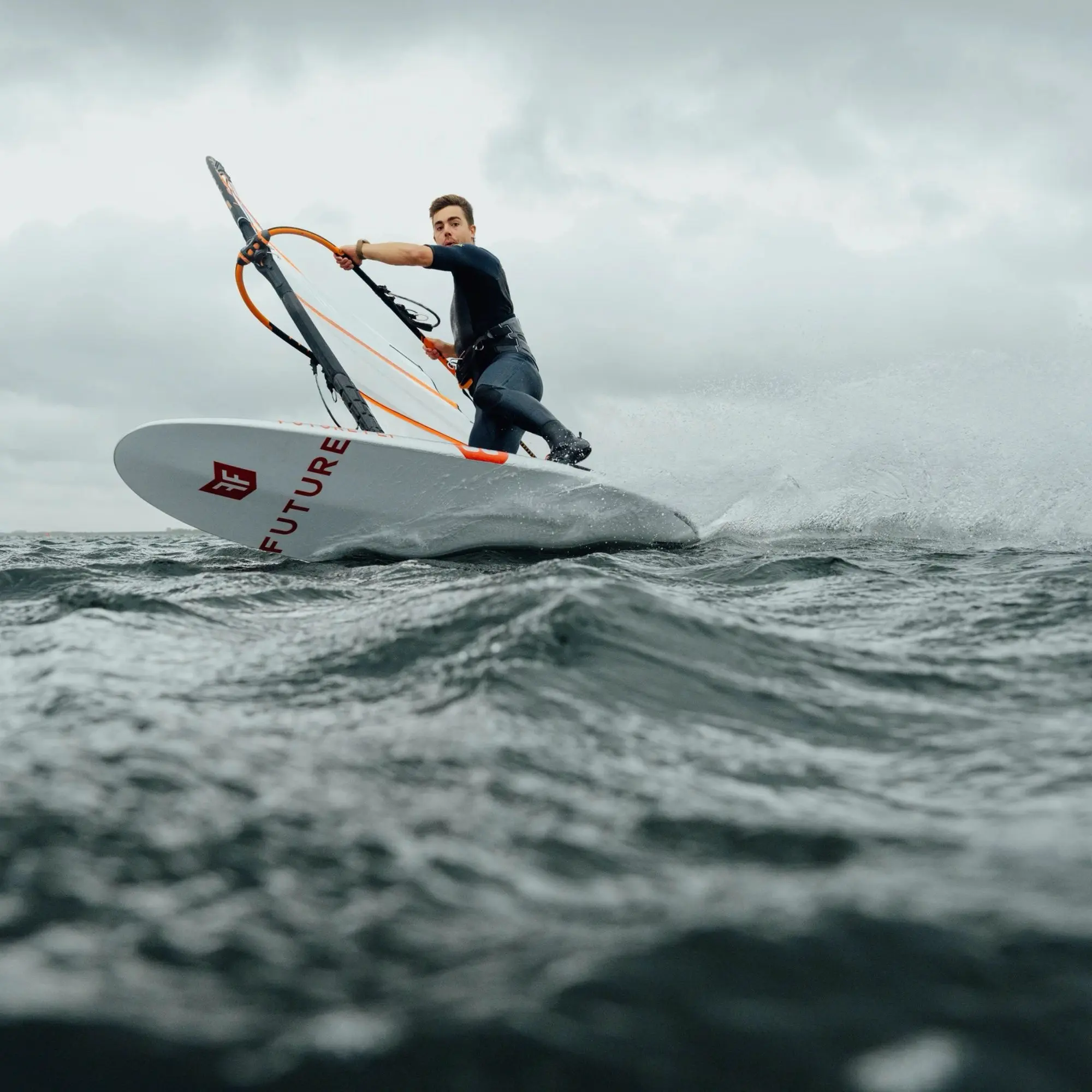
Speedscape 2027 in action.
Ask us about Loftsails 2027 pre-orders
Planning a new rig for next season? We are taking enquiries about Loftsails 2027 pre-orders. Tell us the model and size you have in mind, or start with your current equipment and what you would like to change.
We will check the selected version and confirm an offer, estimated delivery timing and order terms. Pre-orders apply to the specific version we confirm with you. Oxygen and Switchblade are covered here as 2026/27 models, and we check their availability separately. Delivery estimates can change and depend on the model and size.
Prefer to email us? Contact store@easy-surfshop.com with your weight, board model, mast specification and usual sailing conditions. We will help narrow down the choice.
This guide is based on Loftsails documentation and product descriptions. Design features and their intended effects are described from the manufacturer's material; this is not a comparative on-water test. Photos: Loftsails media.