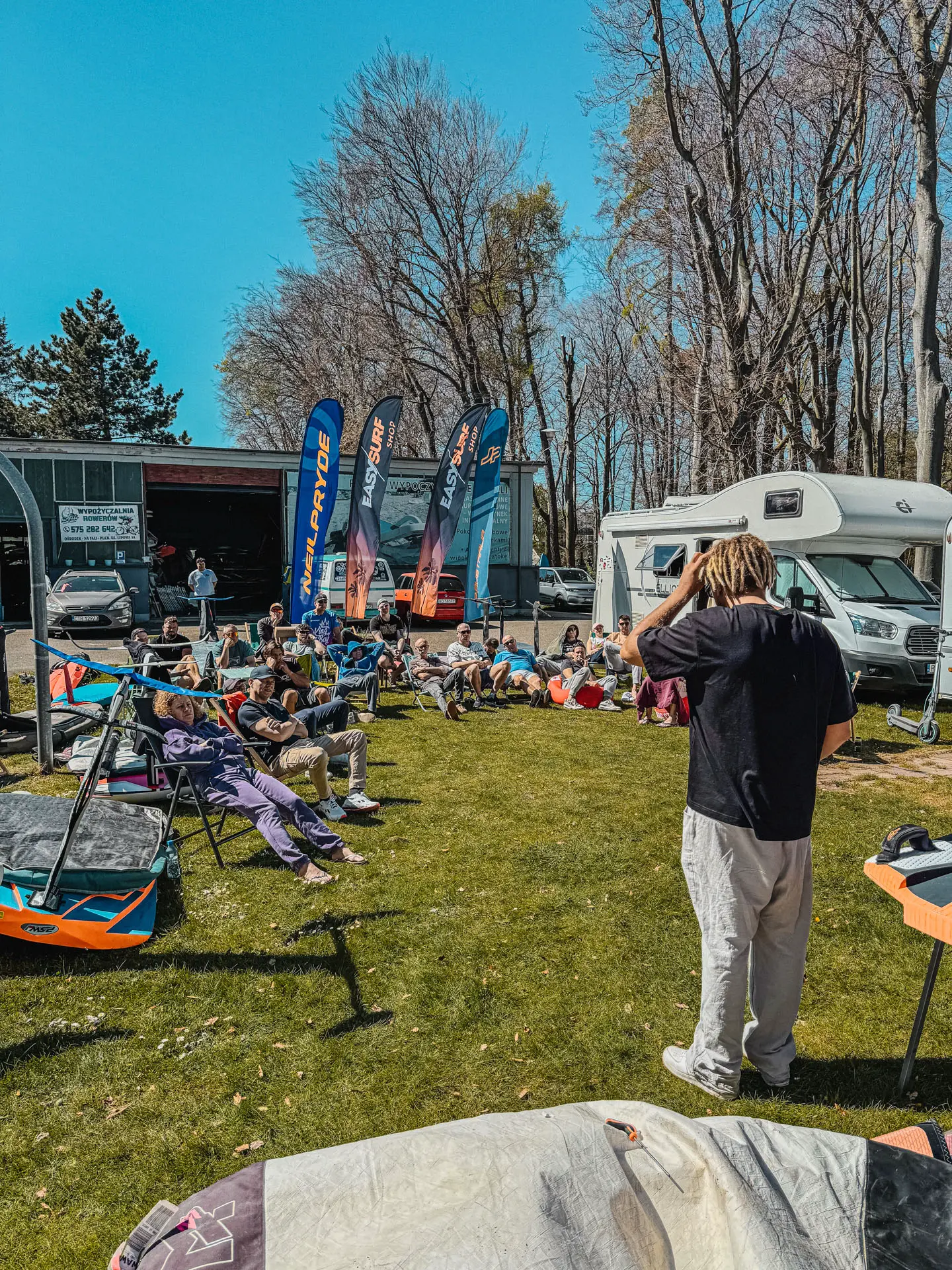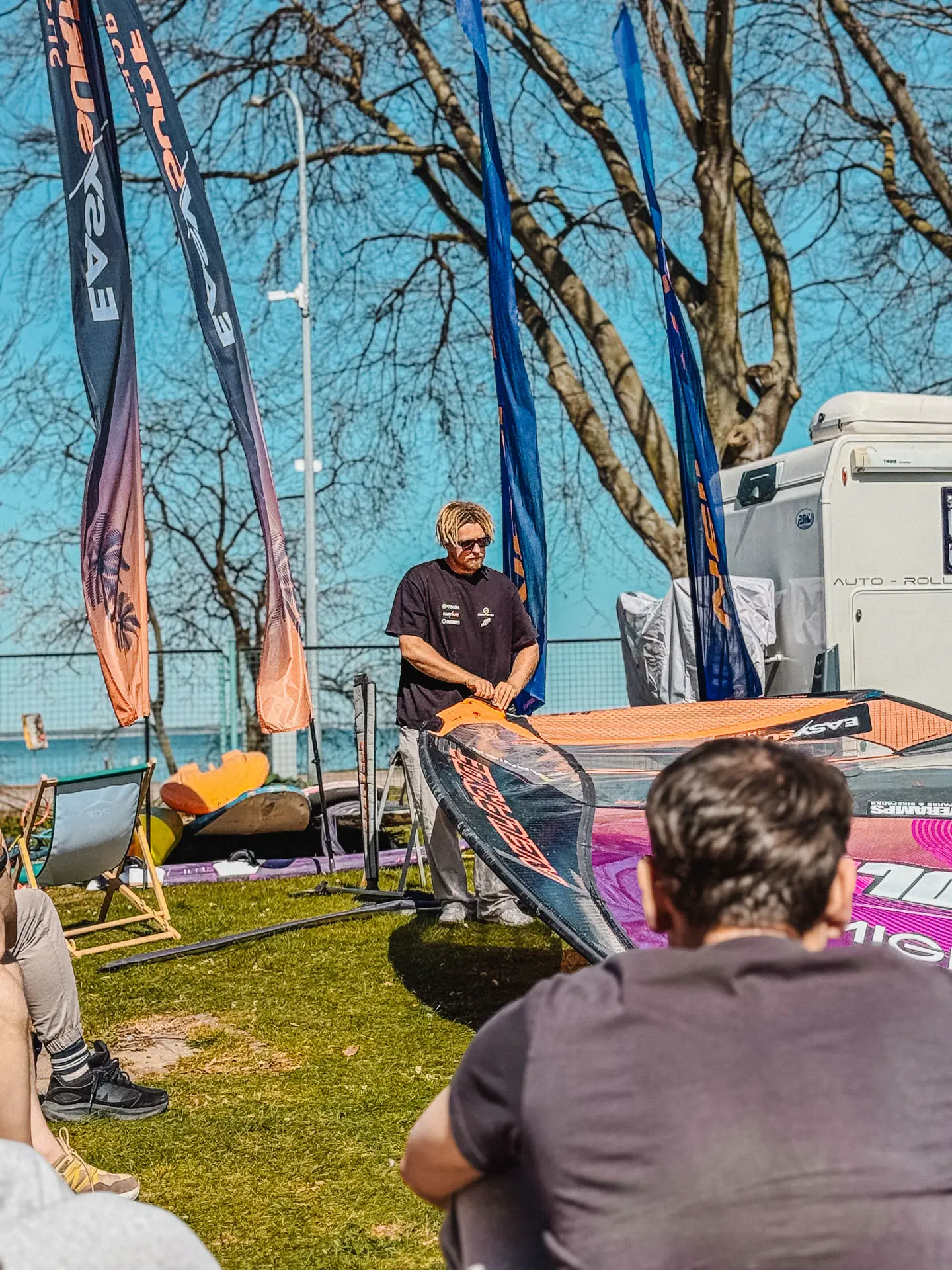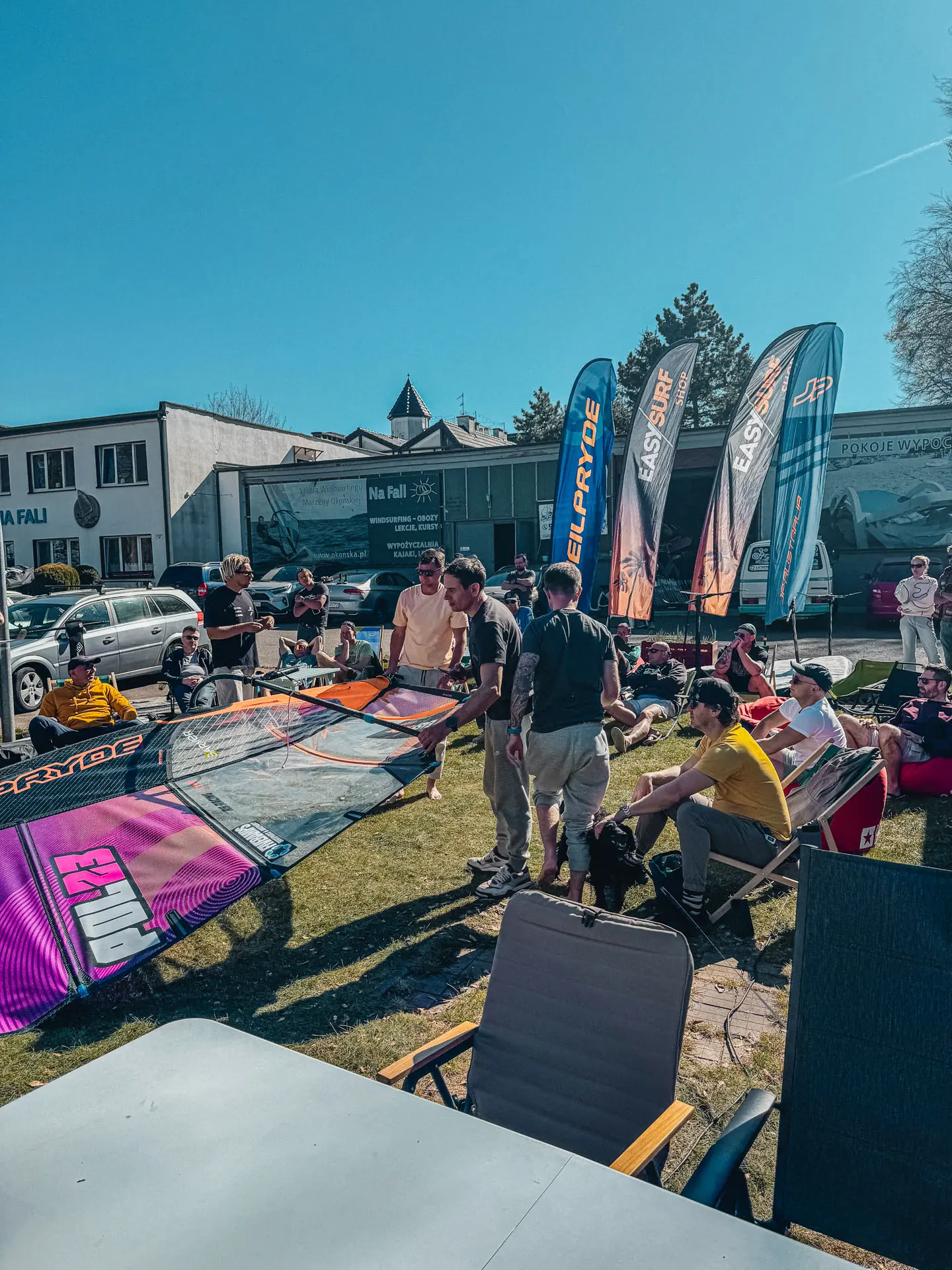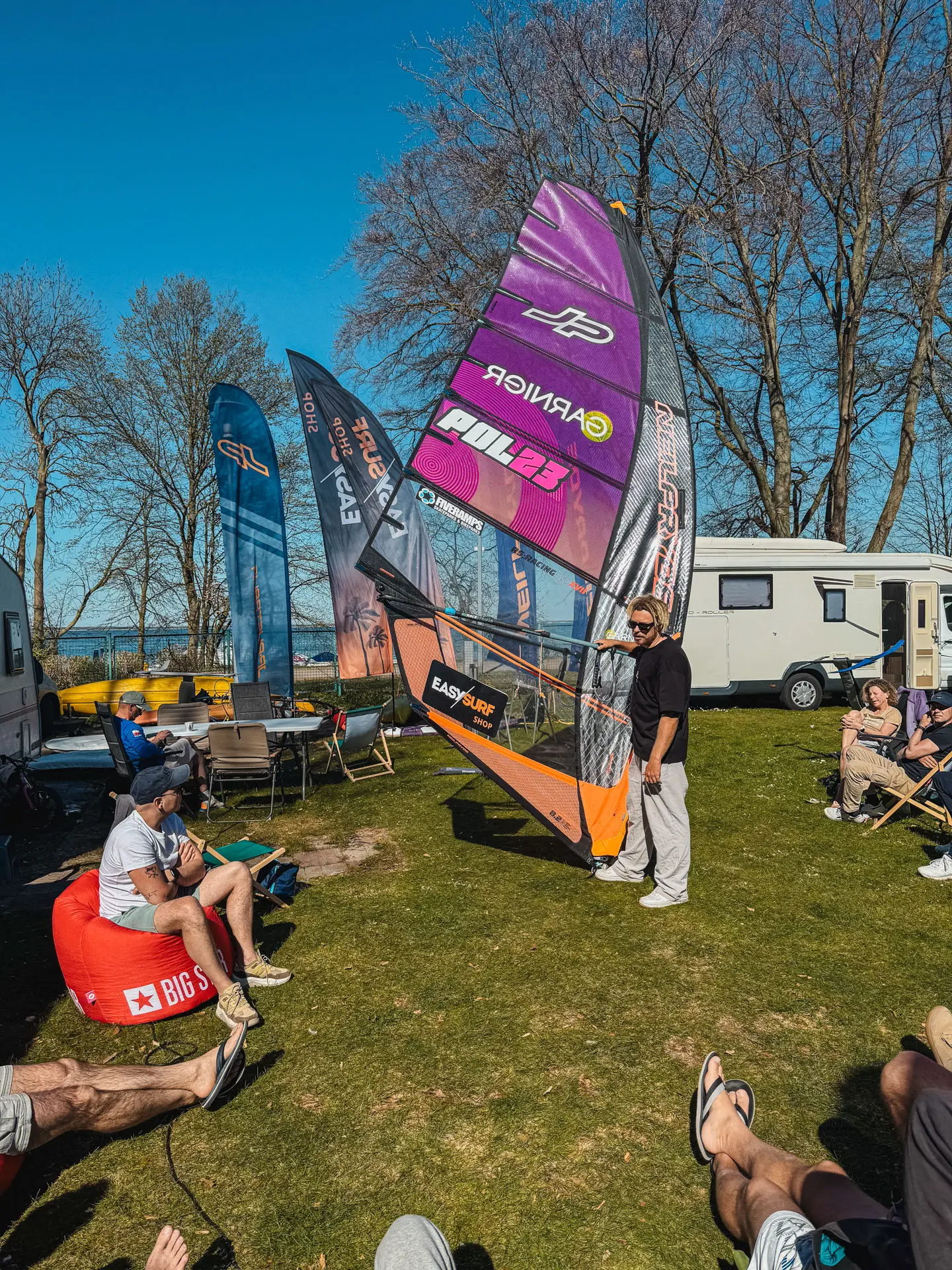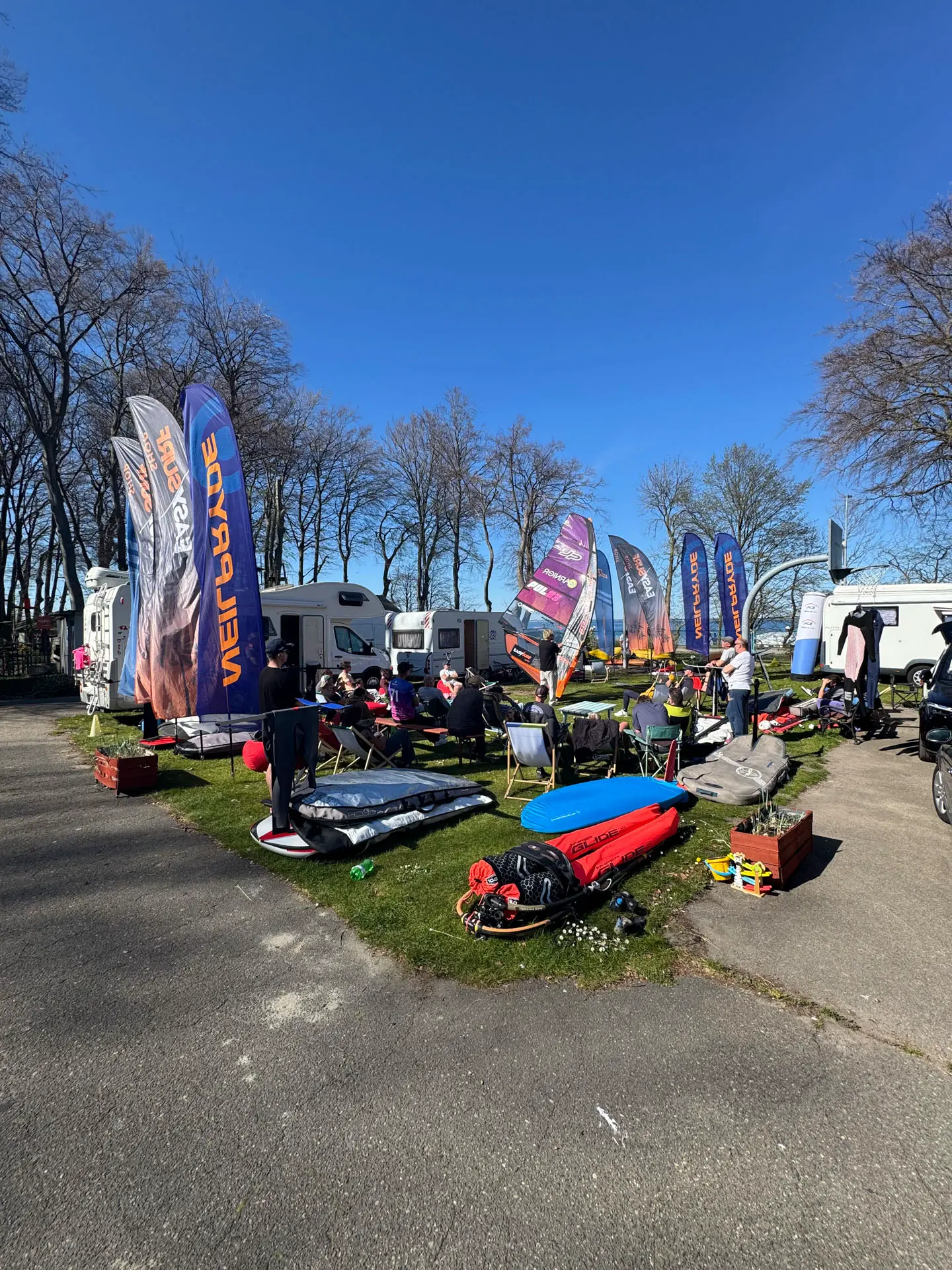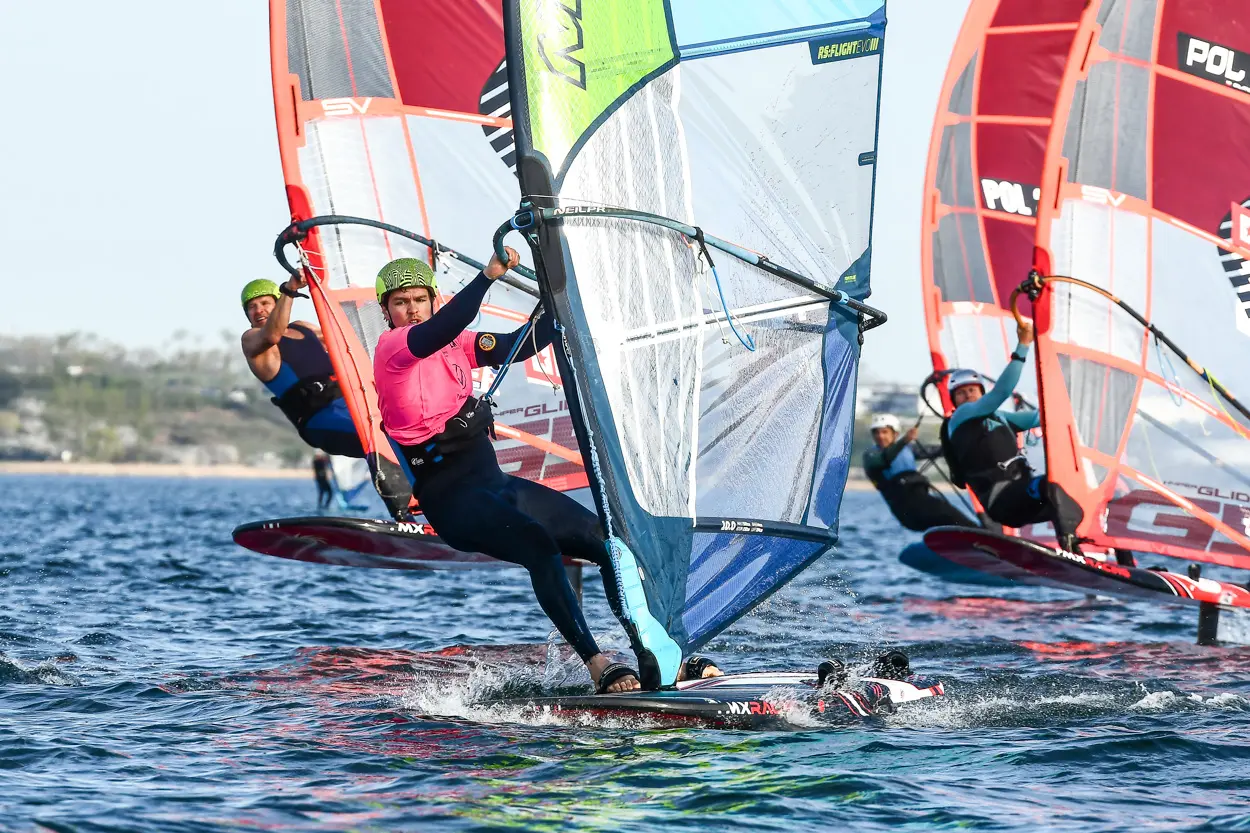


May 2026 will stick in our memory as a special edition of the clinics — combined with the opening round of the Polish Windsurfing Cup in Puck. Conditions were challenging, but as is always the way in windsurfing, the crew found a way to make the most of the weekend.
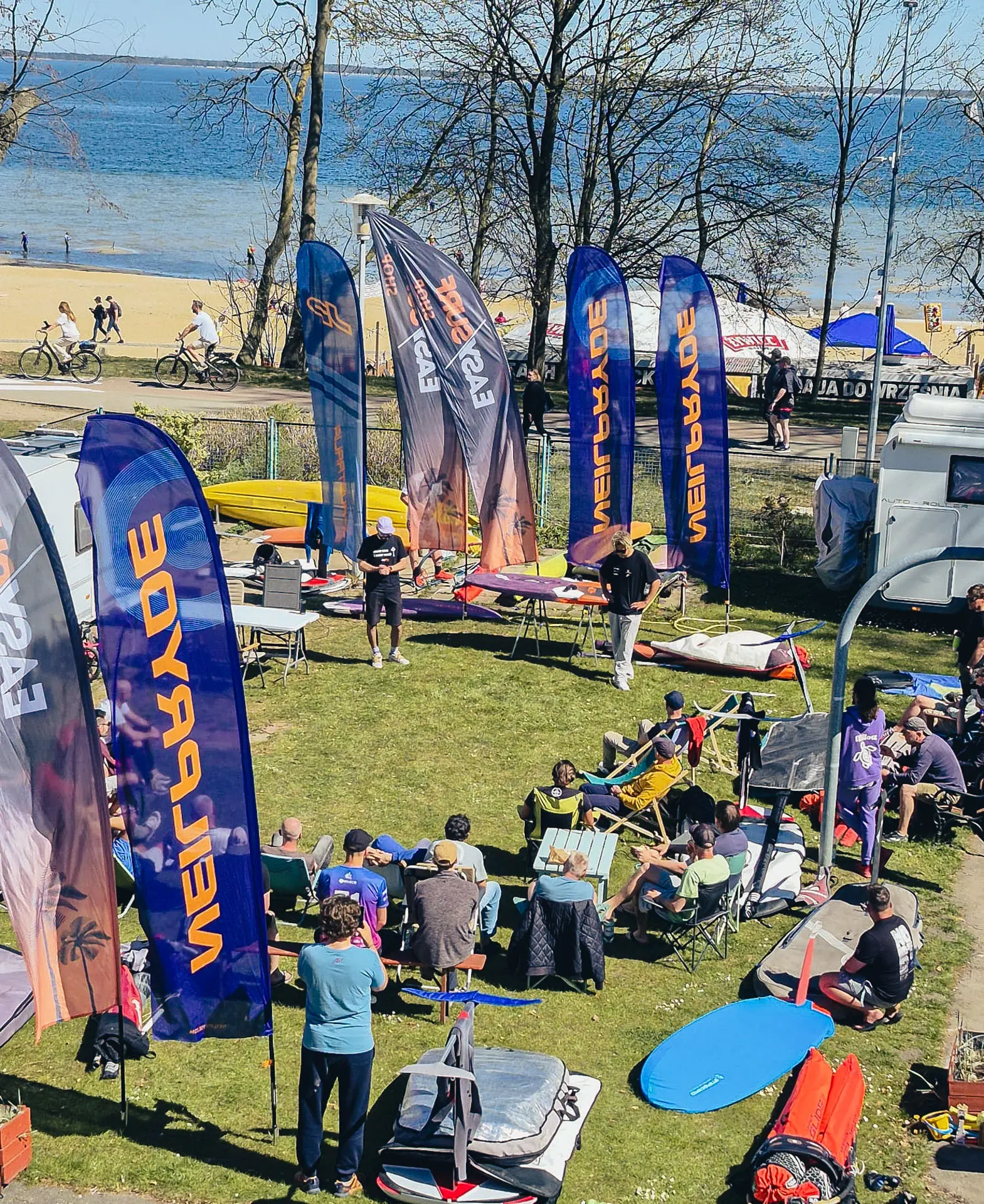
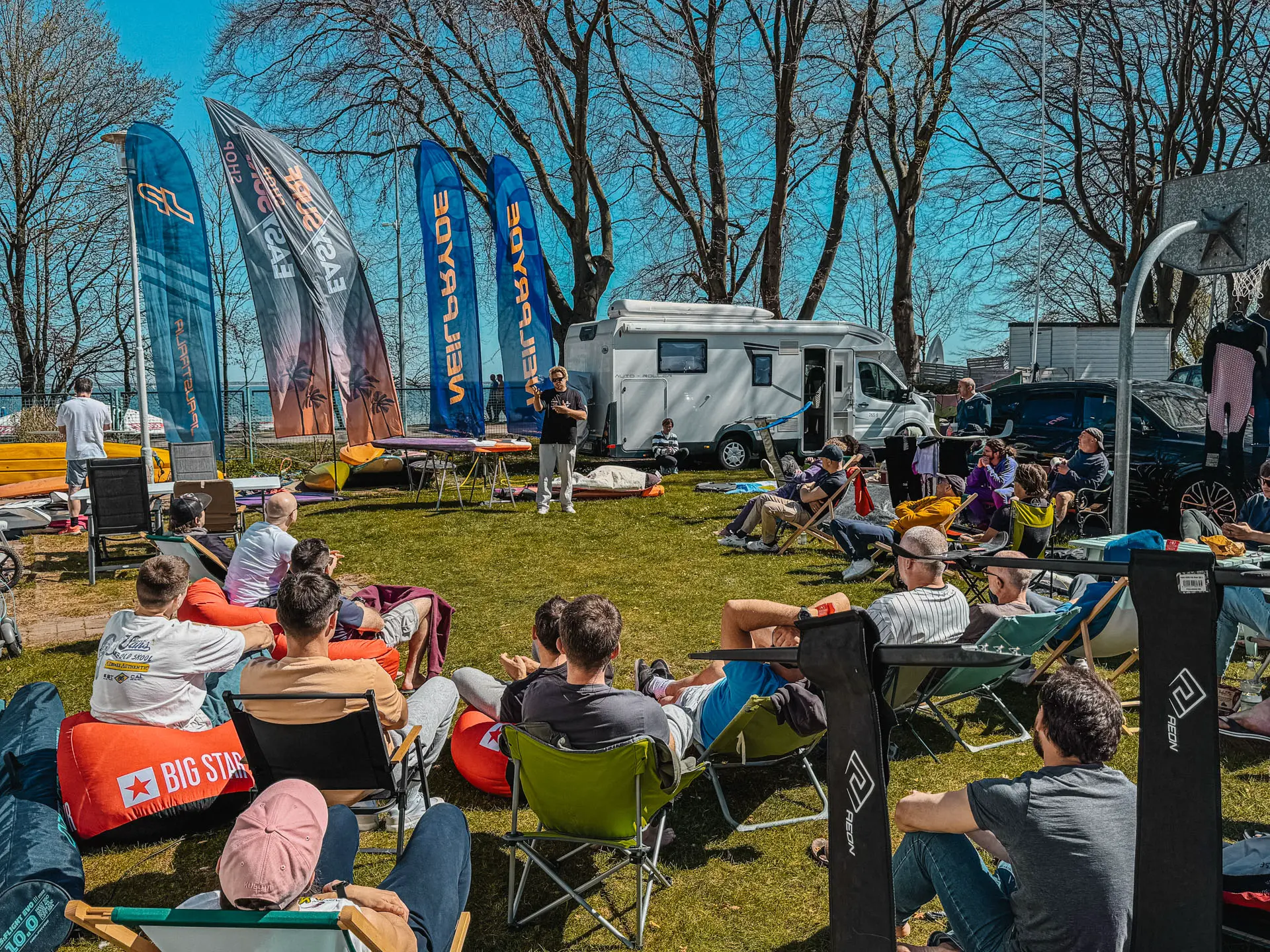
No wind? No problem.
The original plan was two days — theory on Saturday, water time on Sunday. The forecast had other ideas. What we got instead was something you can't really plan for: nine straight hours with one of the best windsurfers in the world, completely focused on sharing what he knows.
Doors opened at 11:00. We wrapped up at 20:00. Three sessions, each completely different, each packed with the kind of detail you don't find on YouTube.
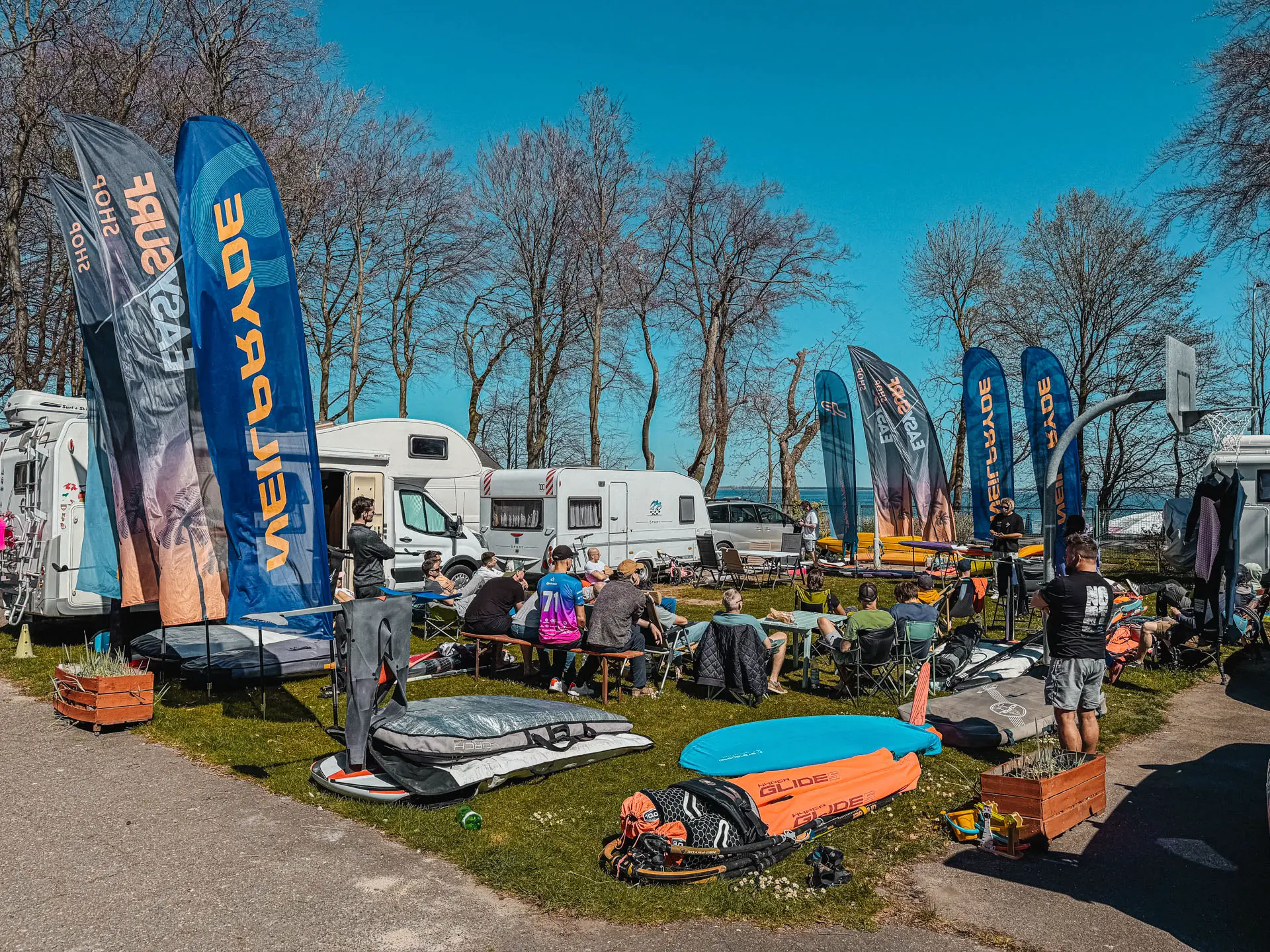
Session 1 — Boards, Fins and Foils
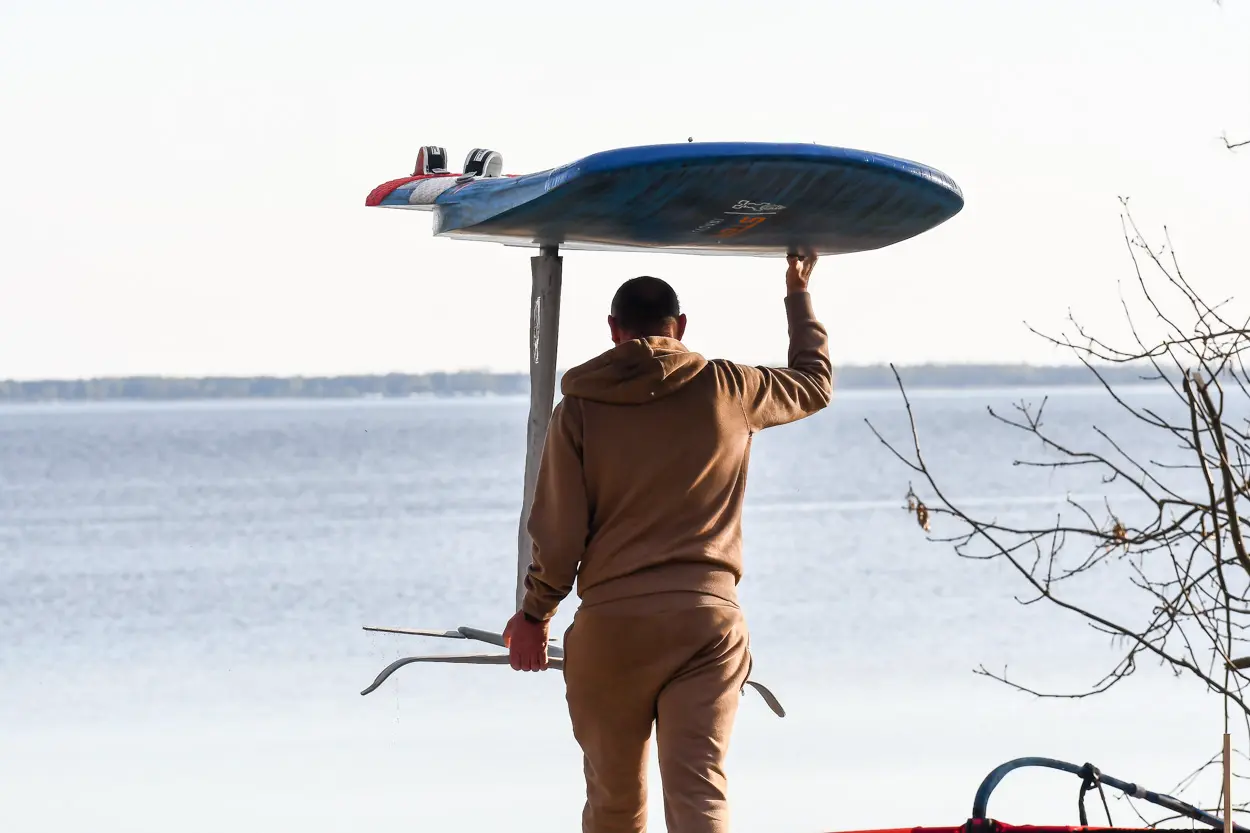
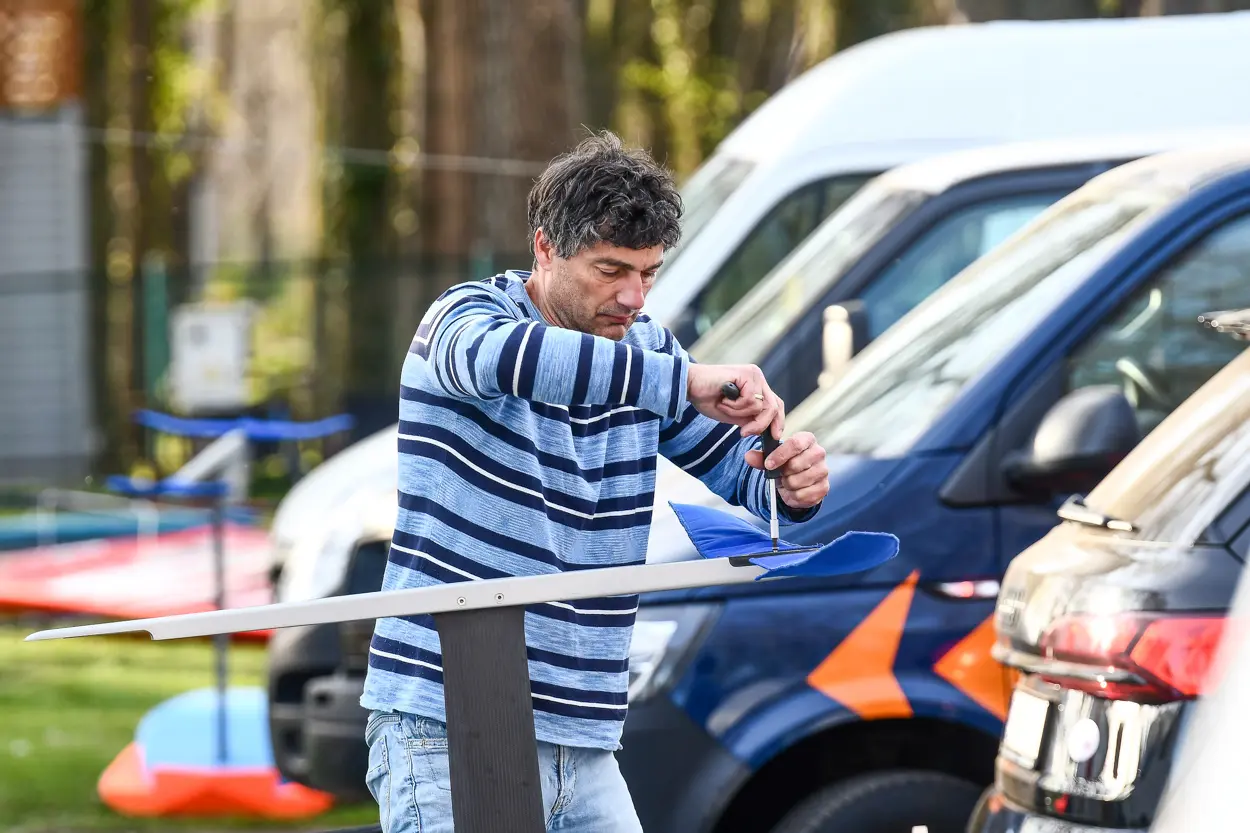
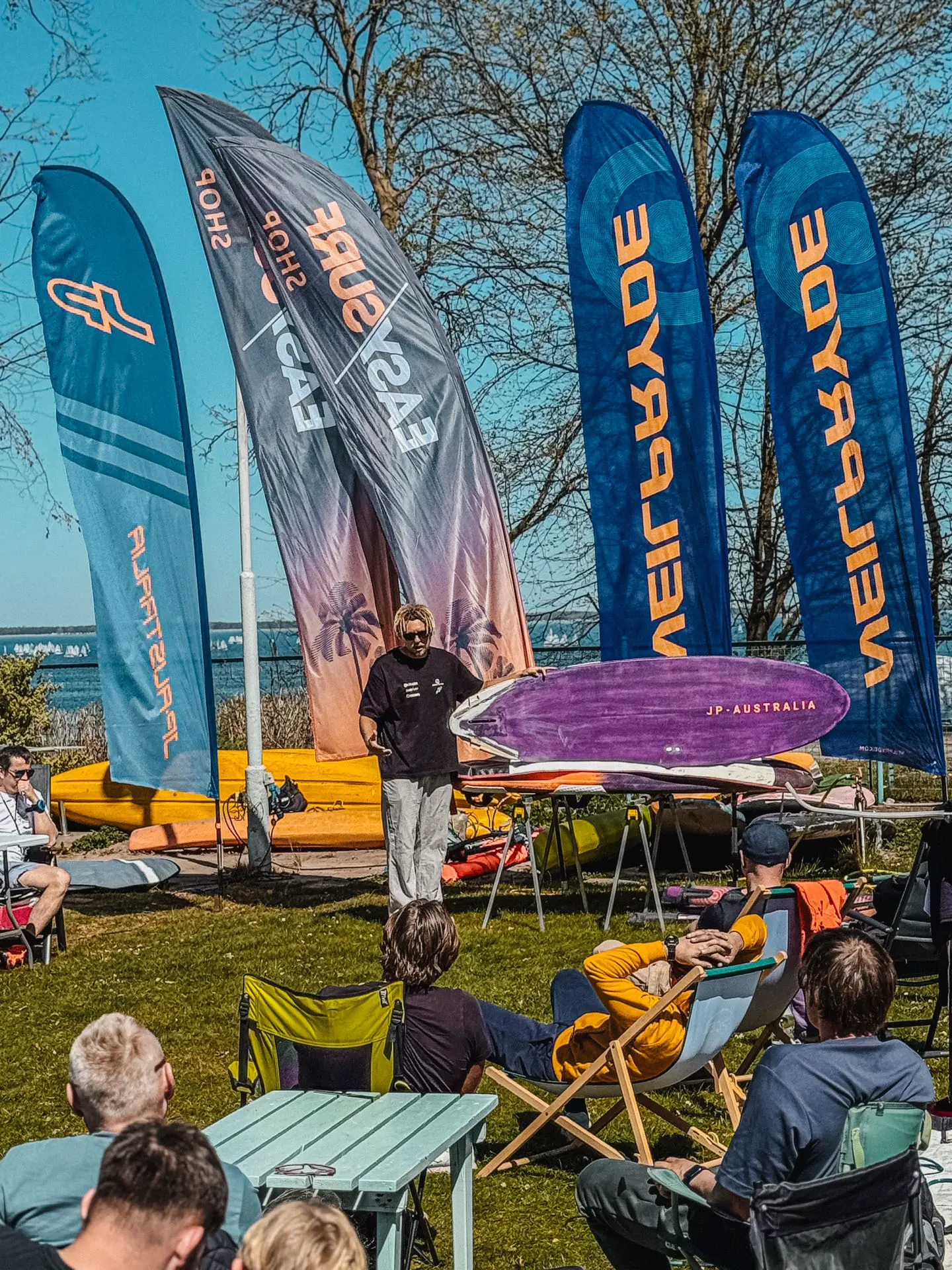
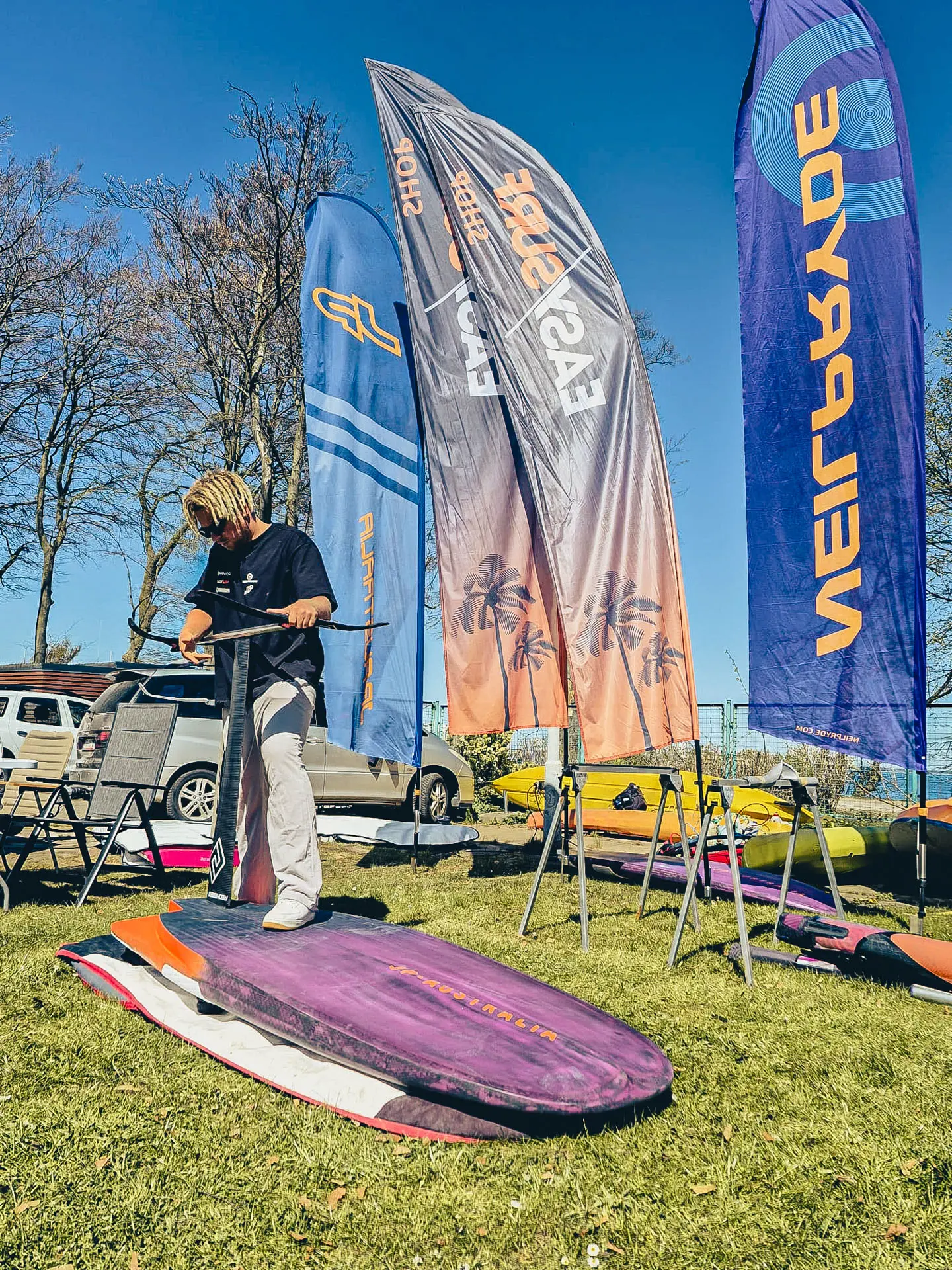
Maciek started with hardware — board selection, footstrap settings, fin setups, foil configuration. But this wasn't a standard gear talk. He went deep into the design process itself: how boards are developed, what changes between model years and why those changes actually matter on the water.
Then came the highlight of the clinic: Maciek pulled out a prototype of a new JP-Australia Slalom board size for 2027 — something he's currently working on. Not many people get to see that.
Session 2 — Sails
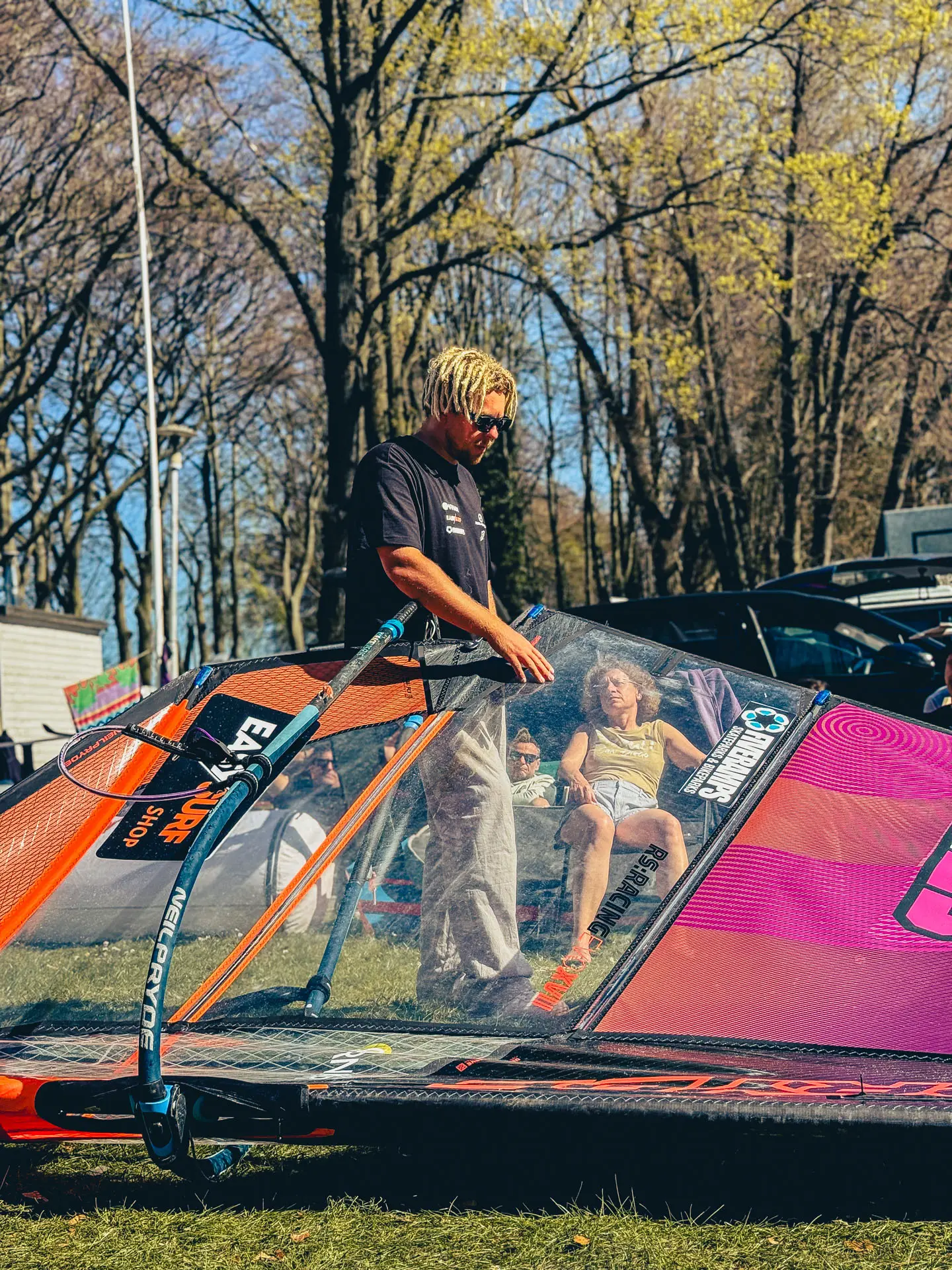
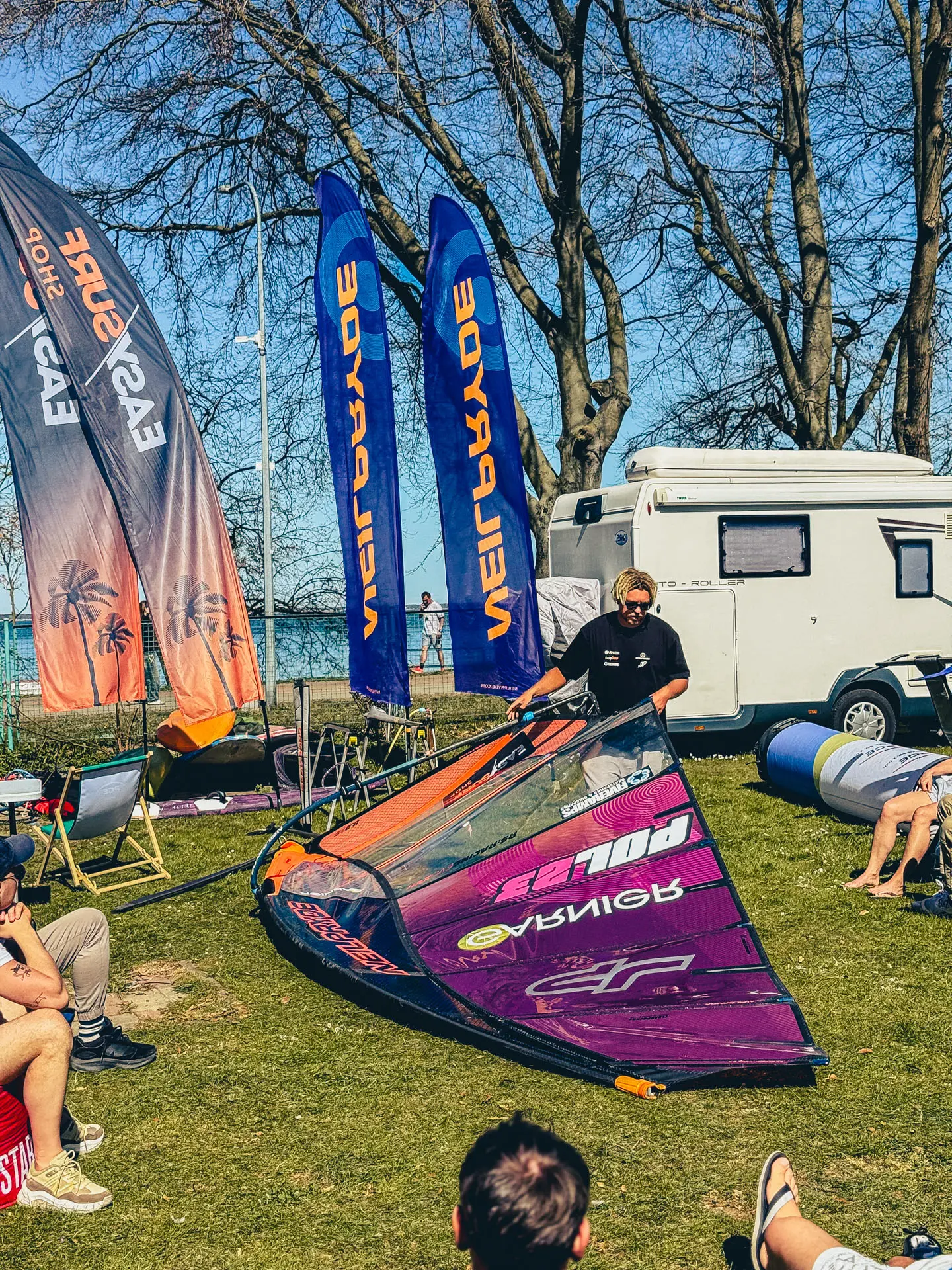
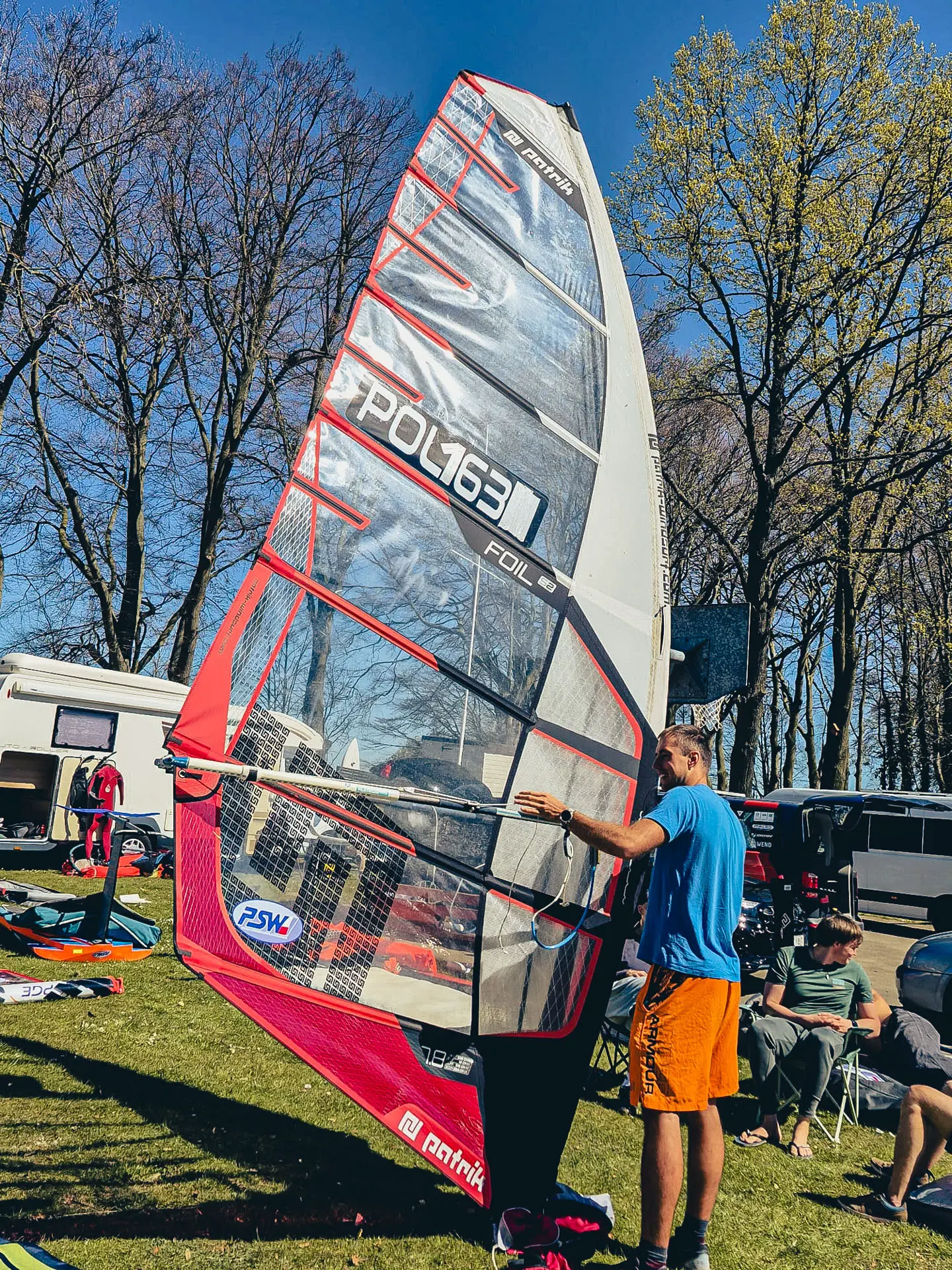
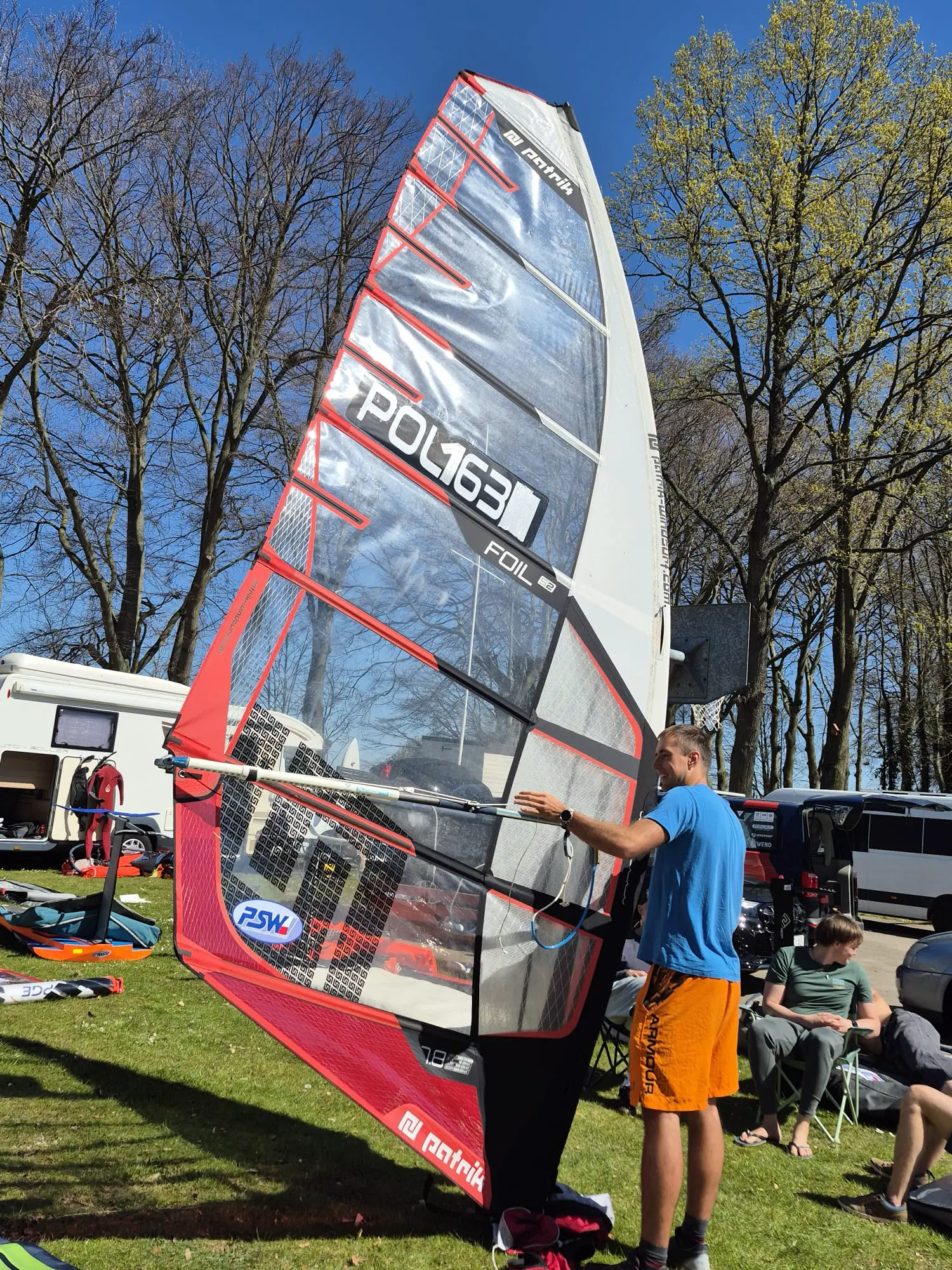
Sail selection, rigging, trim, batten tension — Maciek covered everything that affects how a sail behaves on the water. Every adjustment, every variable, every trade-off.
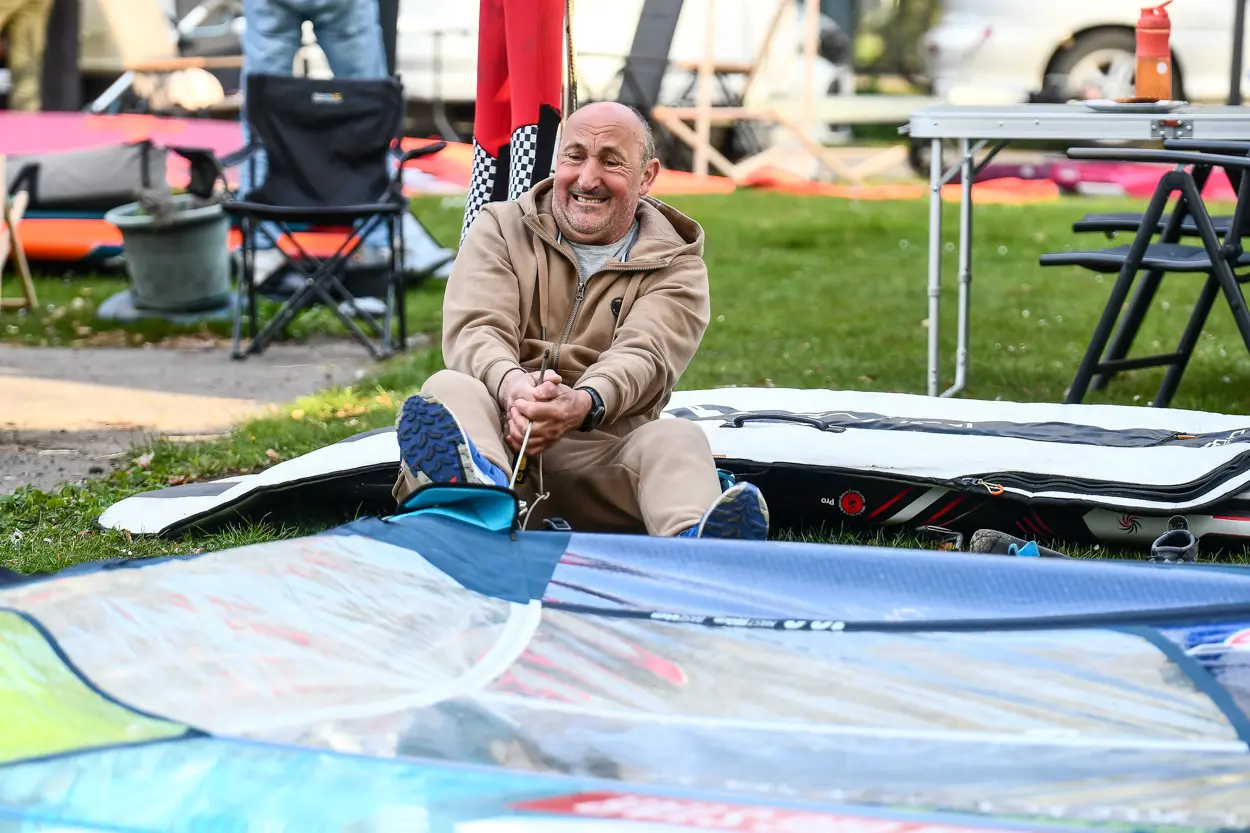
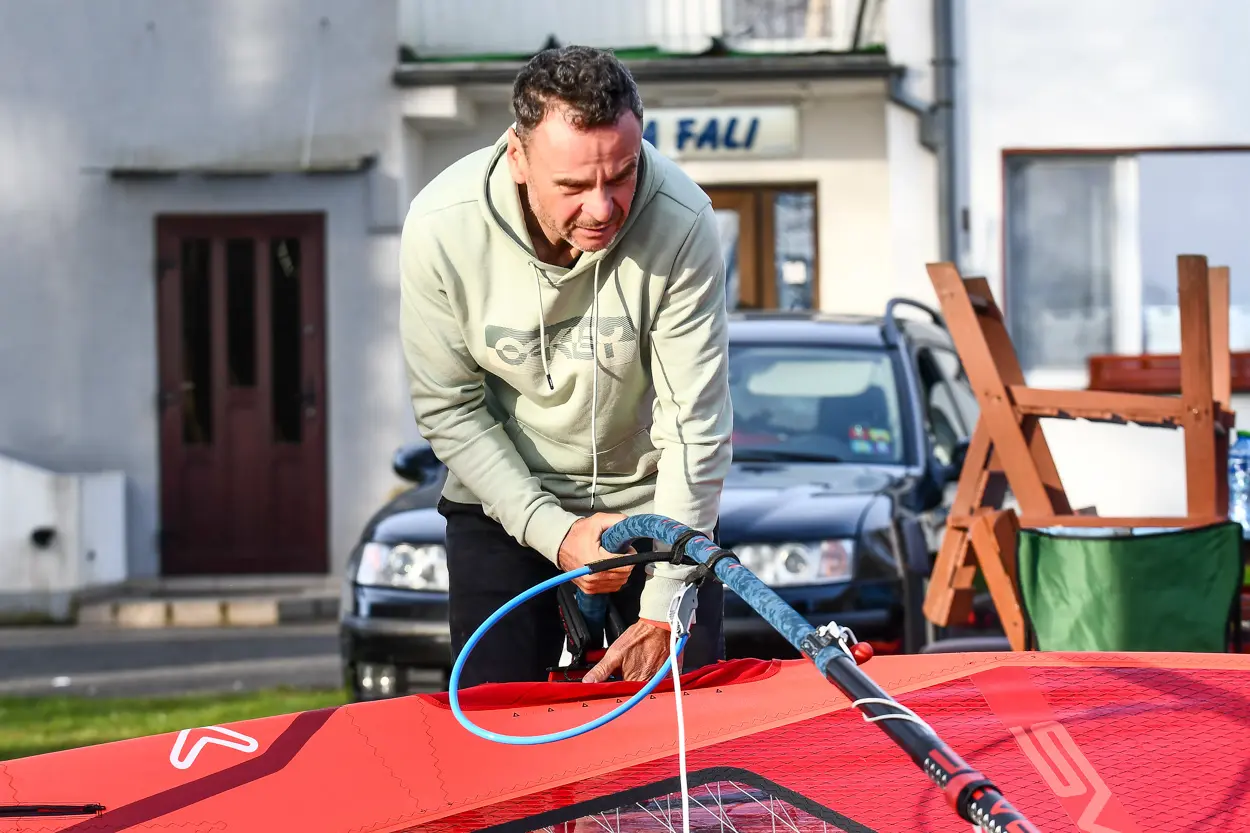
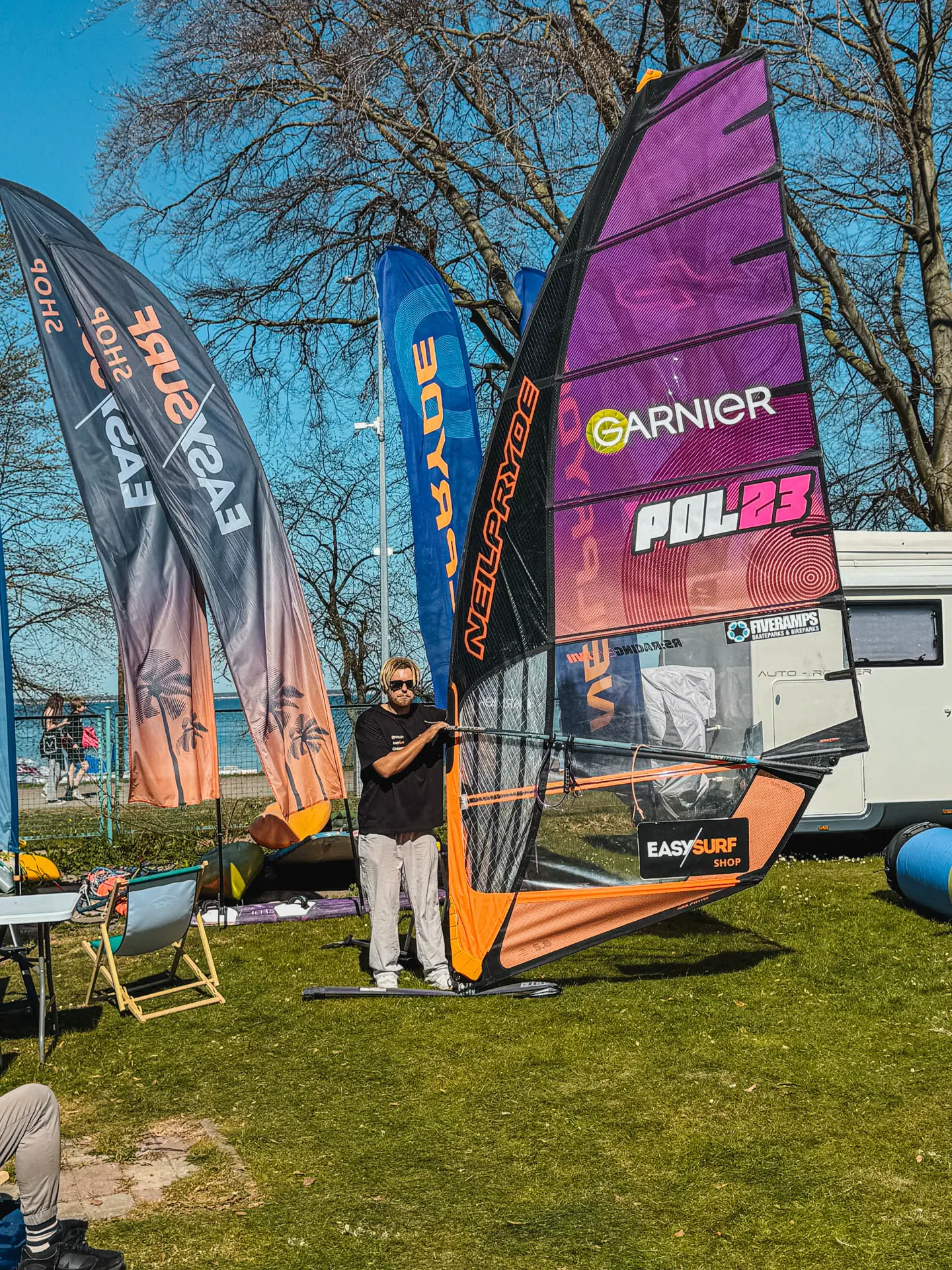
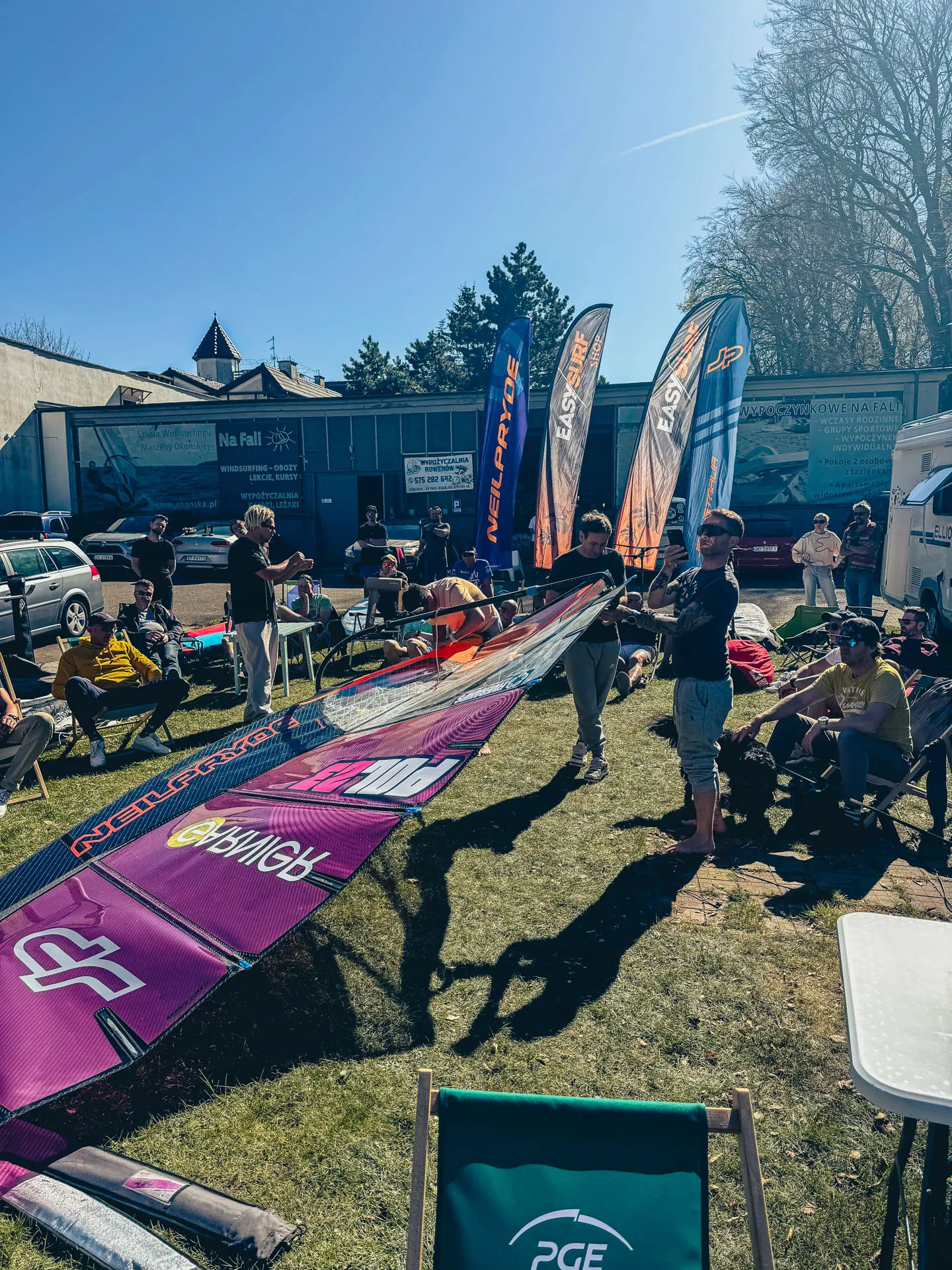
Then he took it off the whiteboard and onto the grass. Participants rigged their own sails while Maciek moved through the group giving individual feedback — tweaking tension here, adjusting the outhaul there. Everyone left that session with something specific to work on.
Session 3 — Race Strategy and Starts
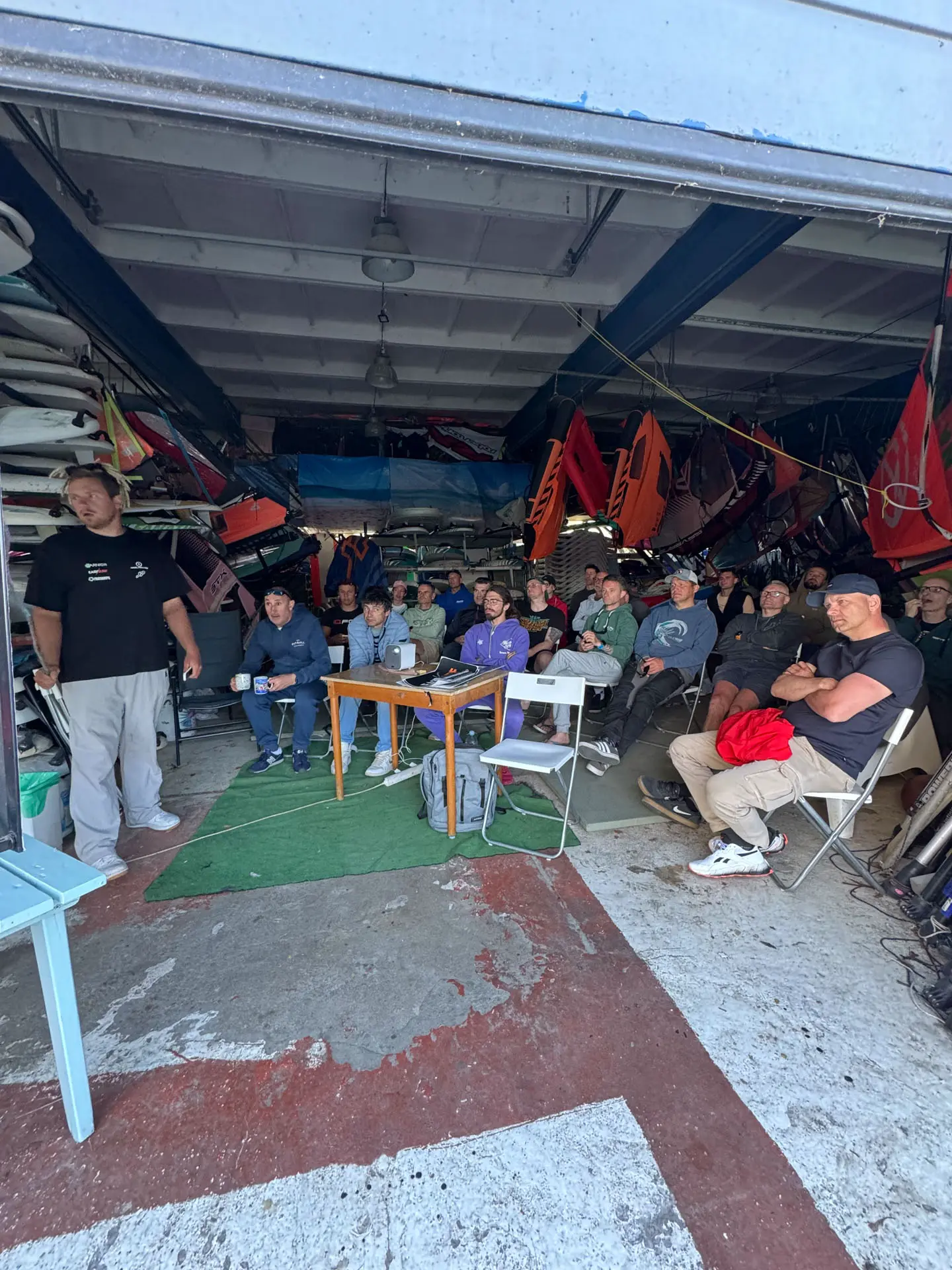
As the evening came in, we moved inside to the Na Fali base hangar. Maciek pulled up two of his own heats from last year's PWA events — one from Fuerteventura, one from Tenerife — and broke them down completely.
Every decision, every move, every mistake. The start sequence, reading the race course, reacting to wind shifts. And crucially, Maciek didn't skip over the moments where he got it wrong or could have done better. This wasn't just tactics. It was a masterclass in how to think on the water.
The Bonfire That Kept Going
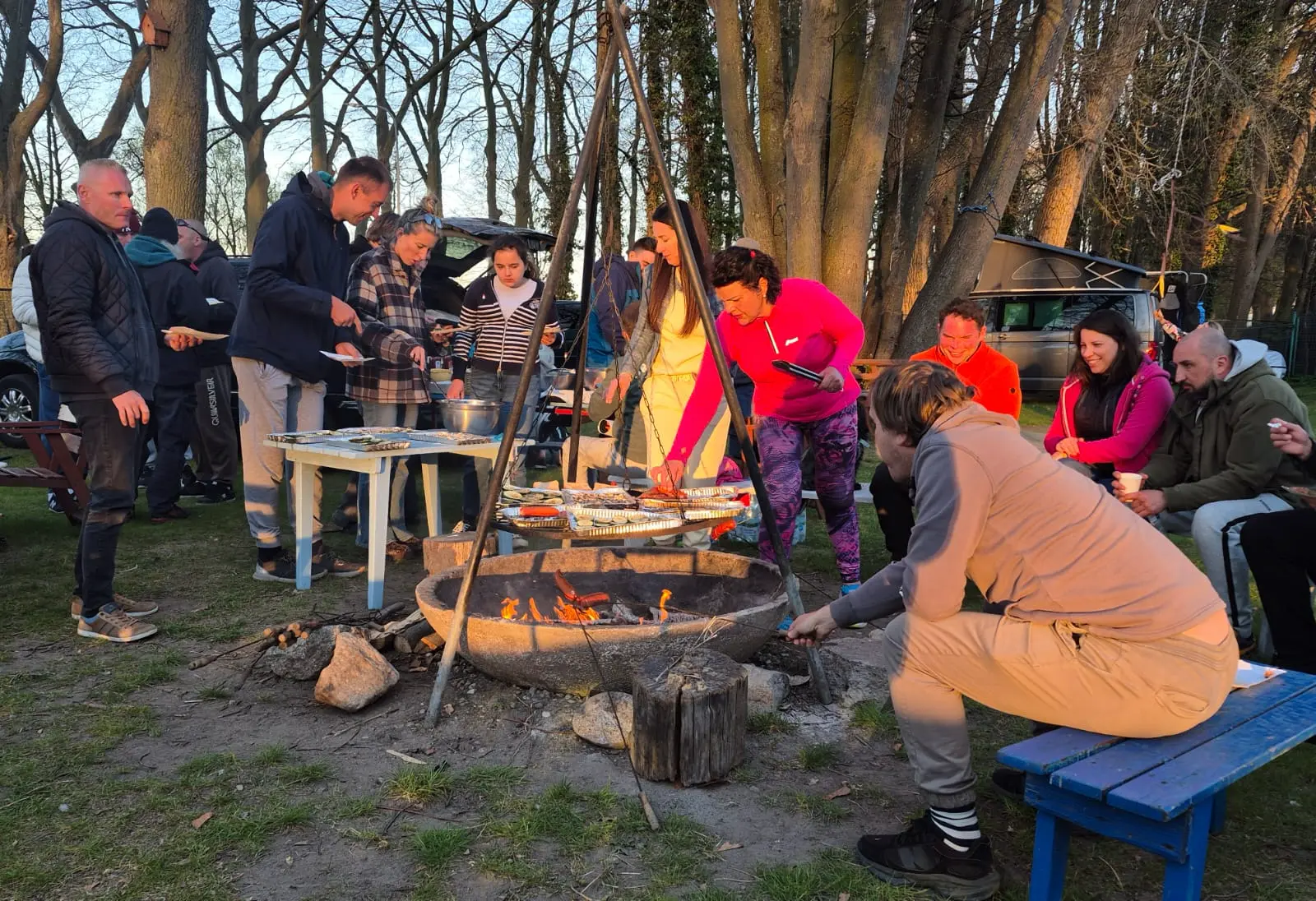
At the end of the day, Marzena Okońska and the PSW team invited everyone to gather around a bonfire. The windsurfing conversations kept going, obviously — that's what happens when you put a group of genuinely passionate people together in one place.
What Participants Said
The feedback after the clinics spoke for itself. One participant sent us this:
"Many thanks for the workshops with Maciek. I took away a lot on the topic of riding technique — there were some really useful points."
Polish Windsurfing Cup — Opening Round
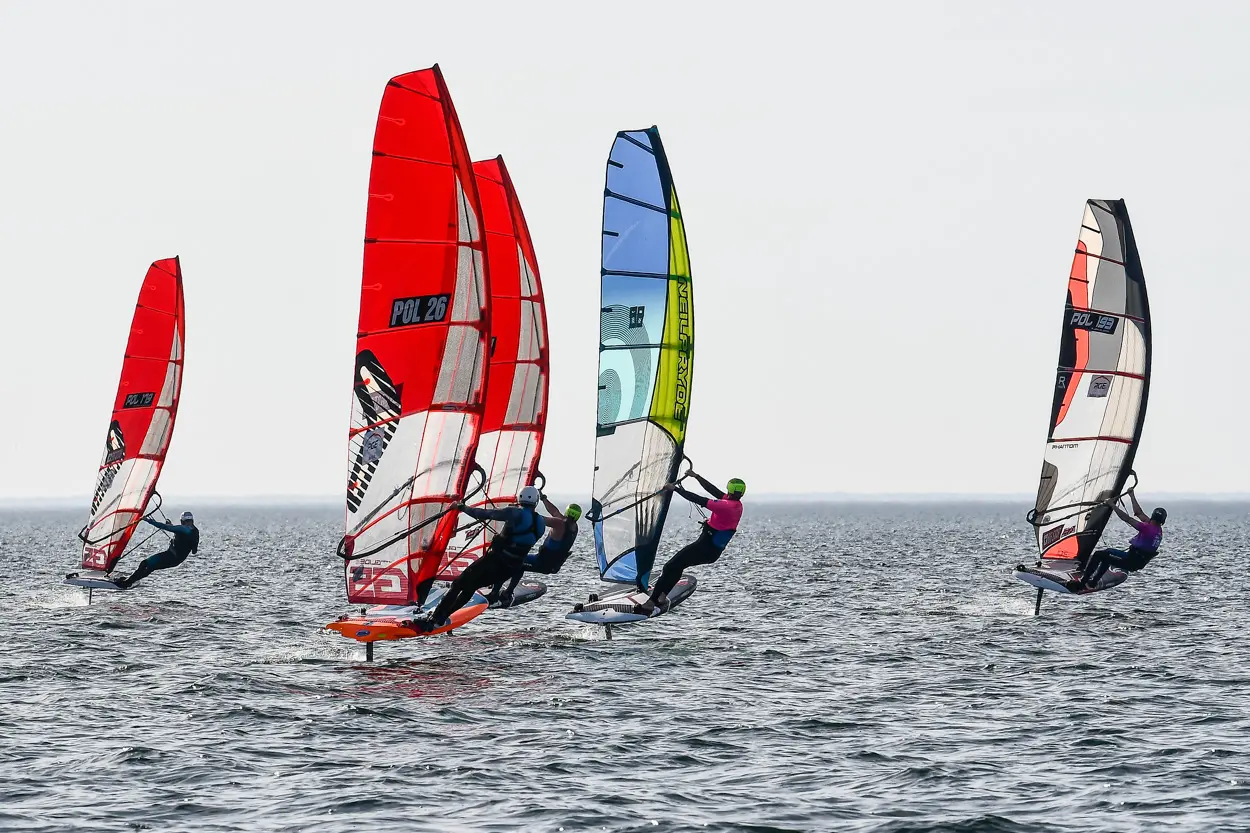
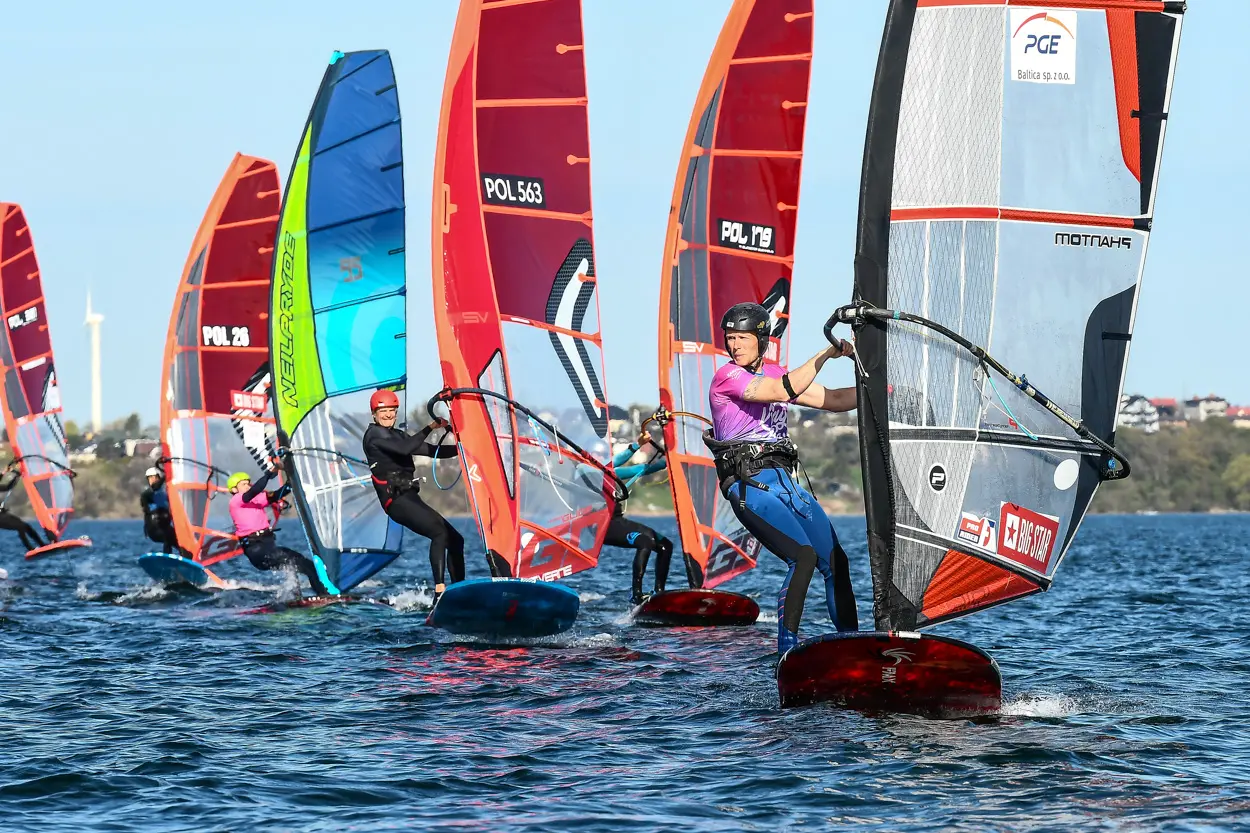
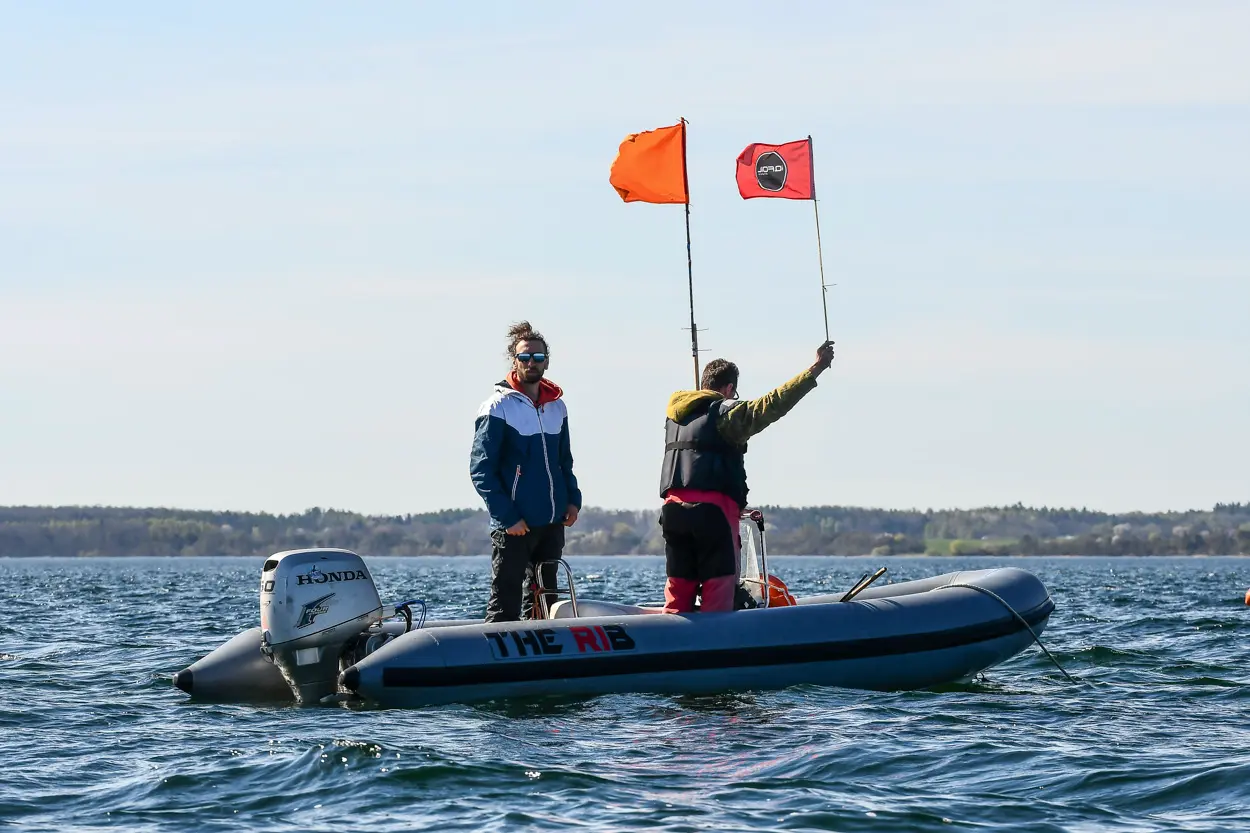
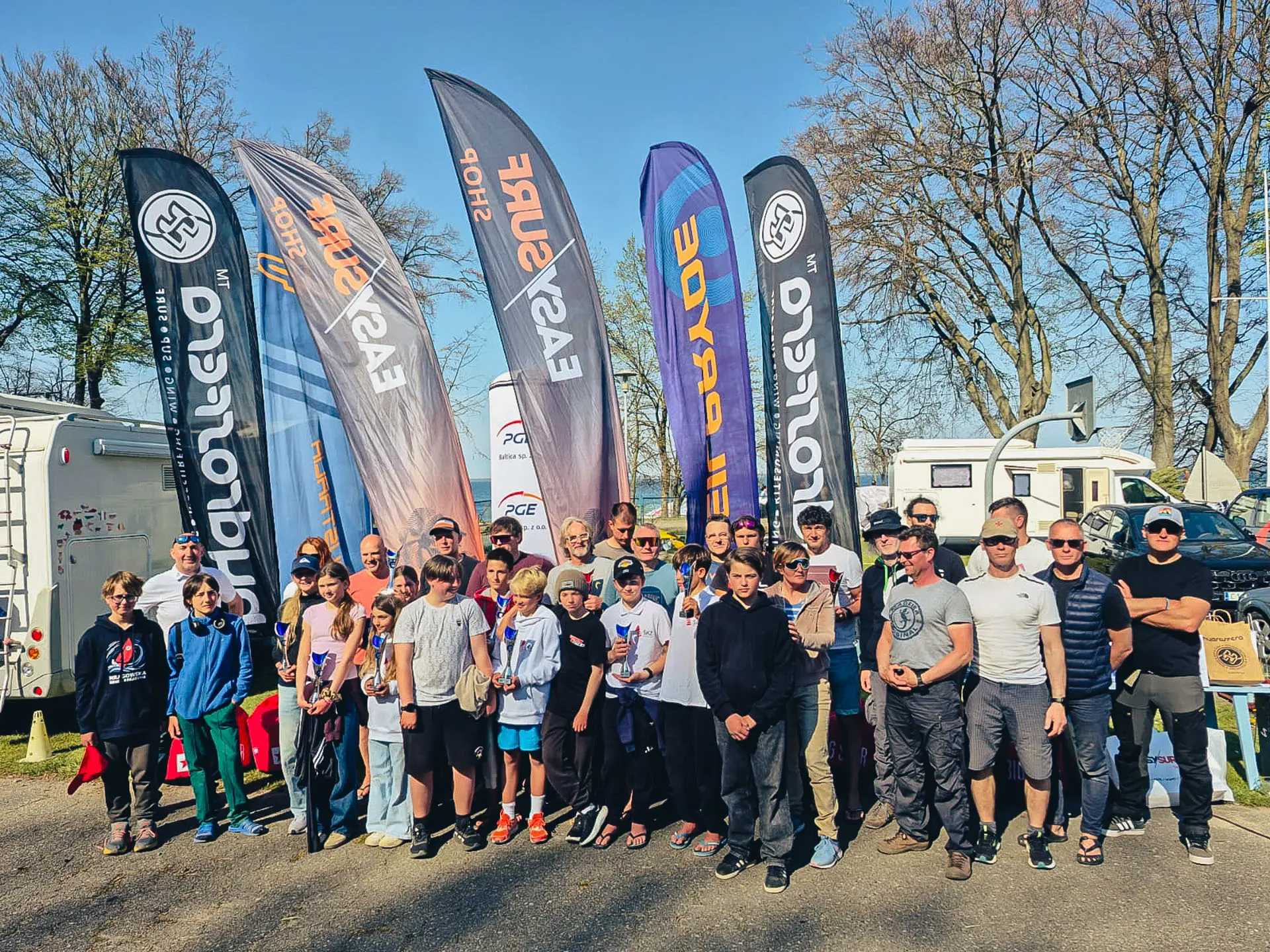
The clinics ran alongside the first round of the 2026 Polish Windsurfing Cup — the Na Fali regatta in Puck, hosted at Marzena Okońska's windsurf school. Nearly 40 sailors competed across the FWF, Slalom and Techno293 classes.
In FWF, after eight races, PSW president Jacek Wróż took the win ahead of Paweł Dittrich. In Slalom, despite tough conditions, four races were completed — Jakub Janik from AZS Sailing Team Poznań took the title. In Techno293, Maksymilian Wilandt and Natasza Cachel both claimed victories for Sopocki Klub Żeglarski.
The event also marked the official launch of the season-long prize — a JP-Australia Slalom S-TEC 2027 board, sponsored by EASY-surfshop. The concept is straightforward: every race start in the Polish Cup earns you an entry into the draw. The more rounds you compete in, the better your chances. The winner will be drawn at the end of the season from competitors in the Slalom FIN and Slalom Open classes.
As Jacek Wróż put it: wind is wind — when it's there, we race. When it's not, we connect.
What's Next
That was one day of theory. Theory without time on the water is only half the story.
We're planning another round of workshops with Maciek later this season — this time built entirely around forecast, with the focus squarely on riding. Details to follow. Keep an eye on our channels. When the wind lines up, we move fast.